Solar energy is the backbone of India’s clean energy transition. As we progress through 2026, understanding how to get the most “Muft Bijli” from your roof is essential. The secret lies in optimizing the factors affecting solar panel efficiency. This guide provides a deep dive into how you can maximize your power generation and ROI.
What is Solar Panel Efficiency and Why Does it Matter in 2026?
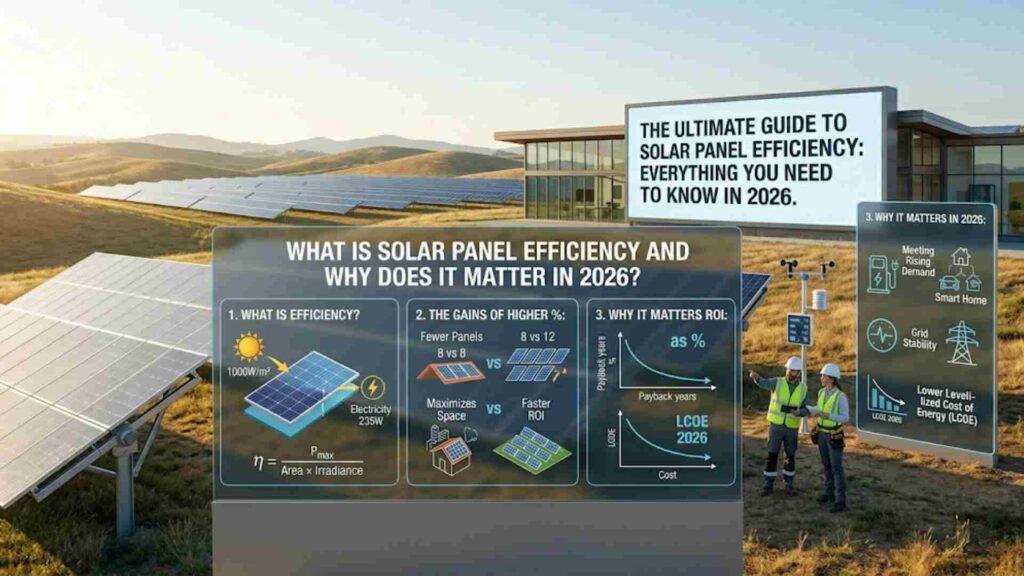
At its core, solar panel efficiency is a measure of a panel’s ability to convert sunlight into usable electricity. If a panel has an efficiency of 22%, it means it converts 22% of the solar energy hitting its surface into DC power.
In 2026, technology has pushed these boundaries. While standard panels used to hover around 15–18%, modern N-Type and TOPCon modules are pushing past the 23% mark. High efficiency means you need fewer panels to generate the same amount of power, which is vital for those with limited roof space.
The Scientific Factors Affecting Solar Panel Efficiency Measurements
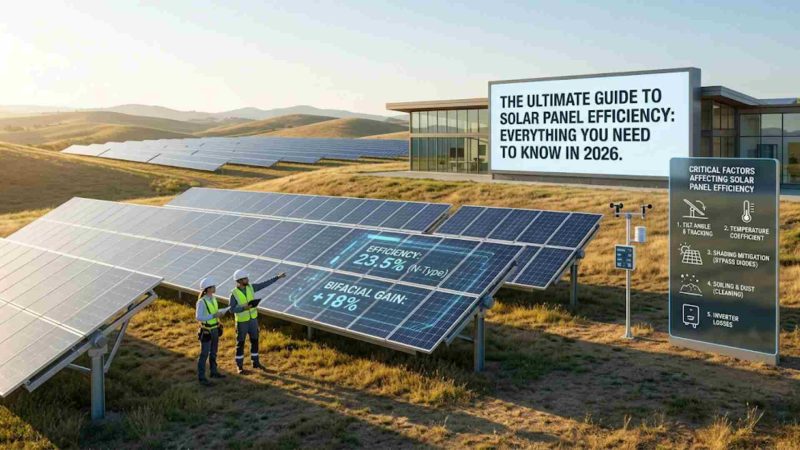
Efficiency is measured under Standard Test Conditions (STC). These conditions include a cell temperature of 25°C and an irradiance of 1000 Watts per square meter. However, real-world performance varies. Knowing these baseline factors affecting solar panel efficiency helps you compare brands fairly before investing.
Internal Technical Factors Affecting Solar Panel Efficiency
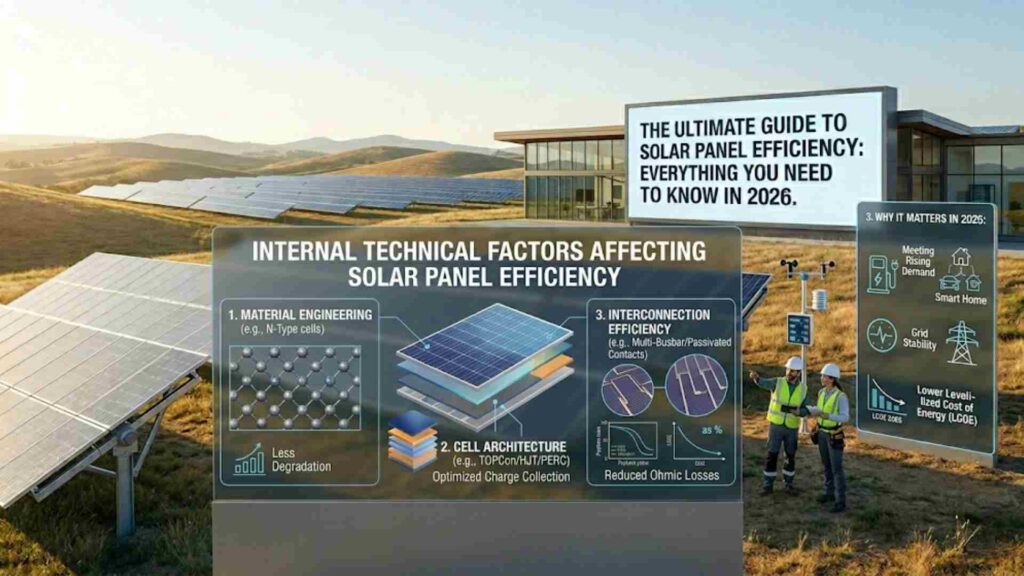
The anatomy of a solar cell determines its energy-harvesting potential. Not all silicon is created equal, and the internal architecture of the module plays a massive role.
Cell Type and Semiconductor Material
The most significant performance drivers start at the molecular level.
- Monocrystalline Cells: Made from a single crystal, these offer the highest efficiency and better performance in low-light conditions.
- Polycrystalline Cells: These are more affordable but have lower efficiency due to “grain boundaries” that impede electron flow.
- Thin-Film: Flexible but generally less efficient, used mostly in specialized industrial applications.
The Shift to TOPCon and Bifacial Technology
Bifacial panels, which capture light from both sides, have changed the ROI calculations for many businesses. By utilizing reflected light from the roof surface, these modules push the boundaries of what a single installation can achieve.
Environmental Factors Affecting Solar Panel Efficiency
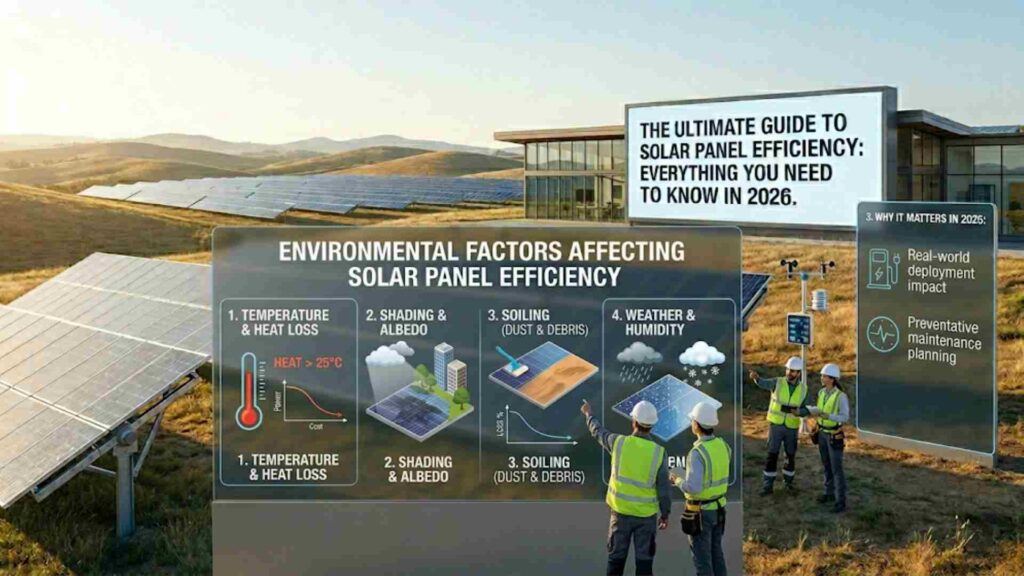
Nature is unpredictable. Even the most expensive panel can underperform if the environment isn’t ideal.
Temperature and Heat as Critical Factors Affecting Solar Panel Efficiency
It is a common misconception that more heat equals more power. In reality, excessive heat increases electrical resistance, which lowers voltage. Choosing a module with a low temperature coefficient is vital for maintaining high output during peak summer months.
Shading and Obstructions: Negative Factors Affecting Solar Panel Efficiency
Shading is the enemy of efficiency. If even a small portion of a panel is shaded by a chimney, tree, or bird droppings, the output of the entire string can drop. Modern inverters and power optimizers help, but physical shading remains one of the top factors affecting solar panel efficiency.
Installation Variables: Maximizing Your Roof’s Potential
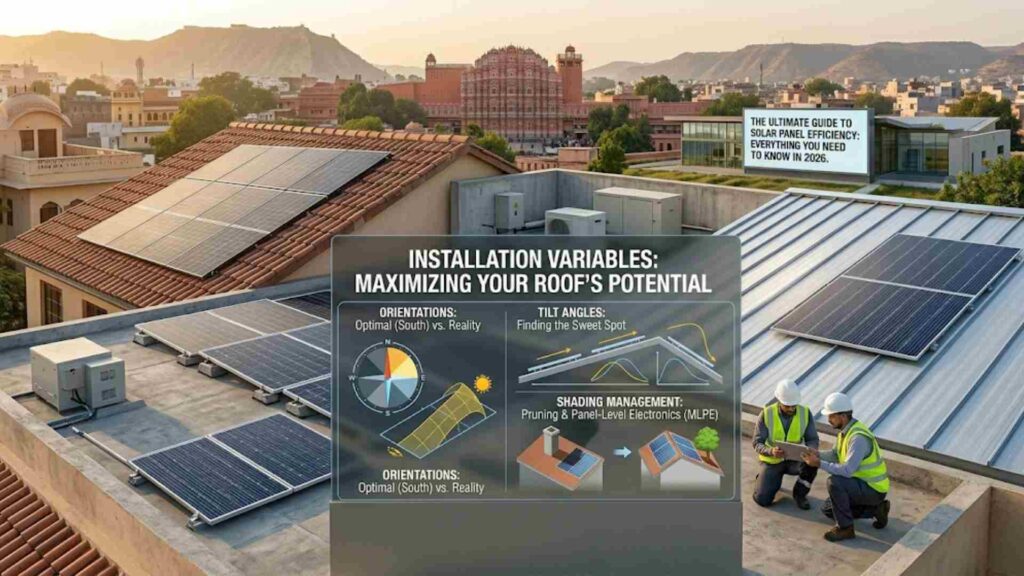
Your installer’s expertise is just as important as the hardware. Poor placement can lead to a 20–30% loss in generation.
Tilt Angle and Orientation
In the Northern Hemisphere, panels should ideally face South. The tilt angle should match your latitude to catch the sun perpendicularly. Incorrect orientation is one of the preventable factors affecting solar panel efficiency. For example, a flat-laid panel in a dusty area will lose more power due to water pooling and dirt accumulation.
Wiring and Inverter Losses
Electricity is lost as it travels through wires. Using thin or low-quality cables increases resistance. Furthermore, the efficiency of your solar inverter determines how much DC power is converted to AC for your home. These technical factors affecting solar panel efficiency often go unnoticed by beginners.
Maintenance: Keeping Efficiency High Over Time
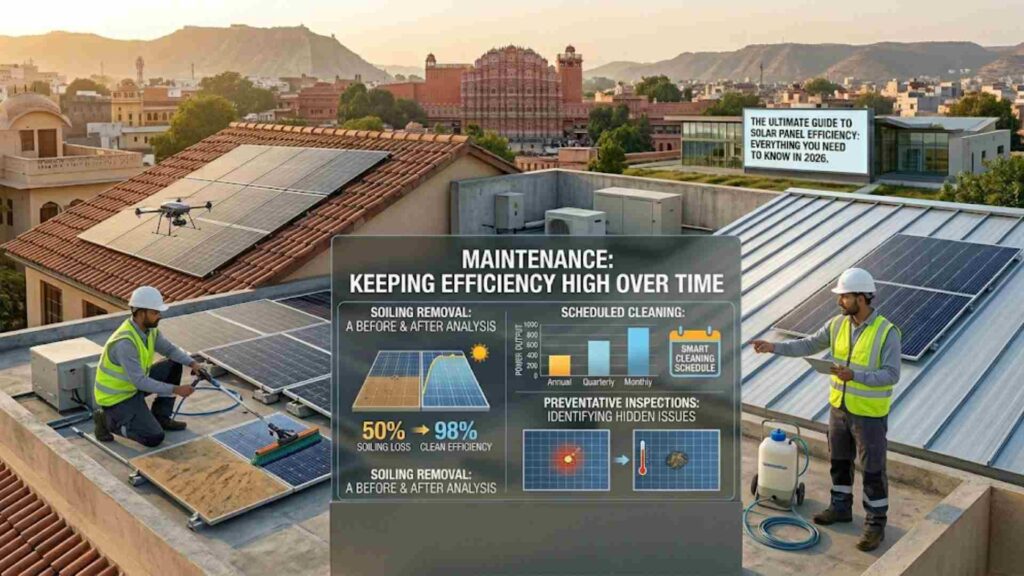
A solar system is not “set it and forget it.” Over time, the environment will take a toll on your equipment.
The Impact of Soiling and Dust
In regions like Rajasthan or Gujarat, dust is a major concern. “Soiling” can reduce efficiency by up to 25% in a single month if not cleaned. Regular cleaning schedules are essential factors affecting solar panel efficiency in dry climates.
Degradation Rates Over 25 Years
All panels degrade. High-quality panels lose about 0.5% efficiency per year. By year 25, your system should still operate at 80-85% of its original capacity. Understanding degradation helps you project long-term financial returns.
Comparison of Solar Technologies in 2026
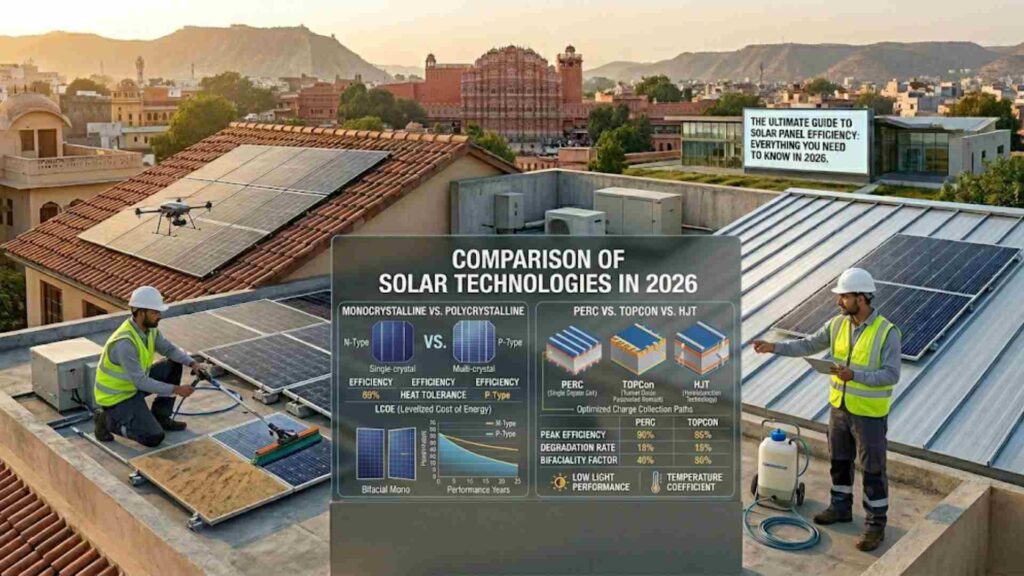
The following table summarizes the different technologies and how they stack up against the various factors affecting solar panel efficiency.
| Technology Type | Average Efficiency | Heat Tolerance | Best Use Case |
| Monocrystalline PERC | 19% – 21% | Moderate | Residential Rooftops |
| N-Type TOPCon | 22% – 24% | High | High-Efficiency Residential |
| Bifacial Modules | 21% – 23%+ | High | Industrial & Open Land |
| Polycrystalline | 15% – 17% | Low | Budget-conscious projects |
Conclusion: The Future of Efficient Energy
Maximizing your solar investment requires a holistic view. You must look beyond the price tag and evaluate the factors affecting solar panel efficiency specific to your location. By choosing N-Type technology, ensuring a shade-free south-facing installation, and maintaining a cleaning routine, you can ensure your system pays for itself in record time.
In 2026, efficiency is the key to energy independence. Stay informed, choose high-quality components, and monitor your system performance regularly to get the best results.
Frequently Asked Questions (FAQs)
Q. What are the main factors affecting solar panel efficiency?
The primary factors include the type of solar cell (Mono vs Poly), the operating temperature, the presence of shade, the angle of installation, and the accumulation of dust or debris on the glass surface.
Q. Does rain clean solar panels effectively?
While light rain can wash away some dust, it often leaves behind “mud spots” or streaks that can actually decrease efficiency. Professional cleaning with deionized water is recommended for the best performance.
Q. Can solar panels work in the shade?
They can, but their output is significantly reduced. Even partial shading on one cell can affect the entire panel. Using micro-inverters or DC optimizers can help mitigate these factors affecting solar panel efficiency.
Q. How does the PM Surya Ghar scheme impact efficiency choices?
Government subsidies like the PM Surya Ghar Muft Bijli Yojana often have technical requirements for panels. Choosing high-efficiency panels ensures you stay within the 3kW or 10kW limits while generating the maximum possible “Muft Bijli” (free electricity).