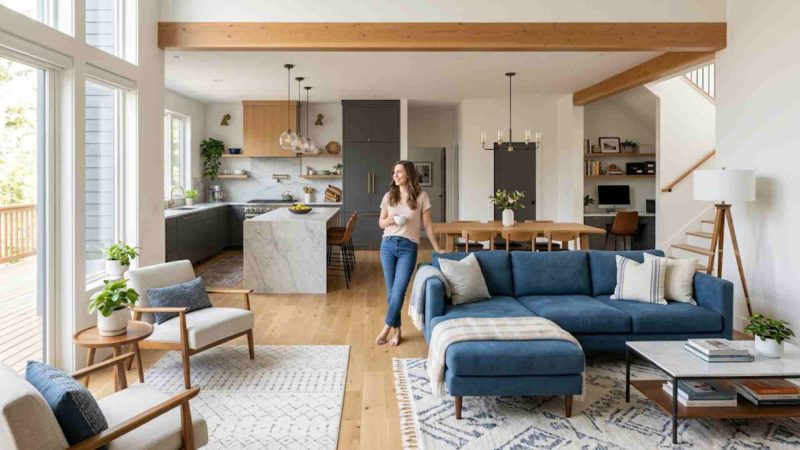
The open floor plan has completely transformed modern interior design. By knocking down walls, maximizing natural light, and creating a seamless flow between rooms, open-concept living offers a sense of spaciousness that traditional boxy layouts simply cannot match. However, designing an open space is significantly more challenging than styling individual rooms. If you want to create a beautifully balanced home, understanding the most common open floor plan design mistakes to avoid is the absolute first step toward success. Without walls to define boundaries, a poorly planned space can quickly become noisy, cluttered, and frustratingly dysfunctional.
To help you build a space that feels balanced and effortless, we have compiled the definitive checklist of design pitfalls. Whether you are planning a major renovation or tweaking your current layout, keeping these critical adjustments in mind ensures your home remains both beautiful and highly liveable.
The Most Critical Open Floor Plan Design Mistakes to Avoid
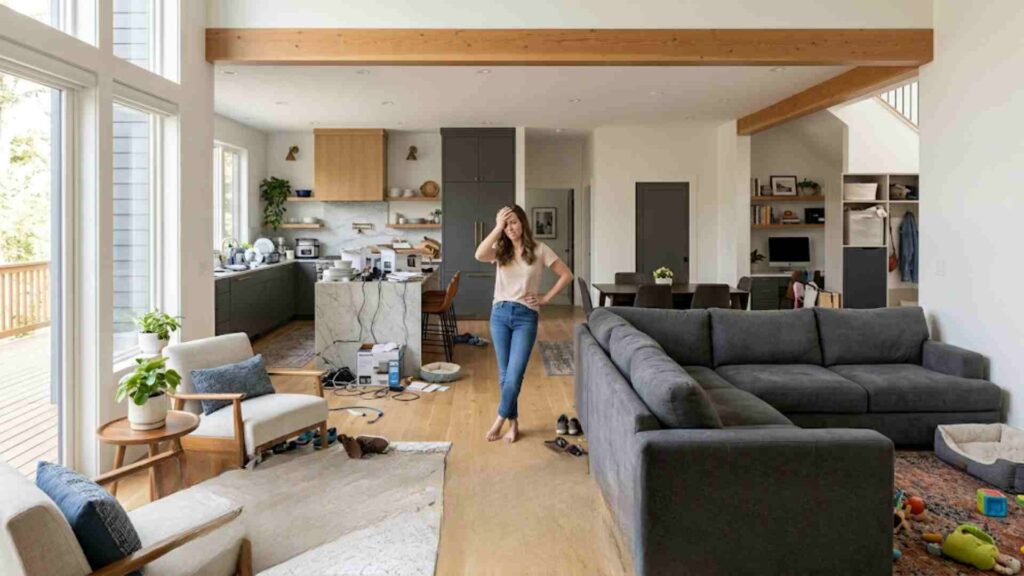
When you eliminate walls, you gain light and space, but you also lose structural boundaries. Let’s dive into the core open floor plan design mistakes to avoid so you can plan your layout with complete confidence and precision.
The Furniture Border: Classic Open Floor Plan Design Mistakes to Avoid
One of the most frequent layout blunders is pushing all your furniture against the perimeter walls. In a traditional room, this layout works well. In a large, open-concept space, however, pushing furniture to the edges leaves a massive, awkward empty void right in the middle of the room. It makes the space feel like an institutional lobby rather than a cozy home.
- How to Fix It: Instead of using walls as a crutch, “float” your furniture away from the perimeter. Group seating arrangements together in the center of a zone to create an intimate conversational area. Place a sofa with its back to the kitchen to naturally slice the living zone away from the cooking zone.
Neglecting Visual Zoning and Visual Anchor Points
When walls are absent, your eyes need visual cues to understand where one functional area ends and another begins. A common pitfall is treating the entire open area as one giant room with identical styling, which results in a sterile, chaotic, or unfinished look.
- How to Fix It: Establish clear, invisible boundaries without sacrificing the open feel by utilizing area rugs and statement lighting. An area rug acts as a physical boundary for a specific zone. Ensure your rugs are large enough—in the living zone, at least the front legs of all seating should sit comfortably on the rug.
Architectural and Layout Mistakes to Avoid in Your Open Plan
Poor Acoustic Control: Noisy Open Floor Plan Design Mistakes to Avoid
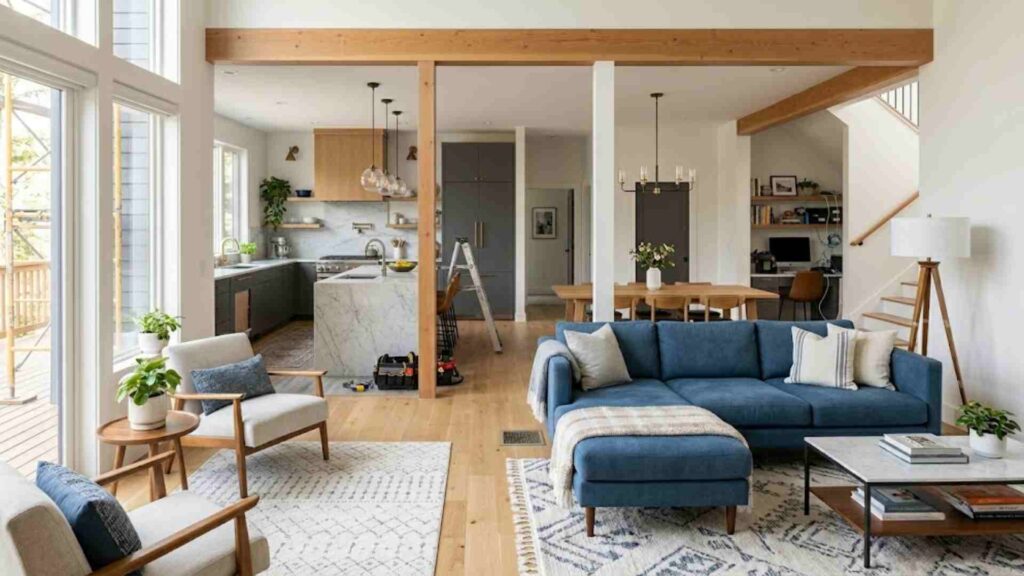
Many homeowners fall in love with the visual spaciousness of open layouts but completely forget about acoustics. Without walls, doors, and dividers to absorb or block sound waves, audio bounces off hard surfaces. The sound of a roaring kitchen blender, a running dishwasher, or children playing video games will reverberate across the entire floor.
- How to Fix It: To combat echoes and sound transmission, you must deliberately introduce sound-absorbing materials throughout the layout. Install floor-to-ceiling drapery over large windows, choose plush upholstered furniture over leather, and lay down thick rugs with dense felt pads underneath.
Compromising on Hidden Storage Solutions
In a traditional home, if the kitchen counters are messy or a kid’s play area is cluttered, you can simply close the door. In an open-concept layout, everything is constantly on display from every single angle. If you fail to integrate dedicated, hidden storage solutions, your layout will look perpetually messy and disorganized.
- How to Fix It: Incorporate cabinetry and furniture pieces that do double duty. Design your kitchen island with deep drawers on the working side and hidden cabinets on the outer side facing the living space. Use floor-to-ceiling built-in shelving units around the television to hide wiring, games, and media gear.
Lighting and Scale: Common Open Floor Plan Design Mistakes to Avoid
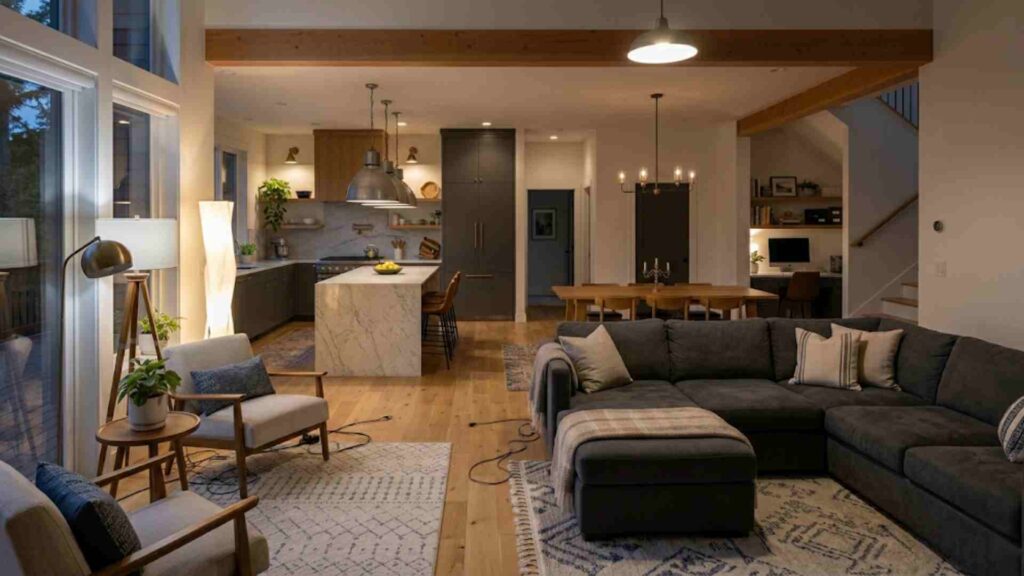
Bad Lighting Control: Common Open Floor Plan Design Mistakes to Avoid
Lighting a massive, multi-functional room with a single central switch or uniform overhead lighting is a major error. If you turn on the ceiling lights and the entire floor lights up like a retail store, you lose the ability to create mood, warmth, and intimacy in the evening.
- How to Fix It: Divide your lighting design into distinct layers and control them independently using zone-specific dimmers, as shown in the comprehensive planning guide below:
| Lighting Type | Purpose | Ideal Application |
| Ambient Lighting | Overall illumination for safety and general visibility. | Recessed ceiling canisters, flush mounts controlled by zone-specific dimmers. |
| Task Lighting | Focused light for specific activities like cooking or reading. | Under-cabinet LED strips in the kitchen, pendant lights over the island, adjustable reading lamps. |
| Accent Lighting | Adds depth and highlights architectural features. | LED strips inside glass cabinets, picture lights over artwork, up-lighting behind large indoor plants. |
Losing Sight of Scale and Proportion
When shopping in a large furniture showroom, a massive sectional sofa or an 8-foot dining table might look completely reasonable. But when placed into an open floor plan, furniture that is too large will block pathways and choke the space. Conversely, choosing furniture that is too small will make your home look fragmented and unanchored.
- How to Fix It: Map out clear circulation paths before purchasing any furniture piece. As a golden rule of spatial design, maintain 36 inches (3 feet) of clear walkway space between major furniture groupings and structural elements. This ensures family members can comfortably move from the kitchen to the living room without squeezing past chairs.
Overlooking the “Kitchen Mess” Factor
The kitchen is the literal heart of an open floor plan. However, it is also the place where dirty dishes, food prep trash, and small appliances naturally accumulate. If your kitchen sink or food prep zone is directly visible from your main lounge sofa, you will be looking at dirty pots and pans while trying to unwind at night.
- How to Fix It: You can maintain an open feel while smartly masking the visual chaos. Design a dual-level kitchen island where the outer counter (facing the living room) is raised to 42 inches, while the inner prep counter sits at 36 inches. This raised tier naturally shields dirty dishes from your sightline when seated in the living room.
Conclusion
Creating a successful open-concept home is all about balancing freedom with structure. By keeping these critical open floor plan design mistakes to avoid at the forefront of your planning process, you can design a space that feels grand and expansive without losing the warmth, privacy, and utility that makes a house feel like a home. Focus on defining clear functional zones, managing acoustics, prioritizing hidden storage, and scaling your furniture properly to enjoy the ultimate modern living experience.
Frequently Asked Questions (FAQ)
Q1. What is the most important open floor plan design mistake to avoid during a renovation?
The most important mistake to avoid is failing to plan for adequate hidden storage and proper acoustics. Since walls are not there to block sound or hide clutter, you must proactively include built-in cabinetry and plenty of soft, sound-absorbing textiles like rugs and drapes during the structural planning phase.
Q2. How do I define areas in an open floor plan without using walls?
You can easily define distinct areas using visual cues rather than physical barriers. Use large area rugs to anchor seating and dining groups, install distinct statement lighting fixtures (like pendants or chandeliers) over different zones, and arrange furniture pieces like sofas or console tables to act as natural dividers.
Q3. How much space should be left for walkways in an open layout?
You should maintain a minimum of 36 inches (3 feet) of clear walkway space for major traffic lanes throughout the layout. This ensures smooth movement between zones without creating a cramped feel or forcing people to navigate around awkwardly placed furniture.
Q4. How can I make an open floor plan feel cozy and warm?
To add warmth, introduce plenty of soft textures like plush area rugs, long window drapery, throw blankets, and decorative pillows. Additionally, use warm wood tones, layer your lighting with lamps and dimmers, and incorporate indoor plants to break up large, empty spaces.