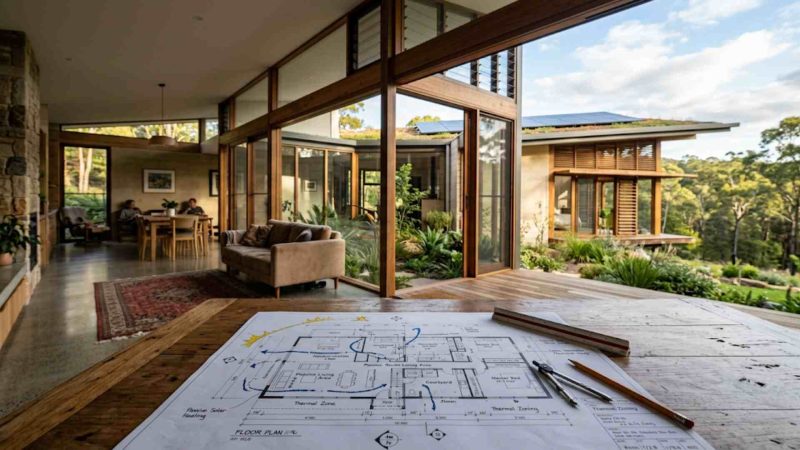
Building a home is no longer just about aesthetics and square footage. As energy costs fluctuate and environmental awareness grows, smart home design must work with nature rather than fighting against it. This is where climate responsive architecture residential floor plans come into play.
By prioritizing regional climate data during the initial layout phase, architects and homeowners can create living spaces that naturally regulate temperature, maximize daylight, and drastically reduce reliance on artificial heating and cooling systems. Whether you are building in a scorching desert or a freezing northern region, understanding how to structure your layout is the ultimate key to sustainable luxury.
What is Climate-Responsive Architecture?
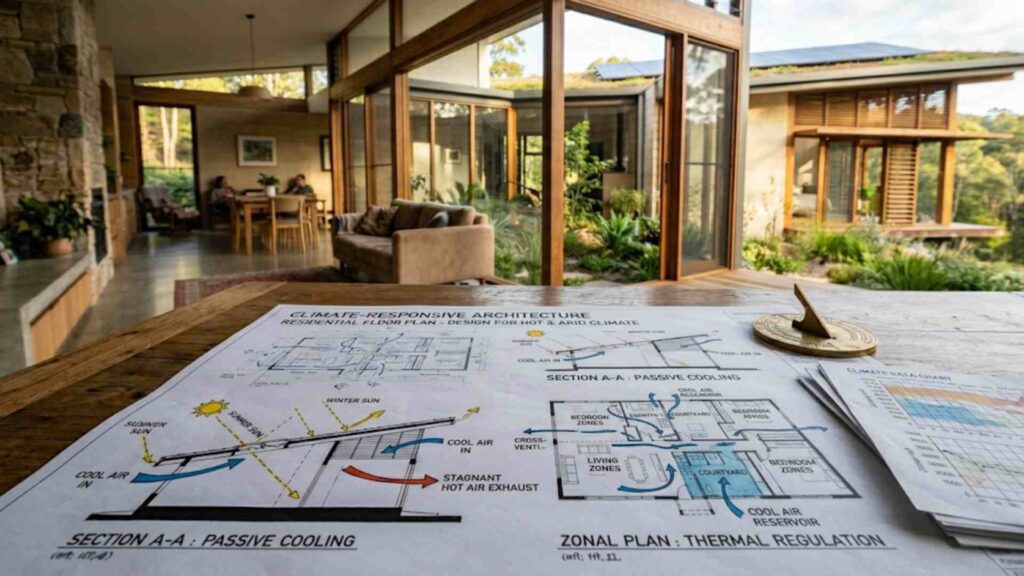
Climate-responsive architecture is the practice of designing buildings based entirely on the local weather patterns, solar paths, wind directions, and humidity levels of a specific region. Instead of using a generic blueprint and relying on heavy HVAC systems to fix thermal discomfort, this approach uses the building envelope and internal layout as the primary thermal regulators.
When applied to residential floor plans, this philosophy dictates the placement of rooms, the sizing and orientation of windows, the selection of materials, and the flow of air. The goal is simple: achieve optimal indoor comfort using minimal artificial energy.
The Core Principles of Climate-Responsive Layouts
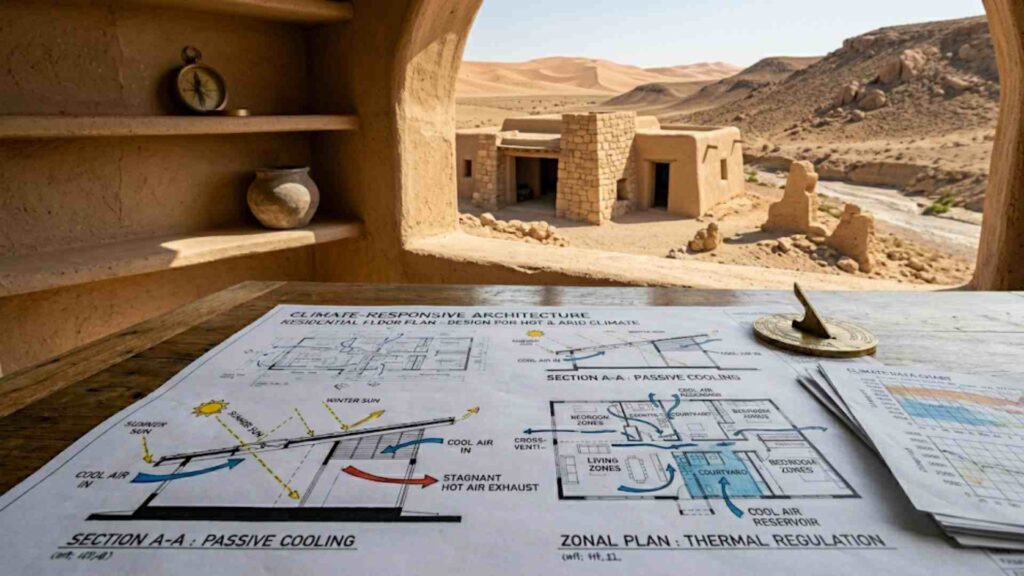
Before diving into specific climate zones, every successful architectural blueprint relies on three fundamental passive design pillars:
1. Solar Orientation for Climate Responsive Architecture Residential Floor Plans
The direction your home faces dictates its thermal destiny. In the Northern Hemisphere, orienting the longest axis of the house toward the south ensures maximum solar heat gain during winter. Conversely, in tropical climates, minimizing east and west-facing walls prevents the harsh morning and afternoon sun from overheating the interiors.
2. Thermal Zoning Rules for Energy-Efficient Layouts
Thermal zoning involves grouping rooms based on their heating and cooling needs, as well as their hours of use. For example, living rooms and kitchens, which generate internal heat and see high daytime activity, should be placed in areas with optimal natural light. Bedrooms, which are preferred cooler for sleeping, are best suited for zones away from late-afternoon solar radiation.
3. Natural Ventilation in Climate Responsive Architecture Residential Floor Plans
Air naturally moves from high-pressure areas to low-pressure areas. Aligning windows, doorways, and internal courtyards creates unobstructed pathways for cross-ventilation. This layout strategy flushes out stagnant, warm air and replaces it with refreshing outdoor breezes completely free of charge.
Designing Floor Plans for Distinct Climate Zones
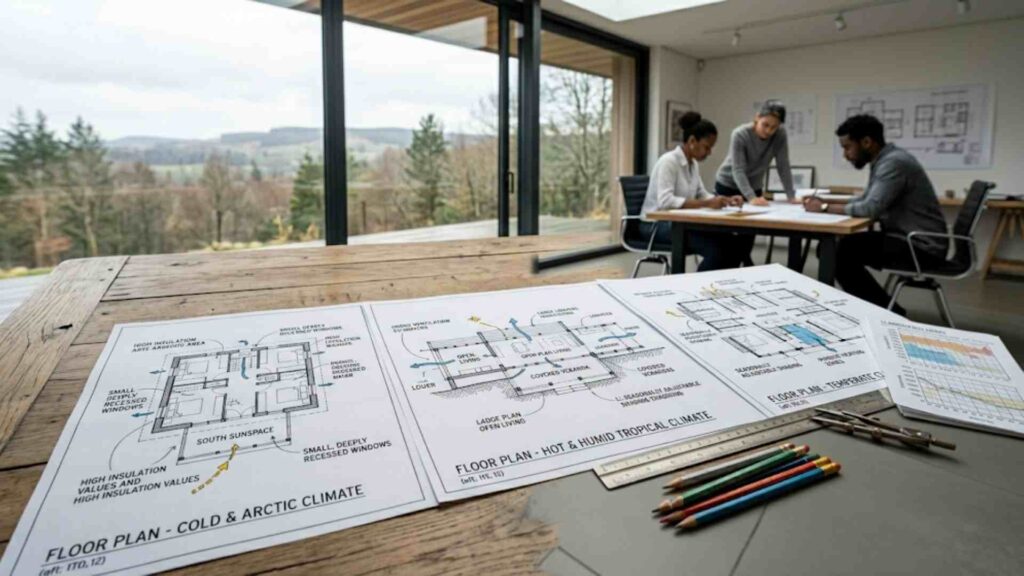
A blueprint that excels in a cold climate will fail miserably in a tropical environment. To make your residential layout truly climate-responsive, the architectural strategy must adapt directly to your local geographic conditions.
Hot & Arid Climate Responsive Architecture Residential Floor Plans
In hot, dry regions, the primary architectural challenge is keeping the intense heat out while retaining cool air.
- The Compact Courtyard Layout: The most effective floor plans for desert climates use a compact, inward-facing design. A central courtyard acts as a cool air reservoir. During the night, cool air settles into the courtyard; during the day, it circulates into the surrounding rooms.
- Buffer Zones: Place secondary spaces like storage rooms, bathrooms, and garages on the hot west-facing side of the house to act as thermal shields for the primary living spaces.
- Deep Verandas: Extend roofs or build deep overhangs on the south and west facades to shade windows from high-angled summer sun rays.
Tropical & Humid Climate Responsive Architecture Residential Floor Plans
Tropical climates require continuous air movement to alleviate high humidity levels and maintain indoor comfort.
- The Extended, Linear Layout: Unlike the compact desert home, tropical floor plans should be elongated and single-room deep wherever possible. This thin layout ensures that every room has at least two exterior walls, allowing breeze to enter from one side and exit through the other.
- Elevated Living Spaces: Elevating the main floor plan on stilts or plinths catches higher-velocity winds and protects the structure from ground moisture.
- Open-Plan Concepts: Minimize interior solid partition walls. Use louvers, screens, or sliding panels instead of solid drywall to allow air to flow seamlessly throughout the entire house.
Cold Region Climate Responsive Architecture Residential Floor Plans
In colder regions, the sole focus shifts to capturing every available bit of solar warmth and preventing it from escaping.
- The Dense, Cubical Layout: A compact, two-story square or rectangular footprint offers the lowest surface-area-to-volume ratio. Less exposed surface area means fewer places for heat to escape.
- South-Facing Solariums: Group living areas on the southern side of the layout with expansive double or triple-glazed windows. This allows the low winter sun to penetrate deep into the home, heating up high-thermal-mass floors (like concrete or stone) that radiate warmth long after sunset.
- Air-Lock Entries: Design a small, enclosed vestibule or mudroom at the main entrance. This acts as a draft lobby, preventing a blast of freezing winter air from entering the main living zones whenever the front door opens.
Summary of Climate-Responsive Layout Strategies
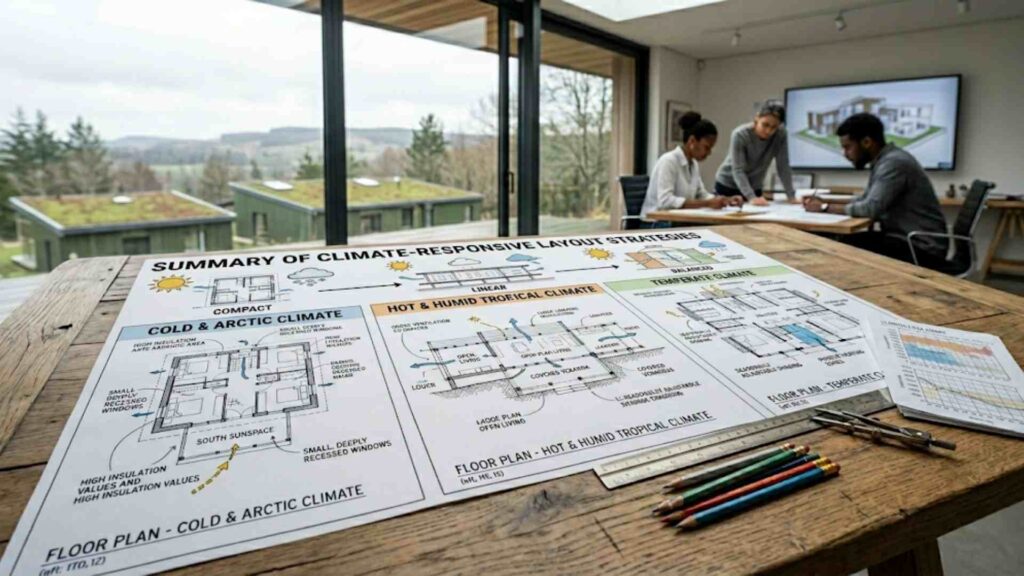
To visualize how these design choices shift based on your geographic location, review the breakdown below:
| Climate Zone | Ideal Building Shape | Key Living Room Orientation | Primary Ventilation Strategy | Critical Architectural Feature |
| Hot & Arid | Compact / Courtyard | North / South orientation | Night-time flushing | Internal courtyards, thick thermal mass walls |
| Hot & Humid | Elongated / Linear | North-South facing walls | Continuous cross-ventilation | Wide roof overhangs, elevated floors, open partitions |
| Cold & Arctic | Dense Cube / Multi-story | Maximum South exposure | Controlled, minimal drafts | Air-lock entries, insulated buffer zones, sunrooms |
The Environmental and Economic Benefits
Investing time into refining your layout pays massive dividends across the lifespan of the property.
- Drastic Energy Savings: By optimizing natural heating and cooling pathways, homeowners often experience a 30% to 50% reduction in monthly utility bills.
- Enhanced Indoor Air Quality: Relying on natural cross-ventilation continuously cycles fresh air through the home, reducing dust buildup, humidity spikes, and mold growth.
- High Property Value: Modern buyers actively seek out green features. A home engineered to remain comfortable independently of grid power holds a premium market value.
Conclusion
Embracing climate responsive architecture residential floor plans is a foundational step toward sustainable, resilient living. By analyzing the sun, wind, and temperature patterns of your specific region before drawing a single interior wall, you create a home that functions as a living ecosystem. A well-oriented, properly zoned floor plan reduces energy dependency, lowers utility costs, and delivers a superior level of daily comfort that mechanical HVAC units simply cannot replicate. Work alongside nature, and your home will reward you for decades to come.
Frequently Asked Questions (FAQs)
1. What is climate-responsive residential architecture?
It is the practice of designing home layouts based on local weather, sun paths, and wind patterns. The goal is to maximize natural comfort while minimizing reliance on artificial heating and cooling.
2. How do floor plans change between hot and cold climates?
- Hot climates: Benefit from elongated layouts that promote cross-ventilation or inward-facing courtyard designs that trap cool night air.
- Cold climates: Require compact, dense layouts (like a cube) with fewer exterior walls to prevent indoor heat escape.
3. What is thermal zoning in a house layout?
Thermal zoning means grouping rooms based on their heating, cooling, and lighting needs. Living areas face the sun for natural daytime light, while bedrooms are placed in cooler zones of the floor plan.
4. Does a climate-responsive home cost more to build?
No. Strategic orientation, smart wall placement, and window layout cost nothing extra during the drafting phase. Any minor upfront material investments are quickly recovered through lowered monthly energy bills.
5. Can I fix a poorly oriented house layout without rebuilding?
Yes. You can optimize an existing floor plan by installing external shades, retrofitting high-performance window glazing, using light-reflective roofing, or swapping room functions to match the sun’s path.