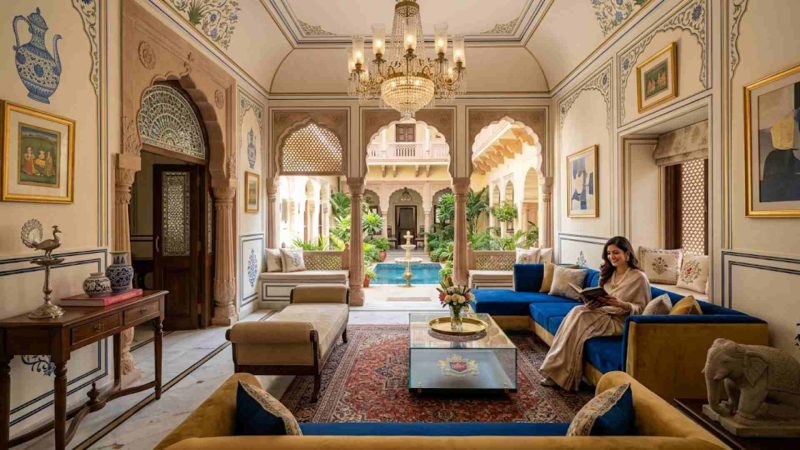
The pink-hued stone walls of Rajasthan whisper stories of a grand, royal past. For centuries, this region has been the global epicenter of architectural magnificence, intricate craftsmanship, and regal aesthetics. However, as the city evolves into a bustling modern hub, the lifestyle preferences of its elite residents are undergoing a massive transformation. The modern homeowner no longer wants a home that feels like a stagnant museum; instead, they desire a space that honors their rich cultural roots while offering the sleek functionality, comfort, and minimalism of twenty-first-century global design. To achieve this flawless balance, elite property owners hire luxury interior designers in Jaipur who understand how to transform raw square footage into bespoke, premium living sanctuaries.
This delicate intersection of past and present is where high-end design firms become indispensable. Successfully merging traditional Rajasthani craftsmanship with contemporary architectural sensibilities is a sophisticated art form. It requires a profound understanding of local heritage, an eye for global luxury trends, and a flawless execution of space planning. In this detailed guide, we explore how leading design experts are redefining premium residential spaces, proving why investing in professional design curation is the ultimate way to manifest your dream home.
Why Elite Homeowners Trust Luxury Interior Designers in Jaipur for High-End Spaces
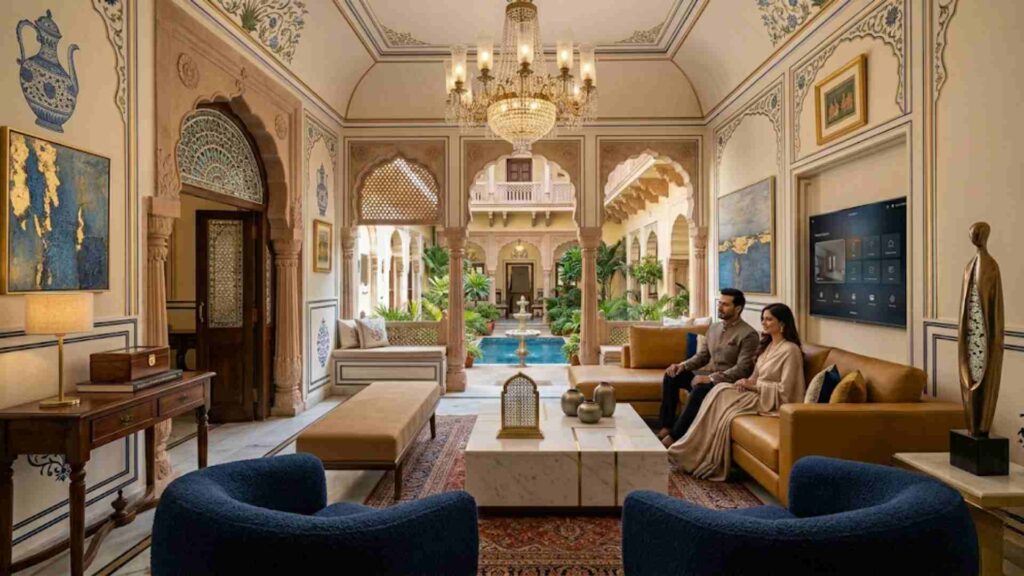
Designing a high-end home in Rajasthan requires a level of mastery that goes far beyond selecting expensive furniture or premium marble. The architectural layout of homes in this region often carries historical context, from traditional jharokhas (overhanging enclosed balconies) and central courtyards to specific Vastu Shastra alignments. Translating these intricate architectural features into a functional, modern layout without diluting their structural beauty is a massive challenge for an untrained eye.
When affluent clients look to build or renovate their premium villas, penthouses, or ancestral Havelis, they turn to specialized professionals to ensure their investments yield breathtaking results.
How Luxury Interior Designers in Jaipur Master Material Selection
The material palette available in Rajasthan is incredibly rich but highly demanding. Working with pristine Makrana marble, rugged Jodhpur sandstone, locally sourced quartz, and delicate Thikri (mirror inlay) work requires specialized labor and deep structural knowledge. Experienced interior designers maintain exclusive networks of master craftsmen (karigars) whose families have served royal households for generations. They know exactly how to treat these materials to ensure longevity while incorporating them into highly contemporary, minimalist layouts.
Spatial Planning Secrets of Luxury Interior Designers in Jaipur
Luxury is fundamentally defined by the luxury of space and how smoothly you move through it. Modern luxury spaces require an organic flow, ample natural light, proper ventilation, and absolute privacy. High-end designers analyze every square foot of a blueprint to optimize human movement, eliminate dead spaces, and establish a harmonious balance between public hosting zones (like formal drawing rooms and courtyard lounges) and private sanctuaries (like master suites and personal home spas).
The Design Secret: How Luxury Interior Designers in Jaipur Blend Heritage with Modernity
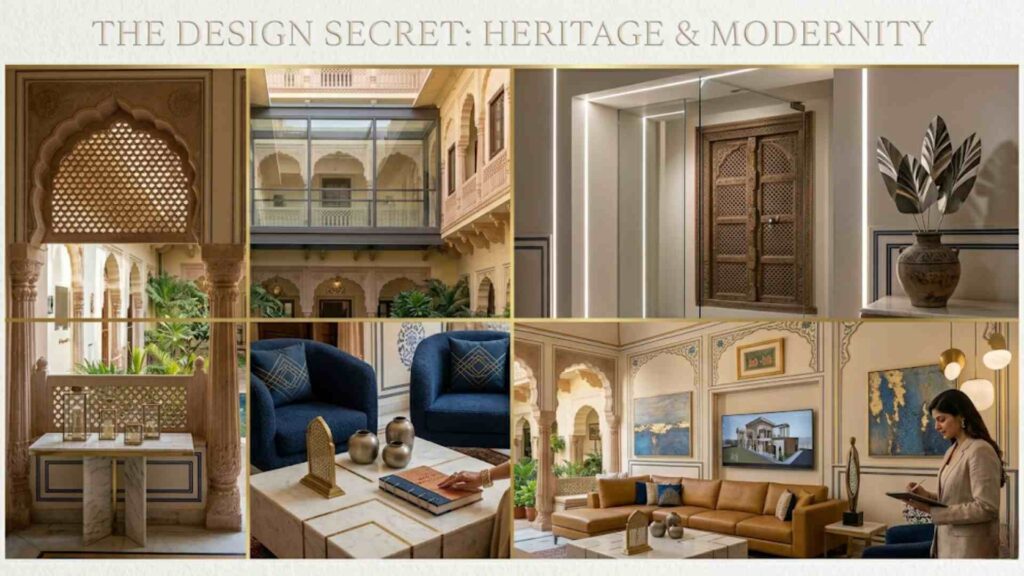
The secret to creating a stunning “Modern Royalty” aesthetic lies in a design philosophy called structural contrast. Instead of overwhelming an entire room with heavy traditional elements, elite designers use heritage features as singular, dramatic focal points, framing them with clean, understated modern backdrops.
The Geometry of Arches and Jali Work
Traditional Rajasthani architecture relies heavily on scalloped arches and intricate stone jali (lattice) screens. In a contemporary luxury home, a designer cleans up the lines of a classic archway, turning it into a smooth, geometric transition between a formal living room and a dining area. Similarly, instead of using stone jalis strictly on exterior facades, modern designers use laser-cut metal or wood jali screens indoors as elegant, light-filtering room dividers that cast beautiful, dramatic shadows across minimalist flooring throughout the day.
Reimagining the Royal Courtyard Lifestyle
The Angan or central courtyard is the soul of any classic Rajasthani home. In modern luxury villas, designers are reinventing the courtyard as a seamless indoor-outdoor transition space. Encased in high-performance, double-glazed glass walls, these modern courtyards pull natural light deep into the center of the house. They are often styled with minimalist water features, floating seating islands, and low-maintenance indoor landscaping, serving as a peaceful, private oasis away from the urban noise.
Core Elements Used by Luxury Interior Designers in Jaipur for Premium Projects
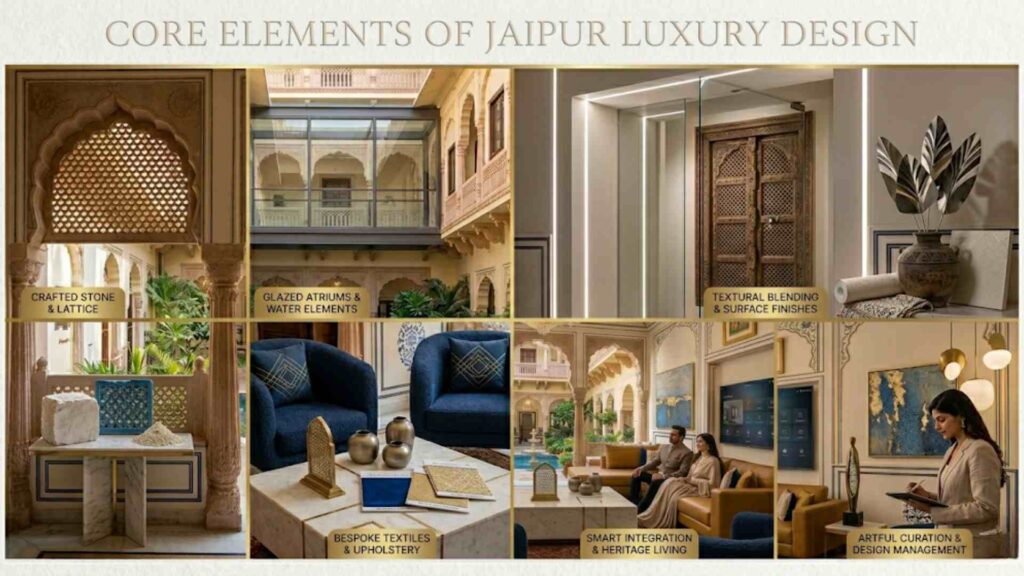
Achieving the perfect balance of modern luxury and heritage requires deep attention to detail across every layer of the interior architecture. Here is a comprehensive look at the specific design elements that define the contemporary royal aesthetic.
1. Premium Flooring Concepts Curation by Luxury Interior Designers in Jaipur
Flooring sets the entire tone for a high-end interior. While solid white Makrana marble remains a timeless luxury standard, modern spaces often feature large-format Italian marble tiles seamlessly integrated with custom geometric stone inlays. Instead of the overly complex, multi-colored floral borders of the past, contemporary designers favor monochrome, high-contrast geometric lines using black Nero Marquina and white statuario marble to create striking visual boundaries.
2. Advanced Lighting Solutions Integrated by Luxury Interior Designers in Jaipur
Lighting is the magic ingredient that brings luxury materials to life. A modern royal home utilizes a multi-layered lighting strategy:
- Ambient Architectural Lighting: Concealed magnetic track lights and warm LED coves define the clean geometric lines of the ceilings and walls.
- Heritage Feature Lighting: Massive, custom-designed crystal chandeliers or hand-blown glass pendants are placed strategically over dining tables or central stairwells, acting as functional art pieces.
- Artisanal Accent Lighting: Handcrafted brass sconces cast warm, direct light onto textured walls, creating a soft, inviting glow that mimics the romance of old-world palaces.
3. Royal Wall Textures Picked by Luxury Interior Designers in Jaipur
To prevent a minimalist, modern space from feeling cold or sterile, designers introduce intense tactile depth through walls and fabrics. Lime-wash finishes, traditional Araish plastering (a centuries-old technique that gives walls a smooth, marble-like gloss), and subtle metallic textures are utilized on accent walls. For upholstery and drapery, heavy velvets, raw silks, and locally woven brocades are paired beautifully with clean linen and premium Italian leather, creating a sophisticated sensory experience.
Project Execution Guide: How Luxury Interior Designers in Jaipur Step-by-Step Manage Work
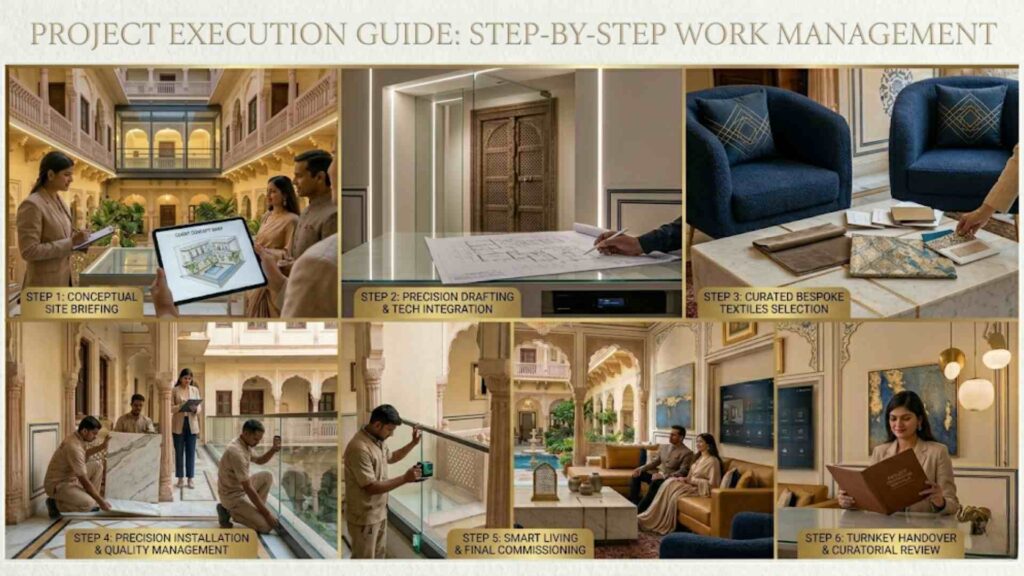
Executing a high-end residential project requires a rigorous, structured approach to ensure the final result matches the initial vision perfectly. Professional design firms follow a definitive, multi-phase roadmap to bring these complex spaces to life.
Phase 1: Contextual Site Analysis and Conceptualization
The process kicks off with an intensive consultation to define your aesthetic preferences, functional lifestyle needs, and budget boundaries. Designers conduct thorough structural site audits, analyzing how natural light moves through the space and identifying architectural features worth preserving. This phase concludes with the creation of comprehensive mood boards and spatial layout options.
Phase 2: High-Definition Visualization and Technical Drafting
Once the initial spatial layout is locked in, the design team creates hyper-realistic 3D interior renders. These visualizations allow you to experience the textures, lighting, and placement of furniture before any physical work begins. Concurrently, engineers draft detailed MEP (Mechanical, Electrical, Plumbing) drawings, lighting schematics, and custom furniture blueprints to guarantee precision during on-site execution.
Phase 3: Material Sourcing and Craftsman Curation
This is where the raw elements come together. Designers guide clients through curated visits to premium marble yards, fabric showrooms, and artisan workshops. Custom furniture pieces are commissioned, stone slabs are personally selected for book-matching patterns, and custom design details—like hand-carved wood trim or custom metal panels—are handed off to specialized craftsmen.
Phase 4: Structured On-Site Execution and Turnkey Management
With blueprints and materials locked down, physical transformation begins. Turnkey design firms take full ownership of on-site project management, supervising civil contractors, electrical installations, false-ceiling fabrications, and stone-laying teams. Regular quality checks ensure that every single millimeter of work aligns perfectly with the approved technical drawings.
Phase 5: Final Handcrafted Styling and Curation
The final phase focuses entirely on layers of comfort and personalization. The design team installs custom furniture, hangs premium drapery, adjusts the angles of architectural lighting, and artfully places curated sculptures, paintings, and indoor plants. The home undergoes a deep, professional cleaning before the keys are officially handed over for your move-in.
Comparing Design Layouts: Traditional vs. Contemporary Luxury
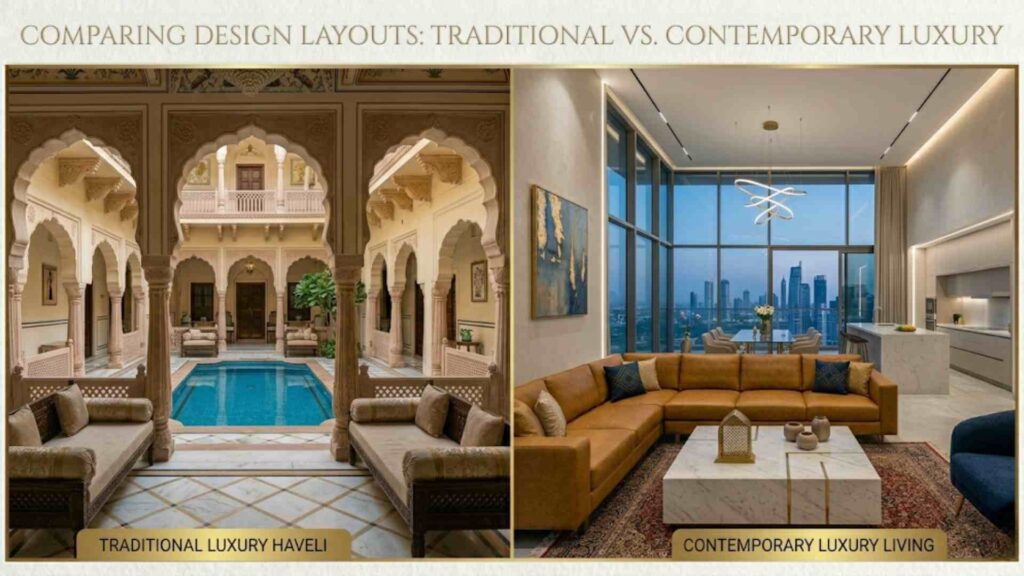
To fully understand how the luxury residential landscape has shifted, it is helpful to look at how specific spatial zones have been re-engineered over time. The following comparison highlights how core home environments have evolved to meet modern standards of living:
| Spatial Zone | Traditional Royal Layout | Contemporary Luxury Approach |
| Living Rooms | Separated formal baithaks, heavy low-seating floor cushions, dark wooden paneling. | Open-plan layouts, low-profile custom Italian sofas, neutral bases with rich jewel-toned accents. |
| Kitchen Design | Closed off, hidden from guests, purely utilitarian with standard heavy marble counters. | Premium modular show-kitchens with seamless built-in appliances and hidden secondary prep kitchens. |
| Master Suites | Heavily carved dark wood poster beds, separate changing rooms, small windows. | Grand layouts, integrated walk-in glass wardrobes, floor-to-ceiling windows, and lounge balconies. |
| Bathrooms | Standard wet areas focused strictly on basic utility and absolute privacy. | Expansive, spa-like wet rooms with freestanding tubs, smart showers, and premium marble cladding. |
| Material Usage | Uncut heavy natural stones, deep hand-carved wood, solid unlacquered brass hardware. | CNC-laser-cut metal screens, engineered stone surfaces, structural glass, polished metallic alloy accents. |
Smart Automation: How Luxury Interior Designers in Jaipur Integrate Smart Home Technology
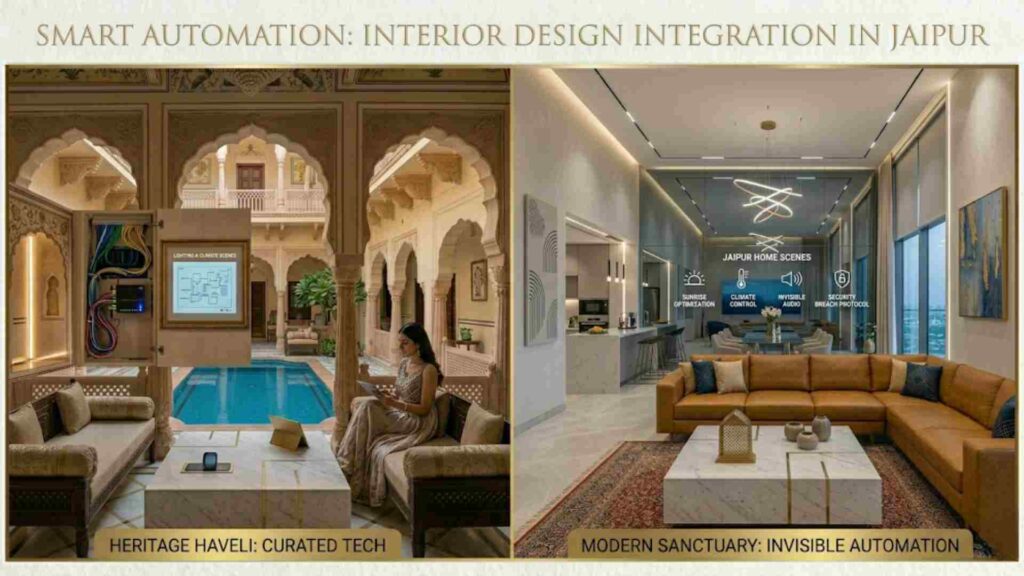
True modern luxury means your home works intuitively to make life simpler and more comfortable. Incorporating cutting-edge smart home automation into a property with deep heritage roots requires an incredibly subtle, thoughtful touch.
Invisible Architectural Automation
The ultimate goal of luxury automation is to maximize convenience while keeping the technology completely out of sight. Motorized drapery tracks are neatly hidden behind elegant crown moldings or within false ceilings. Multi-room audio systems use ultra-thin, paintable in-wall speakers that sit entirely flush with the drywall, delivering rich, high-fidelity sound without breaking up the visual flow of a beautifully textured accent wall.
Intelligent Climate and Lighting Control
Jaipur’s intense climate requires sophisticated thermal management. For this reason, smart thermostats segment the home into distinct cooling zones to adjust temperatures automatically based on occupancy and the time of day. Furthermore, designers pair these thermostats with motorized window shades. In addition to this, these intelligent shades automatically drop during peak afternoon sun to reduce thermal heat gain. As a result, this automated setup protects delicate interior woodwork and precious fabrics from harsh UV damage. Consequently, the entire system drastically optimizes energy efficiency throughout the property.
Sustainable Luxury: The Green Approach Shared by Luxury Interior Designers in Jaipur
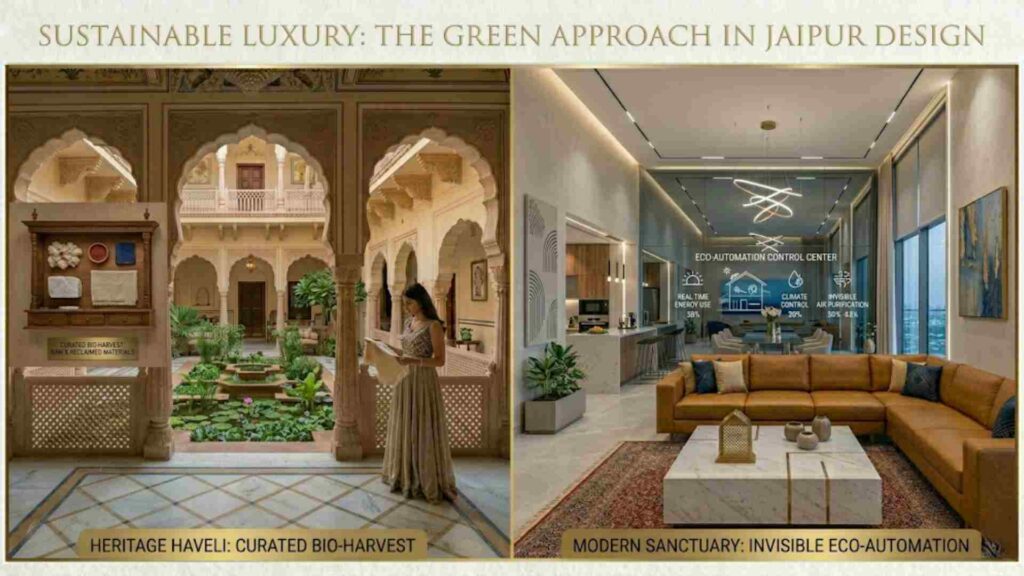
Modern luxury and environmental responsibility are no longer mutually exclusive. Today’s most innovative high-end residential designs actively prioritize eco-friendly practices, sustainable materials, and green energy solutions without compromising an ounce of comfort or beauty.
Localized Sourcing and Reducing Carbon Footprints
One of the most effective ways to design sustainably in Rajasthan is to look right in your backyard. In fact, the state boasts an extraordinary variety of premium stones, minerals, and woods. Consequently, utilizing locally quarried marble and sandstone doesn’t just celebrate local geology. In addition to this, it completely eliminates the massive carbon footprint associated with shipping heavy materials across oceans. At the same time, sourcing custom furniture from local artisan clusters supports regional economies. As a result, this sustainable practice successfully preserves historic craftsmanship traditions for future generations. Furthermore, it ensures that modern luxury developments remain deeply connected to local cultural roots.
Energy Efficiency and Passive Design Techniques
Premium designers integrate smart architectural techniques to naturally lower a home’s energy footprint. By positioning traditional jali screens and deep window recesses strategically, they create natural cross-ventilation systems and shade exterior walls. Inside, selecting low-VOC (Volatile Organic Compounds) eco-friendly paints, using energy-efficient LED fixtures, and choosing responsibly harvested woods ensure that your ultra-luxury home is safe, healthy, and environmentally conscious for generations to come.
Conclusion: Investing in Your Ultimate Living Masterpiece
Designing a premium luxury home is a profound celebration of identity. It is an intricate process of creating a personal sanctuary that honors your heritage while providing an exceptional backdrop for your modern life. By understanding the beautiful relationship between local materials, historical architecture, and contemporary design principles, you can transform any standard property into a breathtaking visual masterpiece.
Partnering with an experienced, highly skilled professional ensures that your unique design vision is executed with absolute precision, technical excellence, and zero stress. When you are ready to elevate your lifestyle and construct a home that stands as a true testament to modern royalty, investing in elite design curation is the foundational first step.
Frequently Asked Questions
1: How do luxury interior designers in Jaipur balance heritage with modern design?
They use a 70/30 rule. They keep 70% of the space modern and clean (neutral walls, smart layouts) and reserve 30% for high-impact heritage elements like Thikri glass work, carved stone arches, or custom artisanal furniture.
2: What is the average timeline for an ultra-luxury residential project?
A high-end residential project typically takes between 6 to 14 months. This includes 2 to 3 months for conceptualization, 3D rendering, and sourcing, followed by 4 to 11 months for on-site execution and turnkey styling.
3: Why should I choose turnkey services from luxury interior designers in Jaipur?
Turnkey services offer single-point accountability. The design firm manages all contractors, material sourcing, and quality checks, ensuring the physical reality matches the approved 3D renders perfectly without causing you stress.
4: Can smart home automation be installed in a heritage-style interior?
Yes, using “invisible automation.” Motorized curtain tracks, smart lighting panels, and multi-room audio speakers are concealed flush within ceilings and walls, providing modern comfort without disturbing the classic aesthetic.