Looking for the best solar energy companies near you? Here is a practical, Indian homeowner’s guide covering local EPC vetting, net metering, PM Surya Ghar subsidies, and key questions to ask before signing.Every Indian homeowner knows the dread of peaking electricity bills during peak summer months when 1.5-ton ACs run round the clock. Between soaring state DISCOM tariffs and the push for cleaner living, going solar is no longer just an environmental talking point—it is a straightforward financial decision.The challenge begins the moment you search Google for “solar energy companies near me.”
You are flooded with dozens of sponsored links, local fly-by-night contractors, multinational solar module brands, and aggressive aggregators. Some promise “zero bills forever,” while others give vague installation warranties. Because a rooftop solar plant is a 25-year structural investment, choosing the right local installer matters far more than saving ₹5,000 on upfront equipment.
Here is your actionable, fluff-free buyer’s guide to shortlisting, evaluating, and hiring the right solar energy company in your neighborhood.
1. Local EPC vs. National Brand: What Are You Actually Buying? – solar energy companies near me
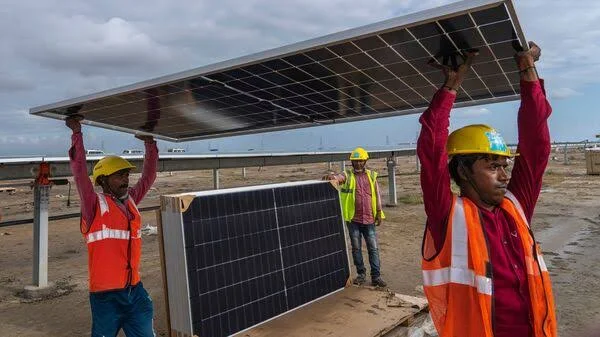
When searching for solar companies near you, recognize who is actually doing the work. In India, the market is divided into two layers:
Equipment Manufacturers (Brands): Tata Power Solar, Adani Solar, Waaree, Vikram Solar, or Loom Solar. These companies manufacture modules, inverters, and cells. While some offer turnkey residential rooftop solutions, many rely on localized franchise networks or certified channel partners.
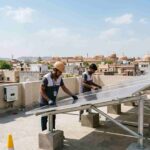
Local Solar EPC Contractors (Installers): These are local Engineering, Procurement, and Construction (EPC) vendors. They inspect your roof, design the mounting structure, procure hardware, handle local DISCOM permissions, and physically bolt the system down.
A tier-1 solar panel is only as reliable as the contractor fabricating the rooftop mounting structure. If an installer cuts corners on zinc-galvanized iron (GI) coatings or chemical roof anchoring, heavy monsoon gusts or corrosion can ruin your investment within three seasons. Look for a verified local installer with an established physical workshop or office within driving distance.
2. The 5-Point Vetting Checklist Before You Sign
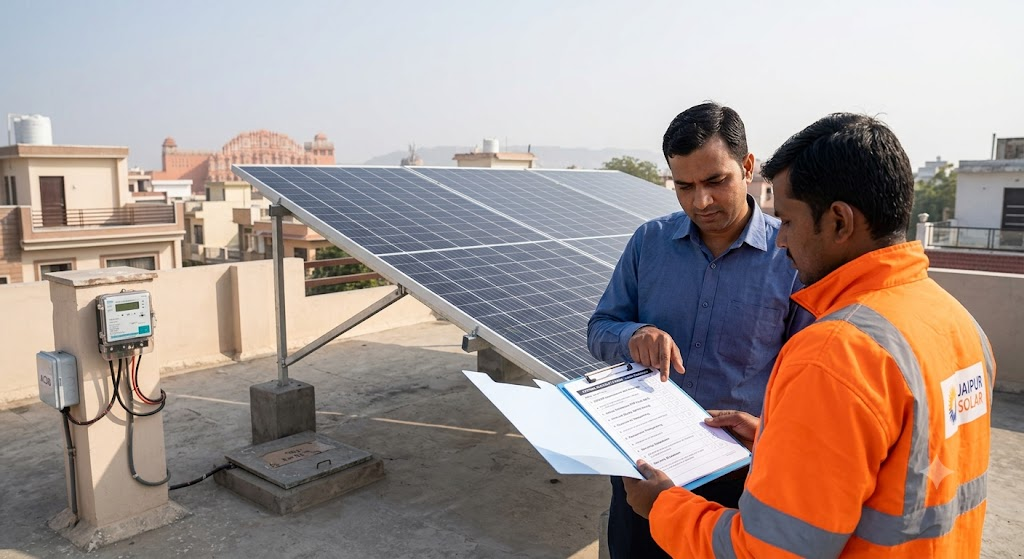
Never finalize an agreement based solely on a PDF estimate over WhatsApp. Vet any local solar contractor against these parameters:
A. DISCOM Empanelment & Net Metering Support
A solar setup without net metering is half an investment. Your local electricity distribution company (DISCOM)—whether it is BESCOM, TANGEDCO, Tata Power, BSES, or your state electricity board—must inspect and swap your conventional meter for a bidirectional net meter.
Ask directly: Will your company handle the end-to-end DISCOM net metering approvals, test reports, and site inspection liaisons, or do I need to run to the local junior engineer’s office myself?
Work with vendors who include DISCOM liaison fees and meter test certification inside the turnkey package.
B. Subsidy Readiness (PM Surya Ghar Muft Bijli Yojana)
Under the PM Surya Ghar: Muft Bijli Yojana, residential consumers can claim Direct Benefit Transfer (DBT) subsidies of up to ₹78,000 for installations up to 3 kW:
Livemint
₹30,000 for 1 kW systems
₹60,000 for 2 kW systems
₹78,000 for 3 kW and above
To receive this subsidy straight into your bank account, the vendor must be a registered vendor on the national PM Surya Ghar portal, and the installed panels must comply with Domestic Content Requirement (DCR) rules. If an installer cannot furnish their portal vendor registration ID, strike them off your list.
C. Mounting Structure Quality (Wind Resistance)
Roofs across Indian regions face extreme weather variations: coastal cyclones in Odisha and Tamil Nadu, dust storms in Rajasthan, and relentless monsoons along the Konkan belt.
Insist on hot-dip galvanized iron (GI) structures with a minimum 80-micron coating, or high-grade anodized aluminum.
The structure should be rated to withstand wind speeds of 150 km/h and elevated adequately so your terrace remains accessible for cleaning or clothes drying without voiding your roof’s waterproofing.
D. Component Transparency: Modules and Inverter Specs
Do not settle for a vague quote stating “Mono PERC panels.” Demand explicit brands and datasheets:
Solar Modules: Are they Tier-1 Mono PERC or TOPCon bifacial modules? Are they DCR-compliant?
Inverter: Is it a reputed on-grid string inverter (e.g., Growatt, Solis, Sungrow, Polycab, Enphase) sized correctly for your load?
Safety Gear: Does the quote include dedicated AC/DC Distribution Boxes (ACDB/DCDB) with Class-II Surge Protection Devices (SPD), along with chemical earthing pits and a lightning arrestor?
E. Warranty Breakdown: Equipment vs. Workmanship
There are three distinct warranties you must examine:
Module Performance Warranty: Typically 25 years (guaranteeing ~80% degradation performance limit).
Inverter Warranty: Usually 5 to 10 years.
Workmanship & Work Warranty: 1 to 5 years provided by the local EPC for cabling, structure stability, roof leak prevention, and physical maintenance.
3. Comparing Quotes: Avoid the “Lowest Price” Trap
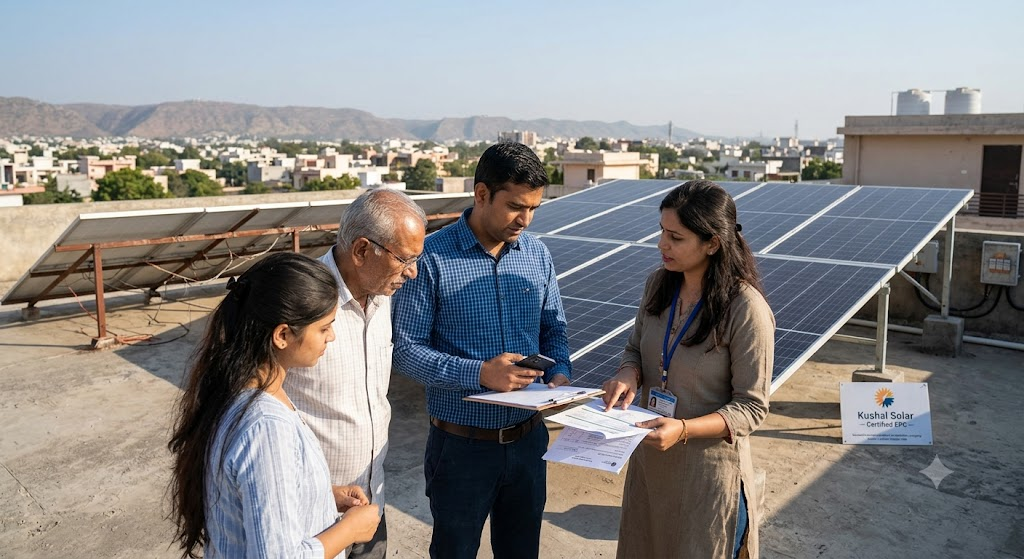
When collecting 3–4 estimates from local companies, a standard 3 kW residential grid-tied system will generally land in a predictable range before subsidy. If one contractor quotes 20–25% below market rate, they are almost certainly sacrificing build quality:
System Parameter Quality Standard (Recommended) Budget Shortcut (Avoid)
Panel Technology Monocrystalline TOPCon / Half-Cut (DCR) Polycrystalline or non-DCR B-grade surplus
Mounting Structure Hot-dip Galvanized Iron (80+ micron) Mild Steel (painted/spray-coated) or thin GI
Earthing System 3 separate chemical earthing pits (AC, DC, LA) Single earthing pipe shared with house ground
Protection Dual SPD (Type 2) in IP65 weather-proof boxes Basic MCBs with no surge arrestor
DISCOM Liaison Included in contract until meter spin “Customer responsibility” or hidden extra charges
A sub-standard installation may save ₹15,000 upfront, but a single thunderstorm surge or burnt-out DC circuit can wipe out that savings instantly.
4. 6 Direct Questions to Ask Before Handing Over an Advance
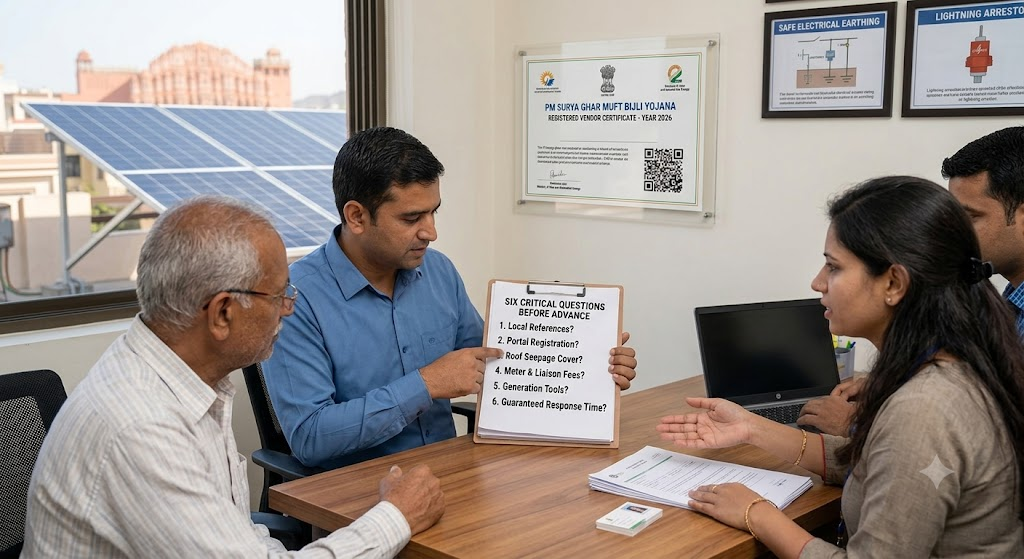
Print this list or keep it open on your phone during your home site assessment:
“Can you share the addresses or phone numbers of 2 homeowners within a 5-km radius where you completed installations in the past year?”
“Is your firm registered on the national PM Surya Ghar portal for claiming central DBT subsidies?”
“What happens if there is roof seepage after installation—do you handle structural waterproofing repairs?”
“Does your quote cover the bidirectional net meter testing fees, DISCOM processing charges, and application tracking?”
“What generation tracking tools (mobile app / web portal) come integrated with the inverter?”
“What is your guaranteed response time if the inverter displays an isolation fault or generation error?”
5. Next Steps: Making Your Terrace Work for You-solar energy companies near me
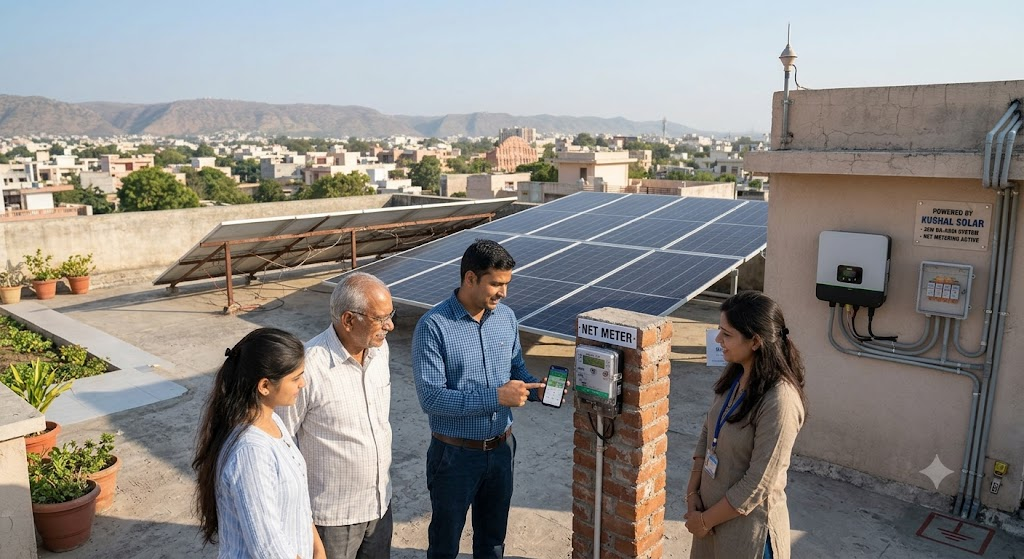
Finding the right solar energy company near you comes down to verification over sales pitches.
Start by taking a copy of your electricity bills from the past 12 months to calculate your average monthly unit (kWh) consumption. A good thumb rule: every 1 kW of installed rooftop solar produces approximately 4 units of electricity per day under clear skies.
Shortlist 2–3 registered local EPCs, schedule a physical roof shadow analysis, compare the component data sheets line-by-line, and prioritize long-term after-sales support over the lowest initial bid. With proper installation and net metering in place, your rooftop can offset your energy costs for the next two decades.