The rising cost of energy is no longer just a minor inconvenience; it has become a significant monthly burden for households and businesses alike. As traditional utility rates continue to climb, more people are looking toward the sun for a solution. But simply installing panels isn’t a magic wand. To truly reduce electricity bill with solar, you need a strategic approach that combines high-efficiency technology, smart consumption habits, and an understanding of the financial incentives available in 2026.
In this detailed guide, we will walk through every step of the journey—from technical assessments to maximizing your return on investment (ROI)—ensuring you squeeze every possible Rupee of savings out of your solar power plant.
Why Now is the Best Time to Reduce Electricity Bill with Solar
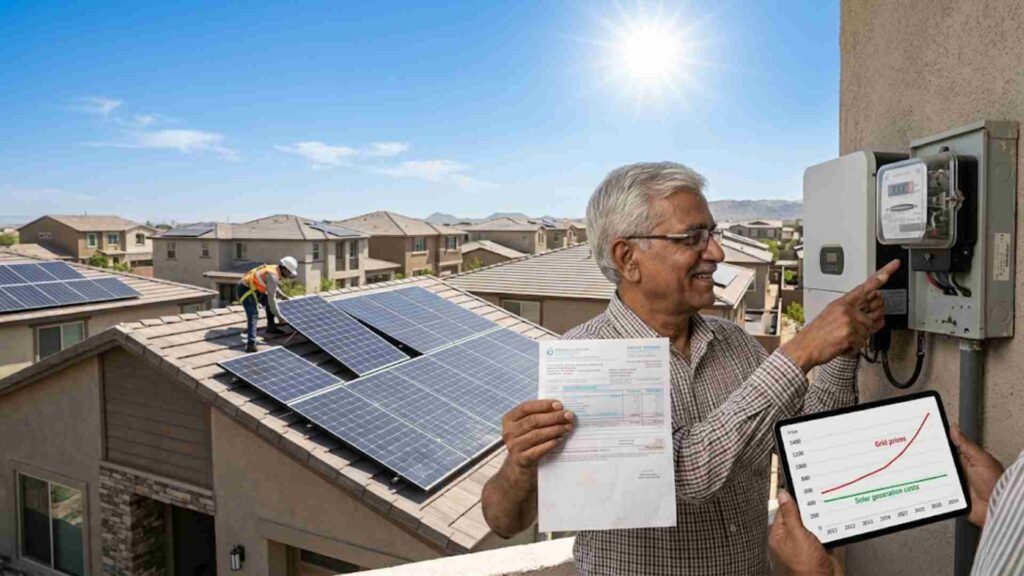
The solar industry has undergone a massive shift recently. With the advent of N-Type TOPCon technology and Bifacial modules, the amount of energy you can generate from a small rooftop area has increased by nearly 25% compared to five years ago.When you decide to reduce electricity bill with solar, you aren’t just cutting costs; you are fixing your energy price for the next 25 years. While grid electricity prices may rise by 5–7% annually, your solar fuel (the sun) remains free.
Step 1: Evaluating Your Energy Consumption Patterns

Before you buy a single panel, you must understand your “Load Profile.” You cannot effectively reduce electricity bill with solar if you don’t know where your energy is going.
Audit Your Monthly Bills
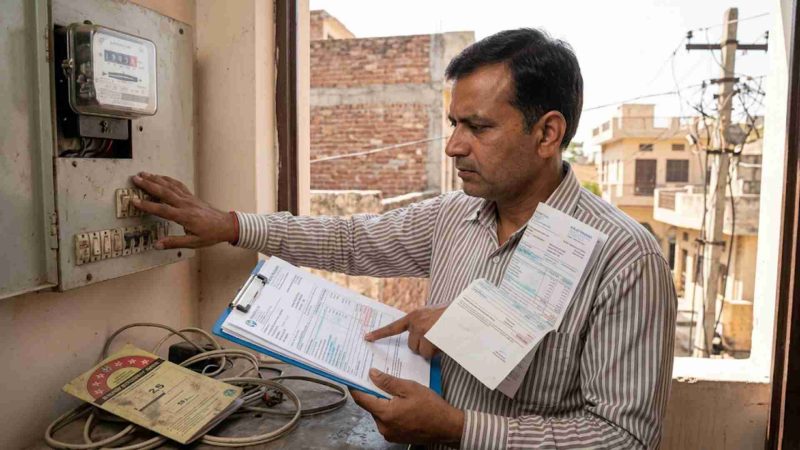
Look at your bills from the last 12 months. Note the peak months (usually summer due to air conditioning) and the lowest months. This average helps in sizing a system that ensures you aren’t under-powered or over-investing in a system larger than you need.
Identify “Phantom Loads”
Even with solar, wasting energy is losing money. Identify appliances that consume power on standby. Combining solar with energy-efficient appliances is the fastest way to see a “Zero Bill.”
Step 2: Choosing the Right Technology to Reduce Electricity Bill with Solar
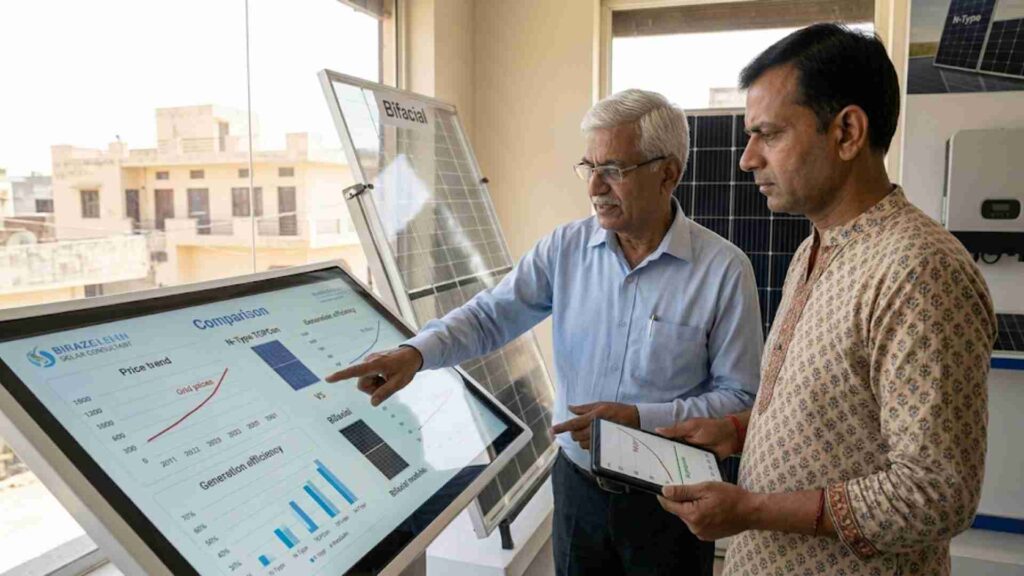
Not all solar panels are created equal. If your goal is to reduce electricity bill with solar in a limited space, the hardware choice is critical.
Monofacial vs. Bifacial Modules
- Monofacial: Only absorbs light from the front. Good for standard rooftops.
- Bifacial: Absorbs light from both sides. These are excellent if you have a flat roof with reflective flooring, as they catch the “albedo” light bouncing off the roof surface, increasing generation by up to 15%.
N-Type TOPCon Technology
In 2026, N-Type TOPCon has become the gold standard. These panels have lower degradation rates and perform significantly better in high-temperature environments (like the heatwaves in Rajasthan or Gujarat), ensuring your production stays high even when the sun is at its harshest.
Step 3: Understanding Net Metering and Its Role
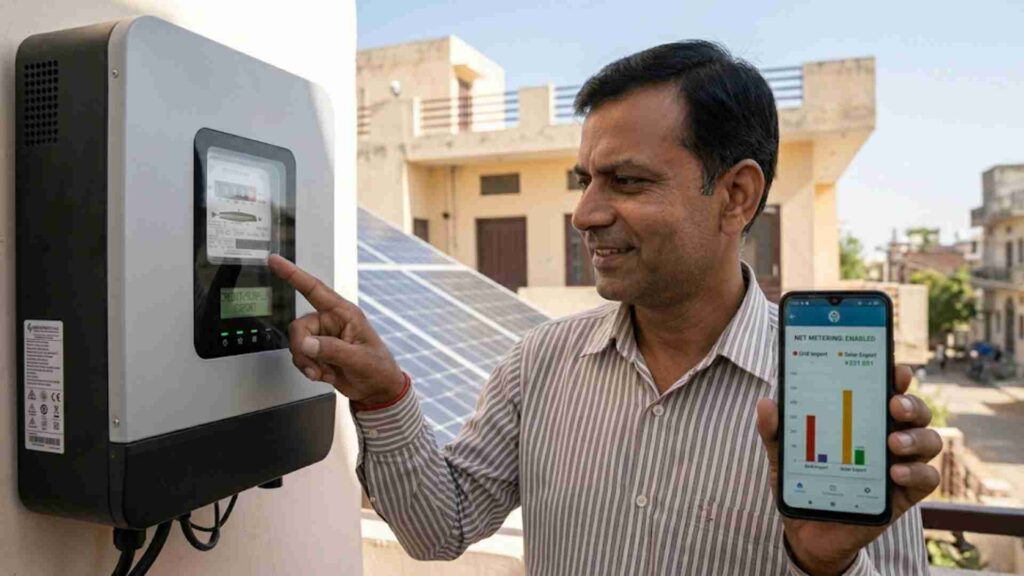
The most powerful tool to reduce electricity bill with solar is the Net Meter.
Net metering allows you to send excess energy generated during the day back to the grid. In return, the utility company gives you “credits.” At night, when your solar isn’t producing, you use these credits to power your home. At the end of the month, you only pay for the “Net” energy used.
Pro Tip: Ensure your solar installer handles the Net Metering application with your local DISCOM (Electricity Board) immediately, as this process can take 30–45 days.
Step 4: Installation Strategy for Maximum Efficiency
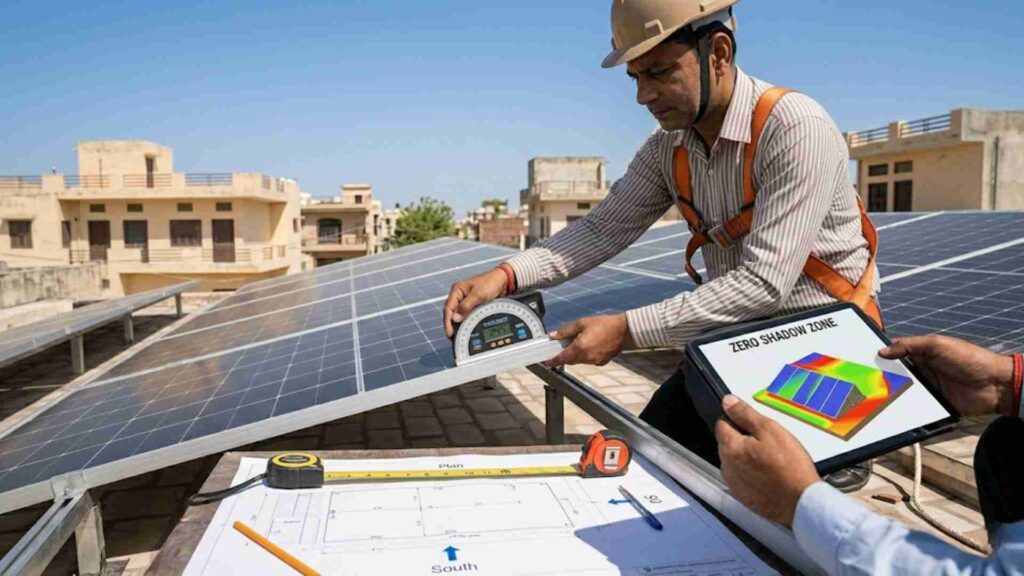
The physical placement of your panels determines how effectively you will reduce electricity bill with solar.
- Direction: In the northern hemisphere, panels should ideally face South to capture the maximum amount of sunlight throughout the day.
- Tilt Angle: The angle should be roughly equal to your latitude. For example, installations in Jaipur or Ahmedabad usually sit at a tilt of 20° to 25°.
- Shadow Analysis: Even a small shadow from a chimney or a nearby tree can drop the output of an entire string of panels. Ensure a “Shadow-Free” area for at least 6 hours of peak sunlight.
Financial Breakdown: Cost vs. Savings
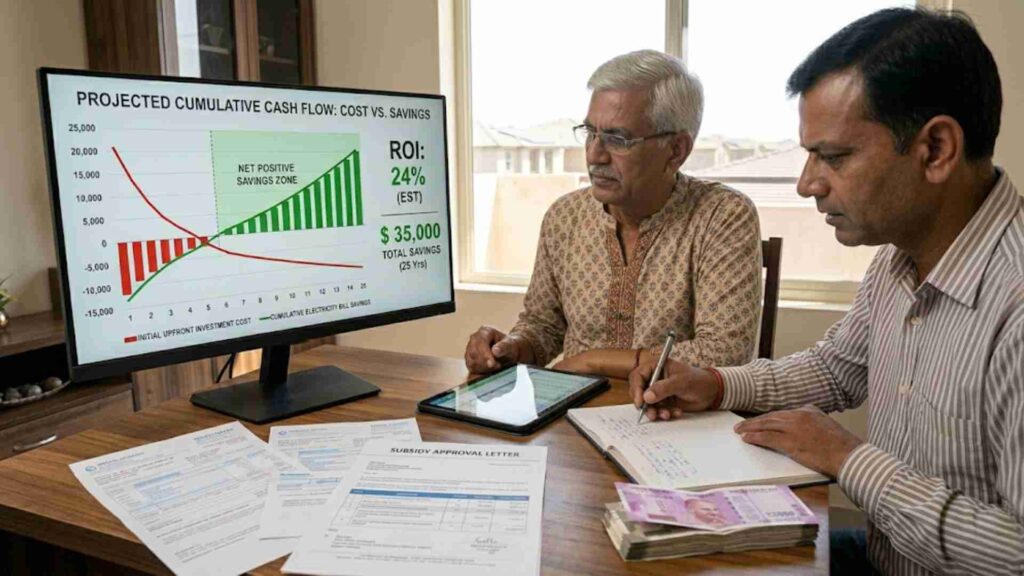
To understand how to reduce electricity bill with solar, you must look at the numbers. While the upfront cost might seem high, the payback period has shortened significantly.
Estimated Savings Table (Residential 3kW – 10kW)
| System Size | Approx. Cost (INR) | Monthly Units Generated | Estimated Monthly Savings | Payback Period |
| 3kW System | ₹1,60,000 – ₹2,00,000 | 360 – 400 Units | ₹3,000 – ₹3,500 | 4 – 5 Years |
| 5kW System | ₹2,50,000 – ₹3,00,000 | 600 – 650 Units | ₹5,500 – ₹6,500 | 3.5 – 4 Years |
| 10kW System | ₹4,50,000 – ₹5,50,000 | 1200 – 1300 Units | ₹11,000 – ₹13,000 | 3 – 4 Years |
Note: Costs are estimates and vary based on brand, subsidies, and installation complexity.
How Maintenance Helps to Reduce Electricity Bill with Solar
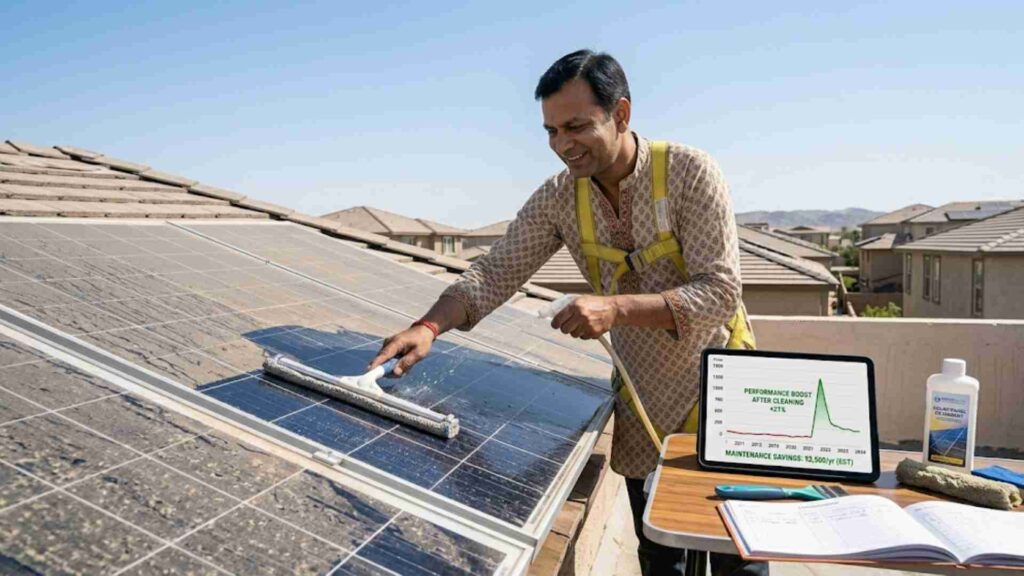
A dirty panel is a thief. Dust, bird droppings, and pollution can create a film over the cells, reducing efficiency by as much as 20–30%.
- Cleaning Schedule: Clean your panels every 15 days with plain water and a soft brush or microfiber cloth.
- Monitor Your Inverter: Most modern inverters come with an app. Check it daily. If you see a dip in production on a sunny day, it’s a signal that something needs maintenance.
- Professional Check-up: Have a technician check the wiring and earthing once a year to prevent energy leakage.
Common Mistakes When Trying to Reduce Electricity Bill with Solar
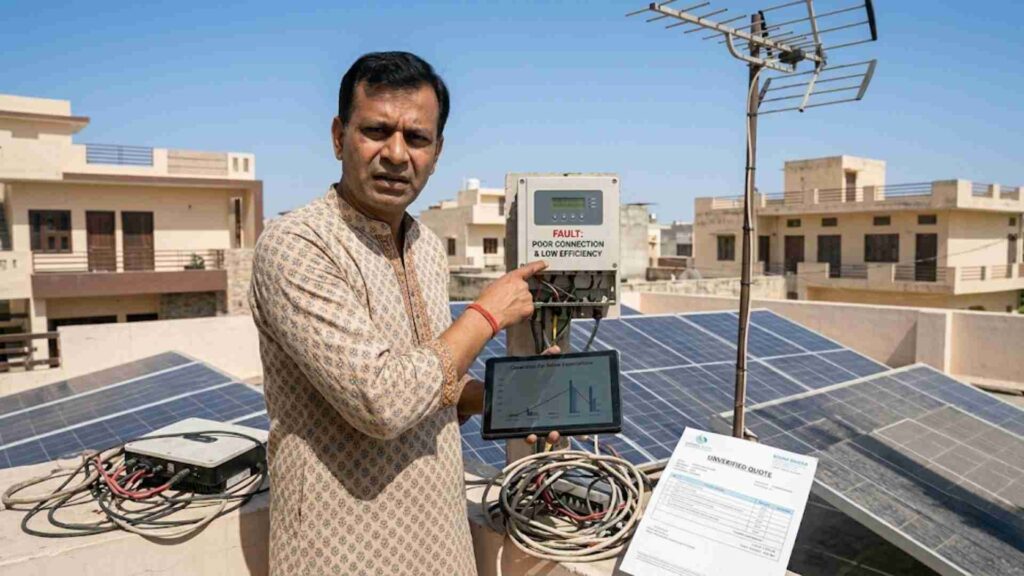
Many homeowners fail to see the expected results because of these three common errors:
- Undersizing the System: Trying to save money on the initial cost by installing a system that doesn’t cover your base load.
- Poor Inverter Choice: The inverter is the “brain.” If you use a low-quality inverter, it won’t convert DC to AC efficiently, wasting the power your panels worked hard to create.
- Ignoring Subsidies: Many state governments (especially in regions like Rajasthan and Gujarat) offer significant subsidies for residential solar. Not claiming these increases your “Time to ROI.”
Conclusion: Your Path to Energy Independence
To reduce electricity bill with solar is not a one-time event, but a lifestyle shift. By choosing the right technology like TOPCon Bifacial panels, ensuring correct installation, and maintaining the system, you can effectively bring your electricity costs down to near zero.
Solar energy is the most reliable way to protect yourself from future inflation in energy prices. It’s an investment that pays for itself in a few years and then provides free electricity for two decades more. Start your transition today, and let the sun pay your bills.
Frequently Asked Questions (FAQ)
Q1: Can I really reduce my electricity bill to zero with solar?
Yes, through Net Metering. If your solar system produces as much or more energy than you consume over a month, your “energy charge” can become zero. You will still have to pay a small fixed “service charge” to the electricity board, but the bulk of the bill disappears.
Q2: How long does it take to reduce electricity bill with solar after installation?
The impact is immediate. As soon as your Net Meter is installed and the system is commissioned, your grid consumption drops. You will see the difference in your very first billing cycle.
Q3: Do solar panels work during the rainy season or on cloudy days?
Yes, but at a lower efficiency. Solar panels work on light, not heat. On cloudy days, they still produce about 10–25% of their usual capacity. Over a year, the surplus generated during sunny months usually covers the deficit during the monsoon.
Q4: Is a 3kW system enough to reduce electricity bill with solar for a 3 BHK home?
Typically, a 3kW to 5kW system is sufficient for a standard 3 BHK home with 1.5-ton ACs, lights, and fans. However, if you use multiple ACs or heavy machinery, a 10kW system might be more appropriate.