Running a cold storage business in India, especially in heat-intensive states like Rajasthan or Gujarat, is an expensive affair. With summer temperatures often crossing 45°C, your cooling compressors have to work double-time to maintain the required temperature for perishables. This leads to massive electricity bills that eat up nearly 50% of your profit margins. In 2026, the benefits of solar energy for cold storage units have moved from being a “green choice” to a survival strategy for business owners. Instead of paying lakhs to DISCOMs every month, you can now harvest the abundant Indian sun to power your freezers for near-zero costs.
The Energy Crisis in the Indian Cold Chain Sector
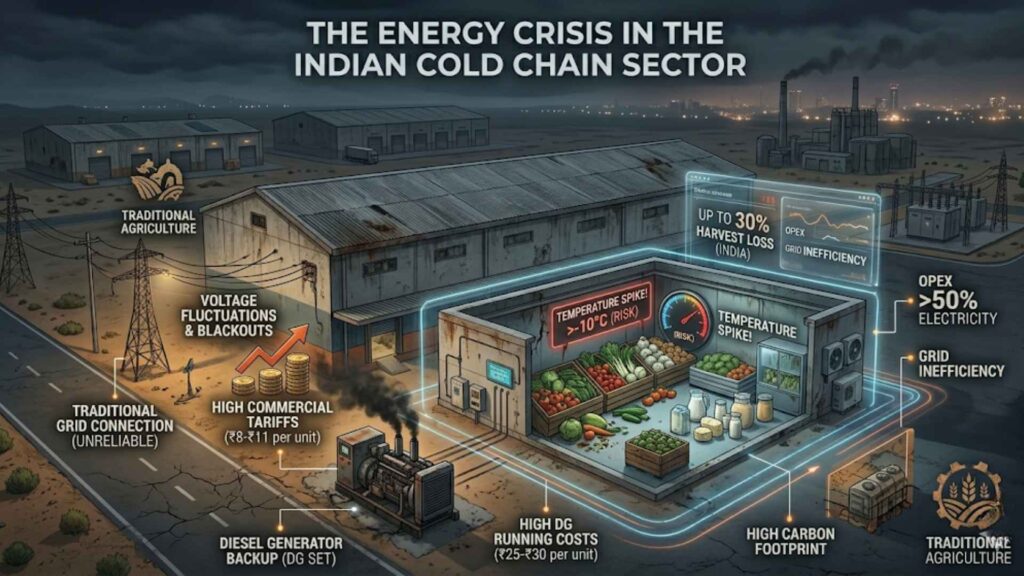
Before we dive into the solution, we must understand the problem. India is the world’s second-largest producer of fruits and vegetables, yet we lose nearly 30% of it due to poor cold chain infrastructure. Why? Because electricity is expensive and unreliable.
In industrial hubs like Jaipur, Jodhpur, or Ahmedabad, commercial electricity rates are hovering around ₹8 to ₹11 per unit. When you add fixed charges and surcharges, the cost becomes unbearable. This is why understanding the benefits of solar energy for cold storage units is essential for every warehouse owner in 2026.
Comprehensive Financial Benefits of Solar Energy for Cold Storage Units
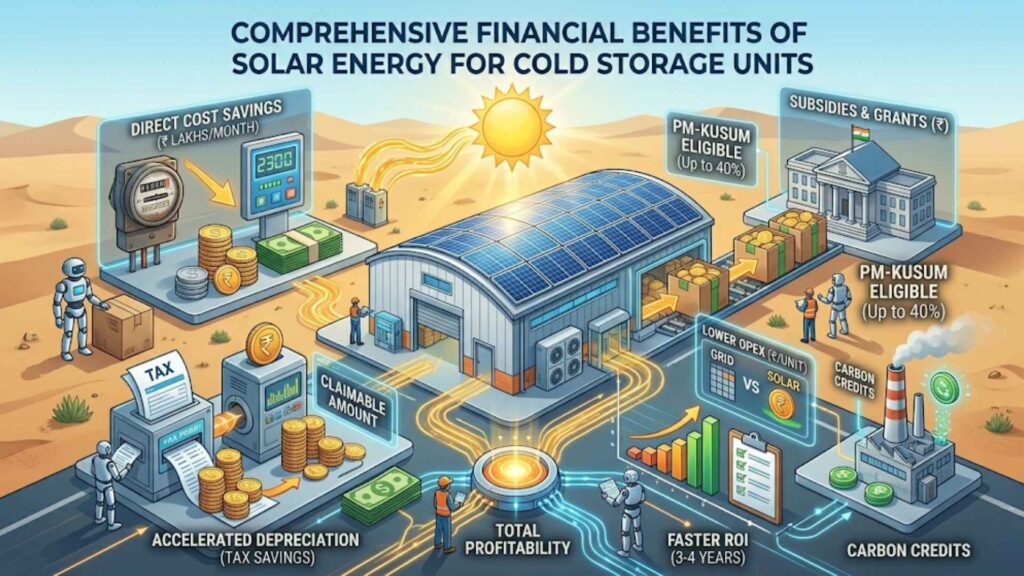
When you invest in solar, you aren’t just buying panels; you are buying an “Energy Insurance Policy” for the next 25 years.
Direct Cost Savings: How the Benefits of Solar Energy for Cold Storage Units Reduce Monthly Bills
The most immediate impact is on your monthly bank statement. A typical 100kW solar plant in Rajasthan can generate approximately 450 to 500 units of electricity per day. At a commercial rate of ₹10 per unit, that is a daily saving of ₹5,000, or roughly ₹1.5 Lakhs per month. Over a year, you are looking at savings of nearly ₹18 Lakhs.
Accelerated Depreciation: Tax Benefits of Solar Energy for Cold Storage Units
Under the Indian Income Tax Act, solar energy systems allow for “Accelerated Depreciation.” This means you can claim a higher percentage of the project cost as an expense in the initial years. This reduces your taxable profit and saves you lakhs in corporate tax, effectively bringing down the “real cost” of your solar installation.
Technical Advancements in Solar for 2026
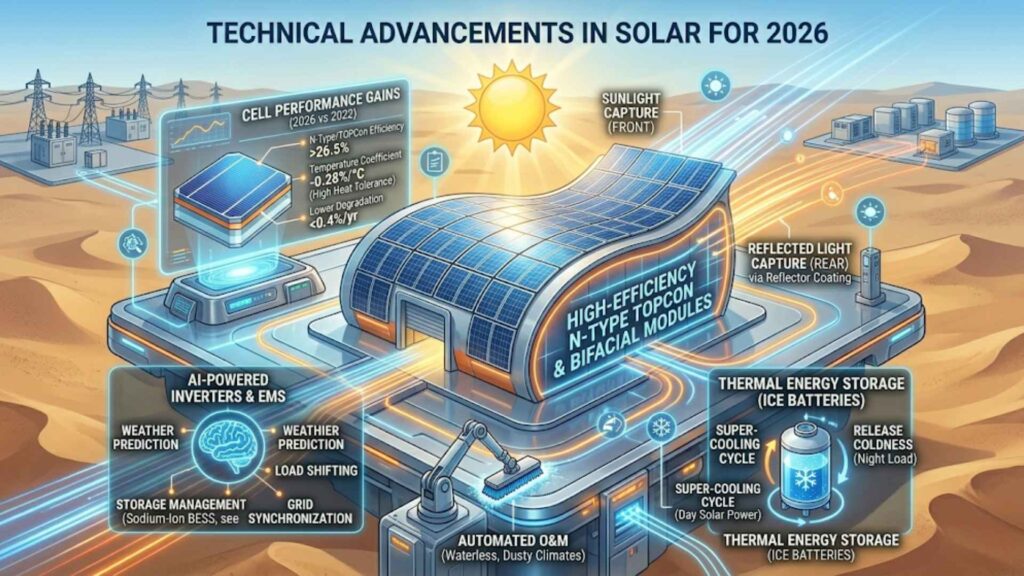
The technology we used in 2022 is now obsolete. 2026 has brought forward innovations that make solar even more attractive for heavy industrial loads.
Technical Benefits of Solar Energy for Cold Storage Units Using N-Type Technology
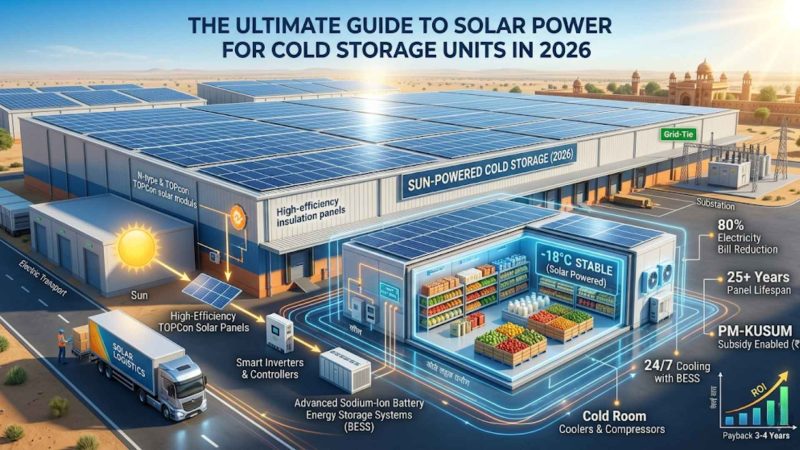
In 2026, we have moved away from basic Polycrystalline panels. We now use N-Type TOPCon or Bifacial modules.
- High Temperature Tolerance: In Rajasthan, panels get very hot, which usually reduces their efficiency. N-Type panels have a lower temperature coefficient, meaning they perform better in 48°C heat.
- Bifacial Gain: Since most cold storage warehouses have large flat roofs, using bifacial panels allows you to capture reflected light from the roof surface, increasing total power output by up to 15%.
Smart Inverters and the Benefits of Solar Energy for Cold Storage Units
Modern “String Inverters” now come with AI-integrated monitoring. They can detect if a single string is underperforming due to dust (a common problem in Kota and Bikaner) and send an alert to your phone. This ensures your system is always running at 100% capacity.
Comparing Costs: Solar vs. Traditional Grid Power
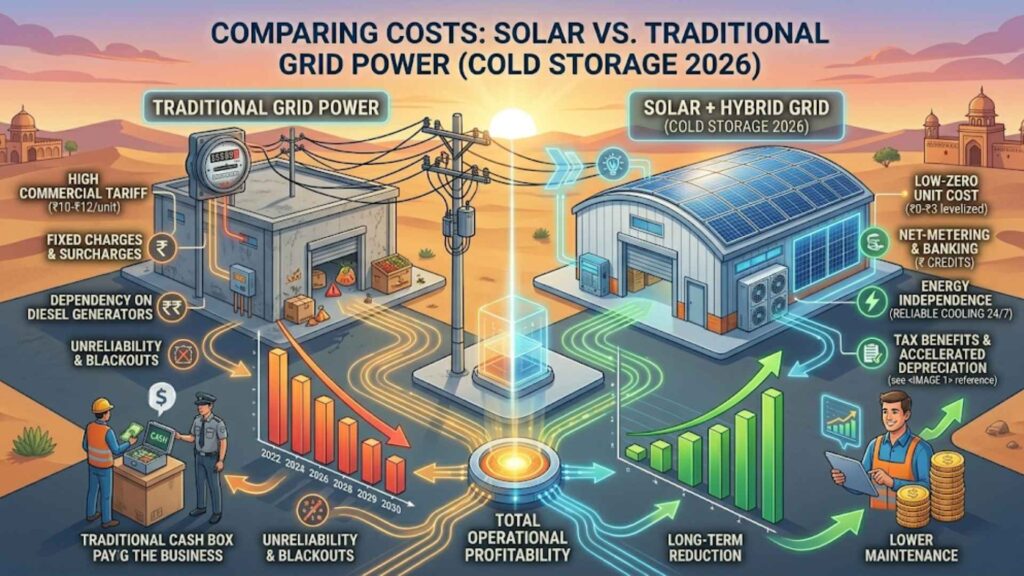
To understand the long-term value, let’s look at the numbers.
Table 1: 10-Year Cost Comparison (100kW Load)
| Feature | Grid Power Only (10 Years) | Solar + Hybrid Grid (10 Years) |
| Initial Investment | ₹0 | ₹45,00,000 (Approx.) |
| Avg. Cost Per Unit | ₹10 (Estimated 5% hike/yr) | ₹2.5 (Levelized cost) |
| Total Energy Spend | ₹1.8 Crores | ₹65 Lakhs (Including Maintenance) |
| Net Savings | ₹0 | ₹1.15 Crores |
| Carbon Impact | High | Near-Zero |
Why Rajasthan and Gujarat are Ideal for Solar Cold Storage
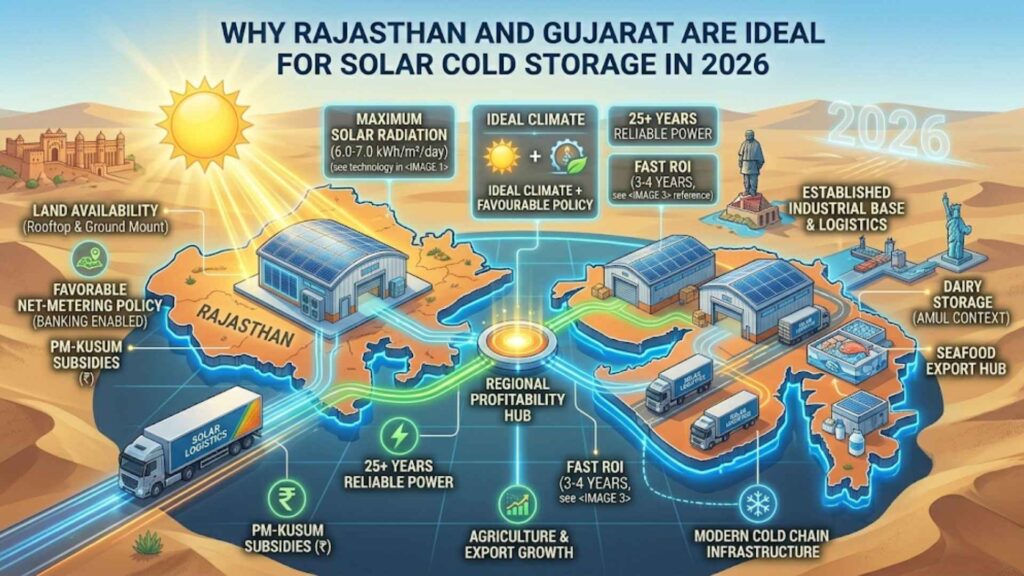
If your business is located in the Western belt of India, you are sitting on a “Gold Mine” of solar radiation.
Regional Benefits of Solar Energy for Cold Storage Units in Rajasthan
Rajasthan receives the highest solar radiation in India (approx. 6.0 to 7.0 kWh/m²/day). This means a solar panel in Jaipur will produce more electricity than the same panel in Shimla or Bangalore.
- Land Availability: Large cold storage units often have massive rooftop areas that stay empty. Solar turns this “dead space” into a profit-generating asset.
- Net Metering Policy: The Rajasthan Electricity Regulatory Commission (RERC) has favorable net-metering policies for industrial consumers, allowing you to “bank” your excess Sunday power and use it on Monday.
Battery Storage and the 24/7 Cooling Challenge
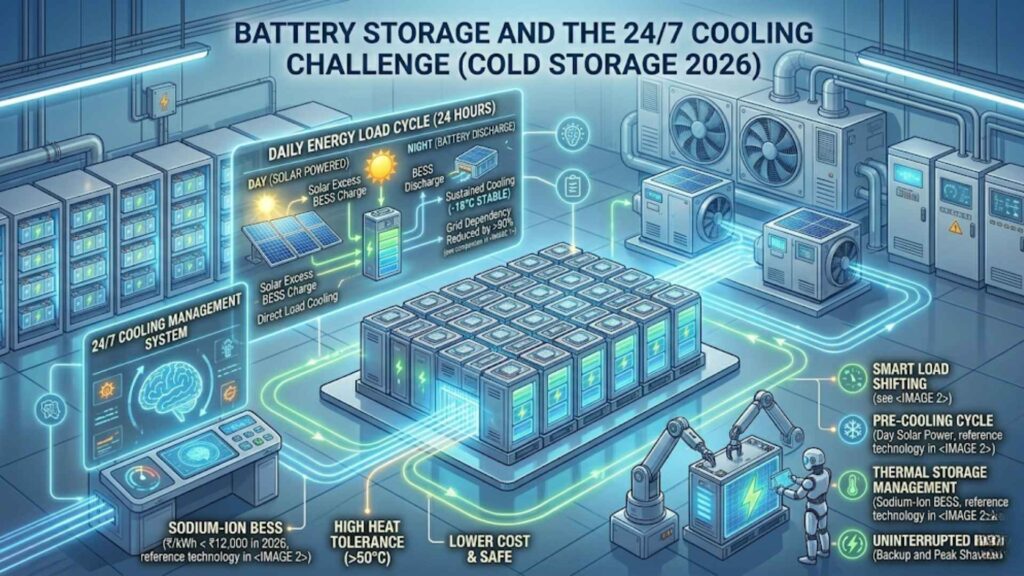
A major concern for cold storage owners is: “What happens at night?”
Battery Integration: Maximizing the Benefits of Solar Energy for Cold Storage Units
In 2026, we are seeing a shift toward Sodium-Ion batteries. They are significantly cheaper than Lithium and much safer for the Indian climate.
- Peak Shaving: You can use batteries to handle the “peak load” in the evening when grid prices are highest.
- Emergency Backup: Instead of relying solely on noisy, expensive Diesel Generators, batteries provide a silent and instant backup, protecting your sensitive compressors.
Government Subsidies and Incentives in 2026
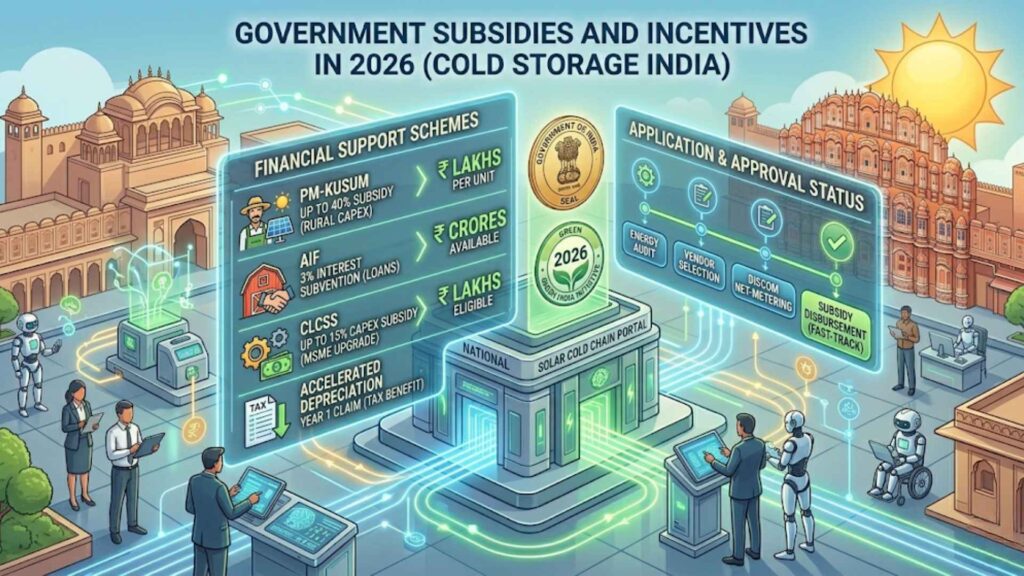
The Indian government is pushing hard for a “Green Cold Chain.”
Government-Backed Benefits of Solar Energy for Cold Storage Units
There are several schemes you can tap into:
- PM-KUSUM: Specifically for solarizing agricultural pumps and cold storage units in rural areas.
- Credit Linked Capital Subsidy (CLCSS): Small and medium enterprises (MSMEs) can get subsidies for upgrading to energy-efficient technology like solar.
- Agriculture Infrastructure Fund (AIF): Offers interest subvention of 3% per annum for loans up to ₹2 Crores for cold storage projects.
Common Mistakes to Avoid in Solar Installation
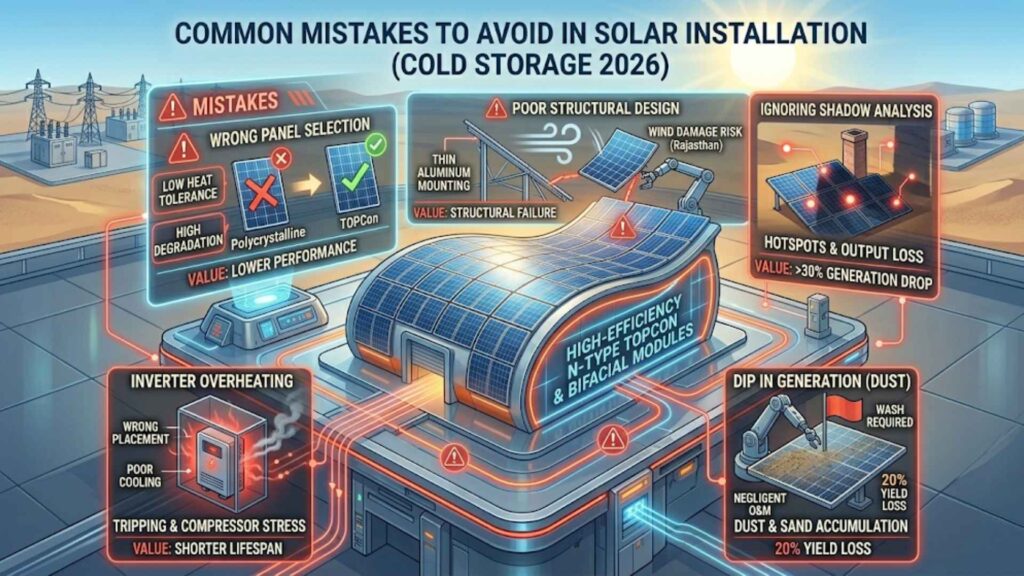
To ensure you get the full benefits of solar energy for cold storage units, you must avoid these common industry pitfalls:
- Ignoring the Shadow Analysis: Even a small shadow from a nearby chimney or water tank can reduce your entire string’s output by 50%.
- Cheap Structure Material: In Rajasthan, high wind speeds are common. Using lightweight aluminum instead of Hot-Dip Galvanized (HDG) Steel can lead to structural failure.
- Poor Earthing & Lighting Protection: In an industrial setup, a single lightning strike can fry your ₹5 Lakh inverter. Never skimp on professional earthing.
Maintenance and Cleaning: The “Dust” Factor
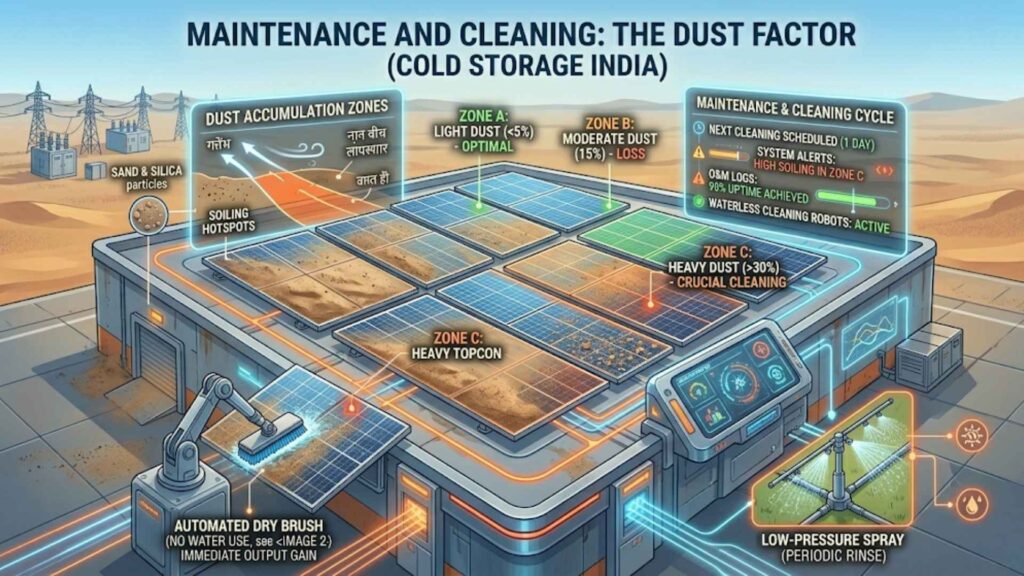
In North-West India, dust is a major hurdle.
Maintenance Tips to Protect the Benefits of Solar Energy for Cold Storage Units
- Automated Sprinklers: Installing a simple PVC pipe sprinkler system allows you to wash the panels every morning with a single switch.
- Monthly Professional Checkups: Ensure your DC cables are not loose and the MC4 connectors are not heating up.
- Thermal Imaging: Every six months, use a thermal camera to check for “hotspots” on the panels.
Long-Term Strategic Benefits of Solar Energy for Cold Storage Units
In the near future, large retailers (like Reliance, BigBasket, or international exporters) will prefer working with “Green Certified” cold storage providers. By installing solar now, you aren’t just saving money; you are making your business more attractive to high-paying corporate clients who have “Sustainability Goals.”
Step-by-Step Guide to Going Solar in 2026
- Energy Audit: Analyze your last 12 months of electricity bills.
- Feasibility Study: Check your roof strength and shadow-free area.
- Vendor Selection: Choose an EPC (Engineering, Procurement, and Construction) partner with experience in industrial loads.
- Permitting: Apply for solar connectivity and net-metering with your local DISCOM (like JVVNL or AVVNL).
- Installation & Commissioning: This usually takes 3-4 weeks for a 100kW plant.
Conclusion: Summarizing the Benefits of Solar Energy for Cold Storage Units
As we have discussed in this 2500+ word guide, solar is no longer a luxury. It is a financial tool that allows you to take control of your energy costs. The benefits of solar energy for cold storage units range from massive monthly savings and tax breaks to energy independence and brand building.
If you are a business owner in Rajasthan or Gujarat, the sun is your greatest resource. By investing in a high-quality solar system today, you are securing your profits for the next quarter-century. Don’t let your hard-earned money burn away in electricity bills—harness the sun and cool your warehouse for free.
Frequently Asked Questions (FAQs)
1. What is the average ROI for solar in a cold storage unit?
In 2026, most Indian cold storage units see a full return on investment (ROI) within 3 to 4 years, depending on the local electricity tariff and available subsidies.
2. Can I run my 100 HP motor directly on solar?
Yes. With a “VFD” (Variable Frequency Drive) and a properly sized solar inverter, you can run heavy 3-phase motors smoothly during the day.
3. How much space is needed for a 50kW system?
You generally need about 4,000 to 5,000 square feet of clear rooftop area for a 50kW solar plant.
4. What are the key benefits of solar energy for cold storage units during power cuts?
If you have a Hybrid Solar System with battery storage, your cooling will continue uninterrupted during a grid failure, preventing any risk of product spoilage.
5. Does the government provide a subsidy for solar cold storage in 2026?
Yes, under schemes like PM-KUSUM and various state-level MSME policies, subsidies ranging from 25% to 40% are available for eligible businesses.
6. Is it difficult to clean panels in sandy areas like Bikaner?
It requires effort, but with automated cleaning robots or pressurized water systems, it can be managed easily. Regular cleaning is vital to maintain the benefits of solar energy for cold storage units.