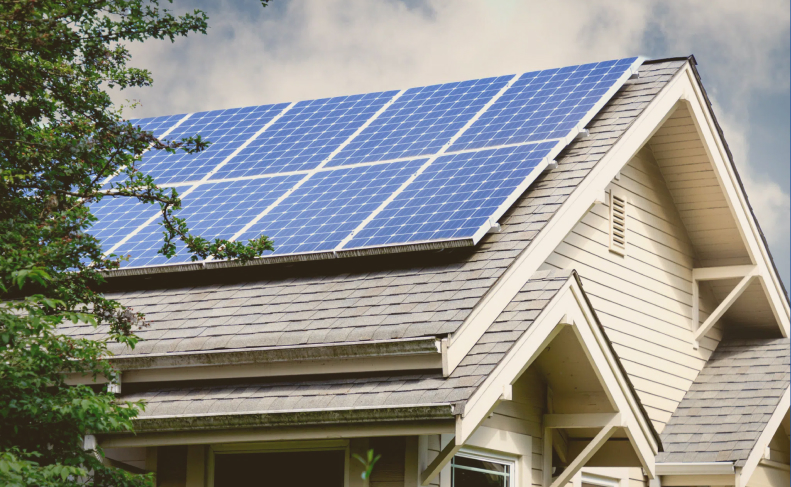

Electricity bills in India are rising every year, and for a typical middle-class family living in a 2-3 BHK home or a villa, the summer months can be particularly harsh on the wallet. If you are running multiple air conditioners, geysers, and heavy appliances, a 5kW solar system is often the perfect “sweet spot.” However, to ensure maximum efficiency and long-term savings, pairing your panels with the Best 5kW solar inverters for residential use is critical. A high-quality inverter bridges the gap between small entry-level systems and large commercial setups, offering enough power to run a modern Indian household almost entirely on free energy from the sun.
Why a 5kW Solar System is the Sweet Spot for Indian Homes
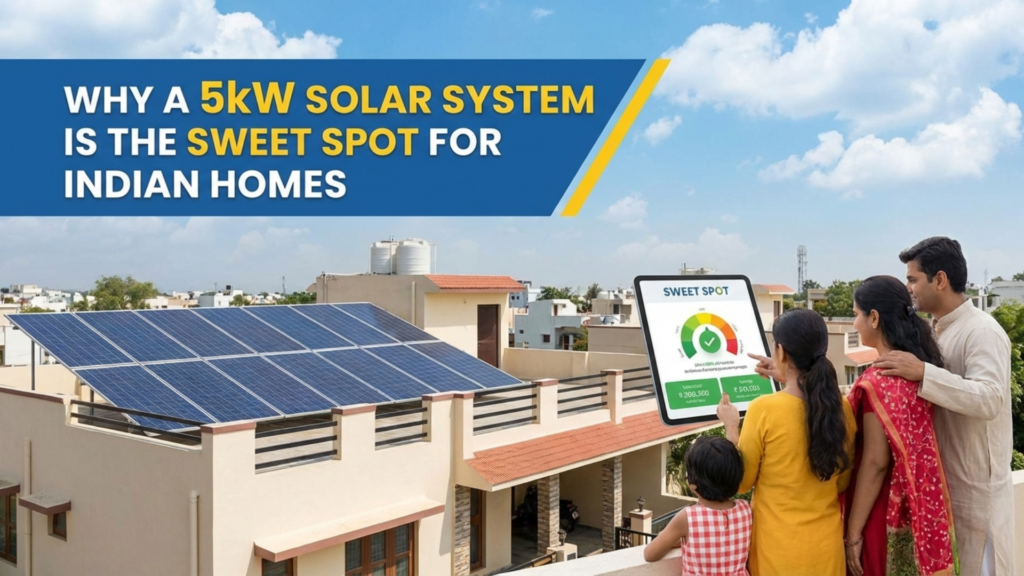
Before diving into the technicals, it is crucial to understand why 5kW is such a popular choice in India. A 1kW or 3kW system might cover basic lighting and fans, but it often struggles when you switch on a 1.5-ton AC.
A 5kW system, however, is a powerhouse.
- Daily Generation: In Indian weather conditions (considering 300 sunny days), a 5kW system generates approximately 20 to 25 units (kWh) of electricity per day.
- Monthly Output: This translates to 600–750 units per month, which comfortably covers the average bill of ₹5,000 to ₹8,000.
- Load Capacity: It can easily support:
- 2 x 1.5 Ton Inverter ACs (during peak sun hours)
- Refrigerator (Double door)
- Washing Machine & Microwave
- Lights, Fans, and TV
- Water Pump (1 HP)
If your monthly electricity consumption hovers around 500-700 units, upgrading to a 5kW system allows you to potentially zero out your electricity bill through net metering.
Best 5kW Solar Inverters for Residential Use
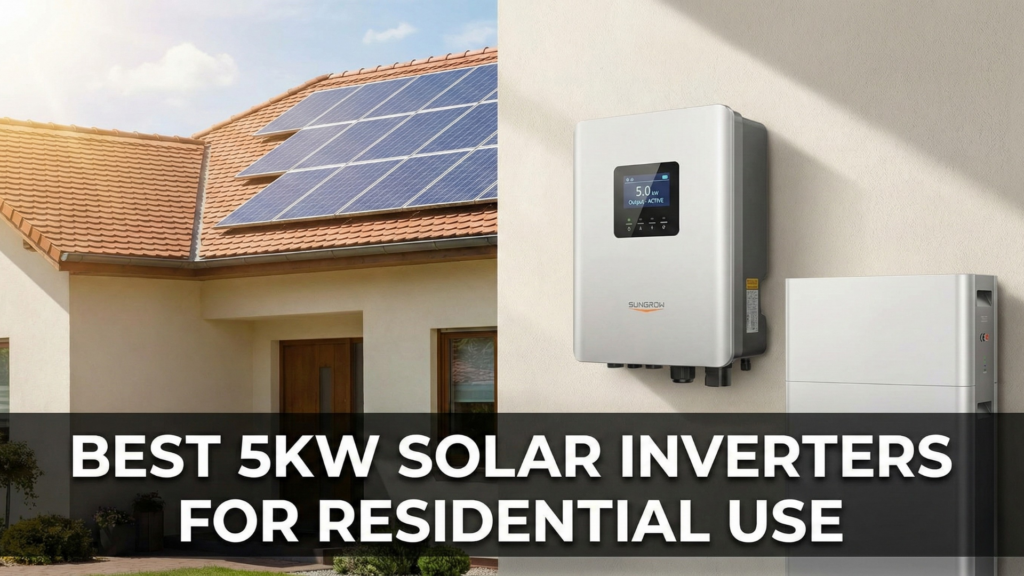
The solar inverter is the brain of your system. While panels collect sunlight, the inverter converts that DC energy into the AC electricity your home appliances need. Choosing the wrong inverter can lead to efficiency losses of up to 15-20%.
When searching for the Best 5kW solar inverters for residential use, you generally have two main categories in India:
- String Inverters: The most common and affordable.
- Micro-inverters: More expensive but offer panel-level optimization (great for shaded roofs).
Top Features to Look for in the Best 5kW Solar Inverters for Residential Use
- Efficiency: Look for >97% efficiency.
- MPPT Trackers: Dual MPPTs are essential if your roof faces two different directions (e.g., East and West).
- Warranty: Standard warranty is 5-10 years, extendable to 20.
- Connectivity: Wi-Fi monitoring apps are now standard to track generation on your phone.
Table 1: Comparison of Top 5kW Solar Inverters in India (2025 Edition)
| Brand & Model | Technology | Efficiency | Warranty | Approx. Price (₹) | Best For |
| SolarEdge SE5000H | HD-Wave (Optimizer) | 99.2% | 12-25 Years | ₹95,000 – ₹1,10,000 | Shadow-prone roofs; Maximum safety |
| Growatt MIN 5000 | String (Dual MPPT) | 98.4% | 5-10 Years | ₹45,000 – ₹55,000 | Budget-friendly residential use |
| Luminous NXI 5kW | On-Grid (MPPT) | 97.5% | 5 Years | ₹50,000 – ₹60,000 | Reliable service network in Tier 2/3 cities |
| Sungrow SG5K-D | String (Dual MPPT) | 98.4% | 5-10 Years | ₹55,000 – ₹65,000 | High efficiency & smart monitoring |
| Microtek M-Sun | Hybrid/Off-Grid | 95% | 2 Years | ₹55,000 – ₹70,000 | Areas with frequent power cuts (Requires batteries) |
Note: Prices fluctuate based on the vendor and location. Always ask for the latest manufacturing date when buying an inverter.
Components & Cost Breakdown of a 5kW System
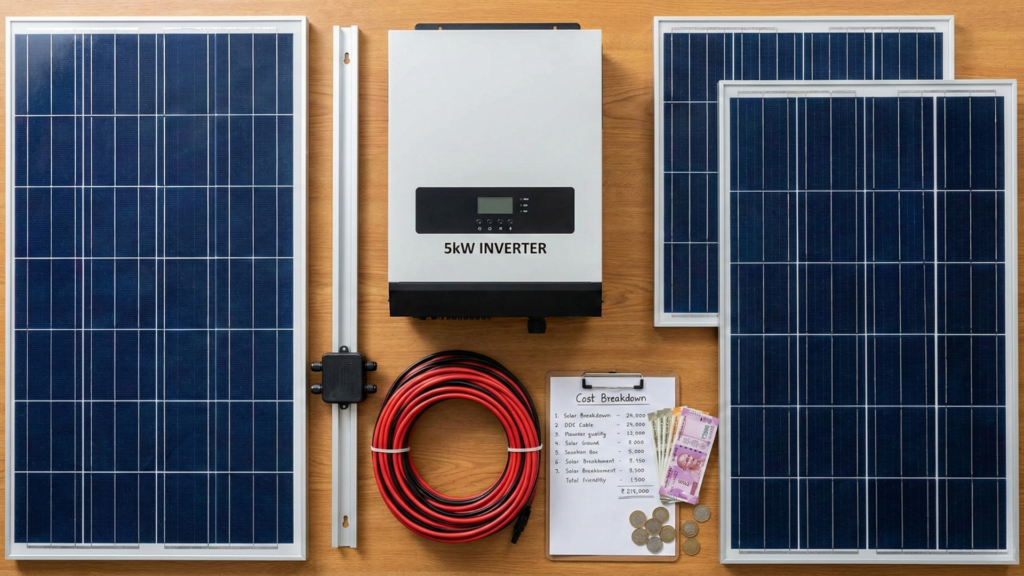
Many homeowners are confused about the price gap between “quoted price” and “final price.” The total cost depends heavily on whether you choose Polycrystalline (older, blue, cheaper) or Mono-PERC/Bifacial (newer, black, high efficiency) panels.
For a robust 5kW setup in India, you will typically require roughly 400-500 sq. ft. of shadow-free roof area.
Detailed Price Analysis
The average market price for a 5kW On-Grid Solar System in India ranges from ₹2,60,000 to ₹3,50,000 before subsidy.
Table 2: Estimated Cost Breakdown (5kW On-Grid System)
| Component | Specifications | Estimated Cost (₹) | Share of Total Cost |
| Solar Panels | Bifacial / Mono-PERC (550W x 9-10 panels) | ₹1,40,000 – ₹1,60,000 | ~50% |
| Solar Inverter | 5kW On-Grid (Dual MPPT) | ₹50,000 – ₹70,000 | ~20% |
| Mounting Structure | Galvanized Iron (GI) – Elevated | ₹25,000 – ₹40,000 | ~10% |
| BOS (Balance of System) | AC/DC Boxes, DC Cables, Earthing Kit, Lightning Arrestor | ₹25,000 – ₹30,000 | ~10% |
| Installation & Paperwork | Net Metering Liasoning, Labor | ₹20,000 – ₹30,000 | ~10% |
| Total (Pre-Subsidy) | Standard Quality Setup | ₹2,60,000 – ₹3,30,000 | 100% |
Understanding the PM Surya Ghar Muft Bijli Yojana Subsidy
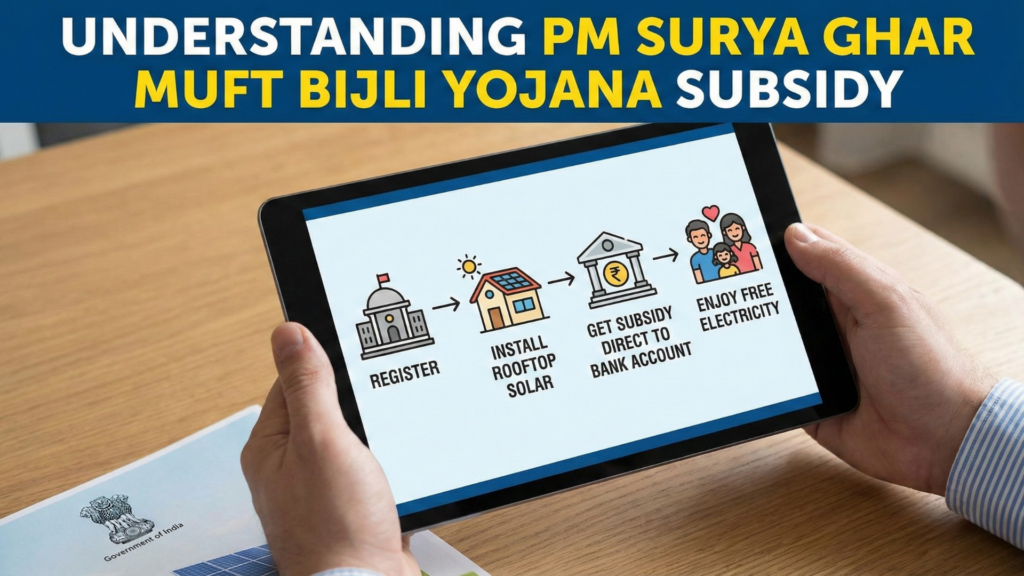
The game-changer for Indian solar adoption in 2024-25 is the PM Surya Ghar Muft Bijli Yojana. This central government scheme has simplified the subsidy process significantly.
How the Subsidy Works for 5kW
Unlike previous percentage-based models, the new scheme offers a fixed flat subsidy for systems above 3kW.
- Subsidy Amount: For a 5kW system, you are eligible for a fixed subsidy of ₹78,000.
- Eligibility: You must use “DCR” (Domestic Content Requirement) panels—meaning the solar cells and modules must be Made in India. Imported panels do not qualify for the subsidy.
- Process:
- Register on the PM Surya Ghar portal.
- Select an empaneled vendor.
- After installation and net-meter setup, the subsidy is credited directly to your bank account within 30 days.
Effective Cost Calculation:
If your vendor quotes ₹2,80,000 for the system:
- (-) Subsidy: ₹78,000
- = Final Cost to You: ₹2,02,000
Power Generation & Return on Investment (ROI)

Is spending ₹2 lakhs worth it? When evaluating the Best 5kW solar inverters for residential use, you are ultimately looking for financial savings. A 5kW system is an asset that pays for itself.
The Financial Logic
Let’s assume an electricity tariff of ₹8 per unit (a common tier-slab average in states like Maharashtra, Karnataka, and Delhi).
Table 3: ROI & Savings Analysis (5kW System)
| Metric | Calculation | Value |
| Daily Generation | 5kW x 4-5 hours peak sun | 20 – 25 Units |
| Monthly Generation | 22 Units x 30 Days | ~660 Units |
| Yearly Generation | 660 Units x 12 Months | ~8,000 Units |
| Annual Savings | 8,000 Units x ₹8/unit | ₹64,000 per year |
| System Cost (Post-Subsidy) | Estimated Average | ₹2,10,000 |
| Payback Period (ROI) | Cost / Annual Savings | ~3.2 Years |
| Lifetime Savings (25 Years) | (25 yrs – 3.2 yrs) x ₹64k | ~₹14,00,000+ |
Conclusion on ROI: You break even in just over 3 years. For the remaining 21+ years of the system’s life, your electricity is essentially free. This is a tax-free return on investment of over 30%, which beats any Fixed Deposit or Mutual Fund.
Maintenance Guide for Panels and Best 5kW Solar Inverters for Residential Use

While solar systems are often sold as “install and forget,” longevity requires some attention.
- Cleaning is Key: In dusty Indian cities, a layer of dust can reduce generation by 15%. Clean your panels with water and a soft mop every 2 weeks (or weekly in summer).
- Inverter Care: As discussed in the section on Best 5kW solar inverters for residential use, the inverter is the most sensitive component. Ensure it is installed in a shaded, ventilated area. Heat is the enemy of electronics.
- Structure Checks: Check the Galvanized Iron (GI) structure for rust once a year, especially before the monsoon season.
- Warranty Contracts:
- Panels: Usually have a 25-year performance warranty (output won’t drop below 80%).
- Inverter: 5 to 10 years comprehensive warranty.
- Workmanship: Ask your installer for a 5-year service warranty to cover loose wiring or net-metering issues.
Conclusion: Choosing the Best 5kW Solar Inverters for Residential Use
Installing a 5kW solar system is arguably one of the safest and most profitable home improvements an Indian homeowner can make in 2025. It not only insulates you from future electricity rate hikes but also contributes significantly to a greener planet.
The key to a successful installation lies in component selection. Do not compromise on the inverter. Choosing one of the Best 5kW solar inverters for residential use—like those from SolarEdge, Sungrow, or Luminous—ensures that the power you generate is efficiently converted and not wasted.
Next Steps for You:
- Check your electricity bill to confirm if your monthly usage is between 500-700 units.
- Register on the PM Surya Ghar portal to secure your ₹78,000 subsidy.
- Get quotes from at least 3 local vendors specifying “Mono-PERC Bifacial panels” for maximum efficiency.
Frequently Asked Questions (FAQ)
Q1: Can a 5kW solar system run an Air Conditioner?
A: Yes, absolutely. A 5kW system can easily run two 1.5-ton inverter ACs simultaneously during sunny hours. However, for night usage, you rely on the grid (Net Metering) or batteries (if off-grid).
Q2: What is the price of the best 5kW solar inverters for residential use in India?
A: Prices vary by technology. A standard string inverter (like Growatt or Luminous) costs between ₹45,000 and ₹60,000. Premium micro-inverters or optimizer-based inverters (like Enphase or SolarEdge) can cost upwards of ₹90,000.
Q3: Is the ₹78,000 subsidy available for all 5kW systems?
A: The subsidy is available only for On-Grid Residential systems that use DCR (Domestic Content Requirement) solar modules. Commercial installations or systems using imported panels are not eligible for the PM Surya Ghar subsidy.
Q4: How much roof space do I need for a 5kW system?
A: You need approximately 450 to 500 square feet of shadow-free area. If you use high-efficiency Bifacial panels (550W+), you can reduce the space requirement slightly as you will need fewer panels (approx. 9-10 panels).
Q5: On-Grid vs. Hybrid: Which is better for a 5kW setup?
A: If you live in a city with rare power cuts, On-Grid is best because it is cheaper and practically maintenance-free. If you face frequent power outages, you must choose a Hybrid inverter with batteries, as standard On-Grid systems shut down during power cuts for safety.