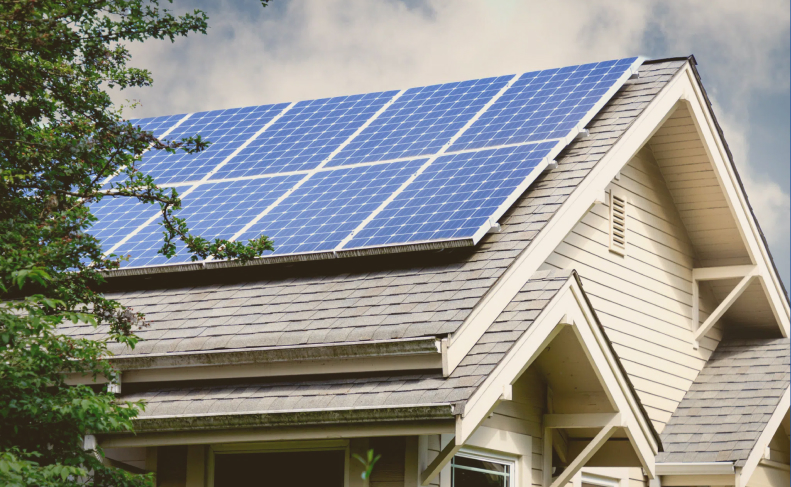

Investing in solar energy is one of the smartest decisions a homeowner can make. You are lowering your carbon footprint and saving significantly on electricity bills. However, like any investment, your solar system requires maintenance to perform at its peak. If you have noticed a slight dip in energy production, the culprit might simply be dust, pollen, or bird droppings. Learning how to clean solar panels properly is essential for maintaining the efficiency of your system. While rain does a fair job of washing away loose dirt, it isn’t enough to get rid of stubborn grime that blocks sunlight.
In this ultimate guide, we will walk you through everything you need to know about how to clean solar panels safely and effectively at home, ensuring you get the maximum power output from your investment.
Why You Need to Know How to Clean Solar Panels
Before we dive into the methods, it is important to understand why cleaning is necessary. Solar panels work by allowing light into the solar cells. The more light that hits the panel, the more power it generates.
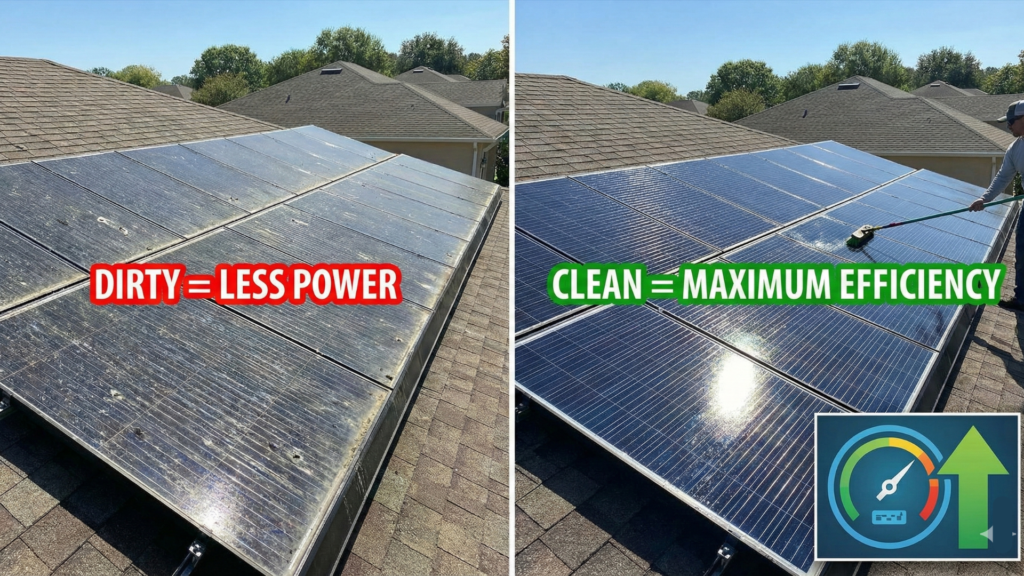
When dust, leaves, water spots, and bird droppings accumulate on the surface, they create shading. Even a small amount of shading on a single solar cell can impact the energy output of the entire panel—and sometimes the entire string of panels.
The Impact of Dirt on Efficiency
Research suggests that dirty solar panels can lose anywhere from 5% to 25% of their efficiency. In areas with high pollution, dust storms, or infrequent rain, this loss can be even higher. By learning how to clean solar panels correctly, you are essentially putting money back into your pocket by restoring that lost efficiency.
When is the Best Time to Clean Solar Panels?
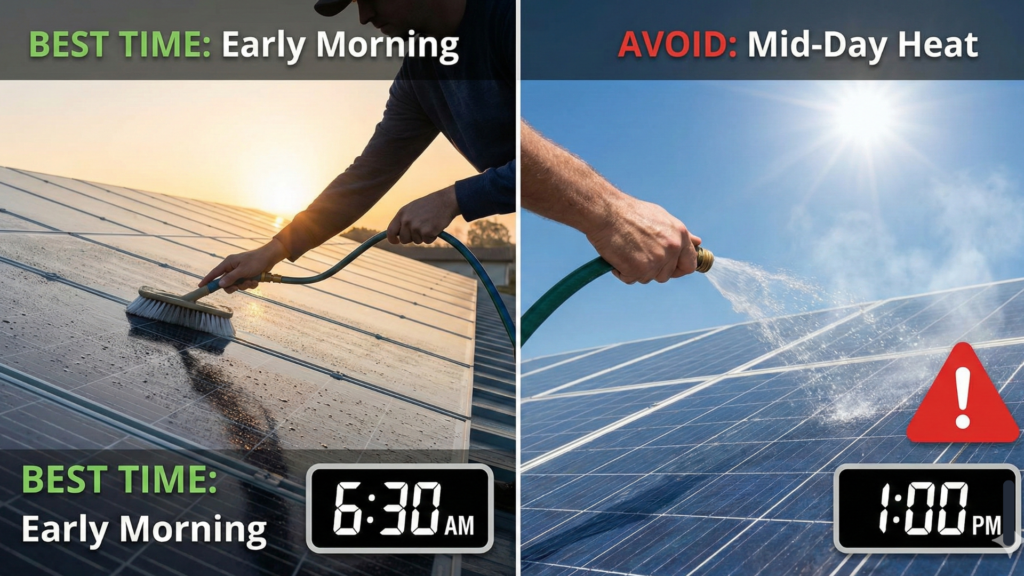
Timing is critical when maintaining your solar array. You cannot simply go up on the roof whenever you feel like it.
1. Time of Day
The golden rule of solar cleaning is to clean them early in the morning or late in the evening.
- Avoid Mid-Day Heat: During the day, solar panels absorb heat and can reach extremely high temperatures. If you spray cold water on a hot panel, the sudden temperature change can cause “thermal shock,” leading to the glass cracking.
- Evaporation Issues: Cleaning in the hot sun causes water to evaporate quickly, leaving behind mineral deposits and smears that can block more light than the dust you removed.
2. Seasonal Considerations
- Spring: This is a great time to clean off winter grime and pollen to prepare for the high-production summer months.
- Autumn: Cleaning in the fall removes leaves and debris that may have accumulated.
Safety First: Pre-Cleaning Checklist
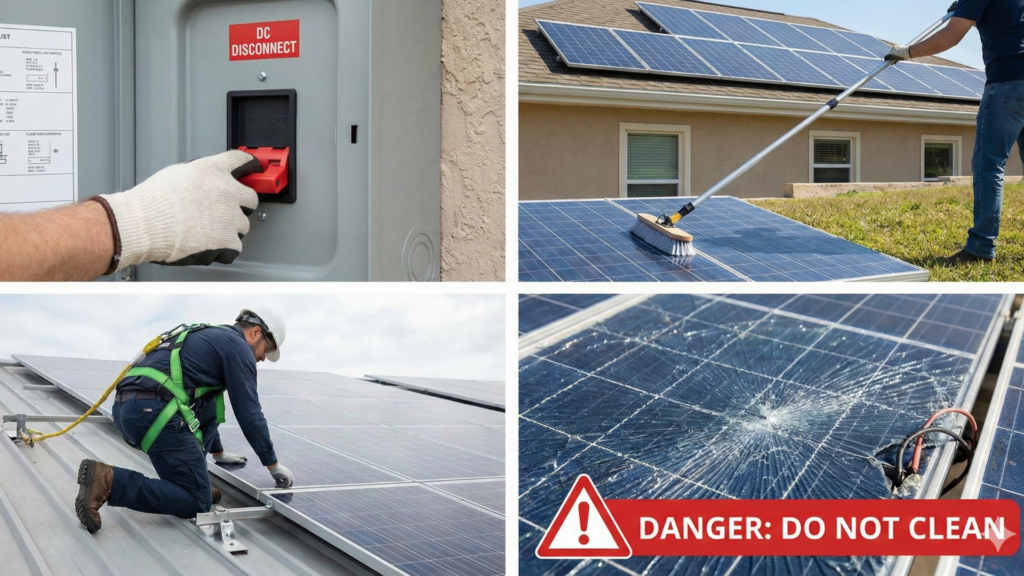
Safety is the absolute priority. Cleaning solar panels often involves climbing ladders and working on sloped roofs. Before you attempt to learn how to clean solar panels, ensure you have checked these safety boxes.
- Shut Down the System: Always follow the manufacturer’s guide to shut down the solar system before cleaning. This usually involves turning off the DC disconnect switch.
- Work from the Ground if Possible: If you can reach your panels with a long-handled extension brush from the ground, do not climb on the roof.
- Use Safety Gear: If you must go on the roof, wear a safety harness and non-slip shoes.
- Check for Damage: Before applying water, visually inspect the panels for cracked glass or exposed wiring. If you see damage, do not clean them; call a professional immediately.
Equipment You Need for Solar Panel Cleaning
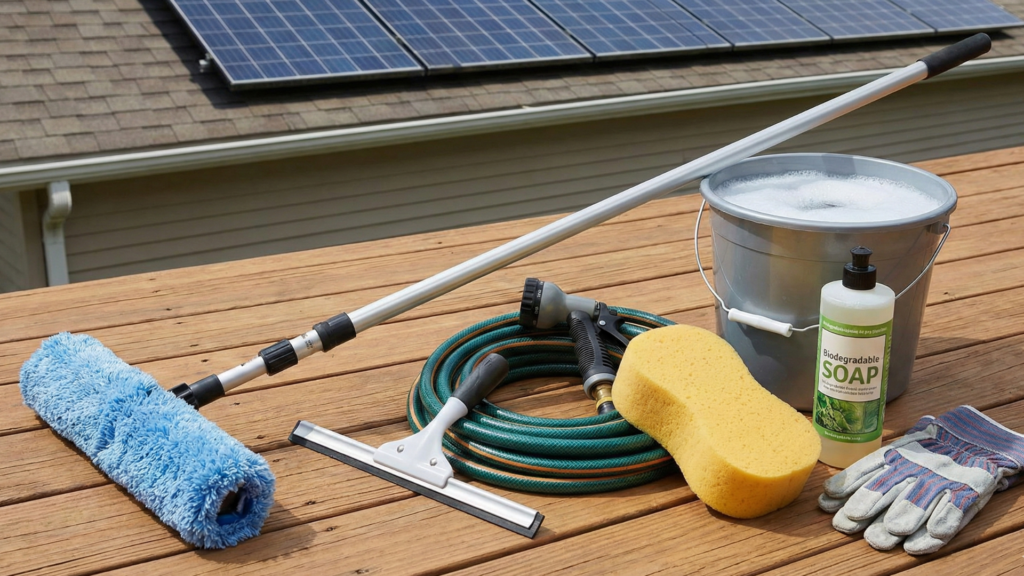
You don’t need expensive industrial equipment. in fact, keeping it simple is often safer for the panels.
| Tool | Purpose | Recommendation |
| Extension Pole | Reaching panels without climbing. | Lightweight aluminum or fiberglass. |
| Soft Brush/Sponge | Scrubbing without scratching. | Non-abrasive microfiber or soft bristle. |
| Squeegee | Removing water to prevent spots. | Plastic blade (avoid metal frames). |
| Water Hose | Rinsing the panels. | Standard garden hose (low pressure). |
| Cleaning Solution | Breaking down grease/grime. | Plain water or mild, biodegradable soap. |
Warning: Never use a high-pressure power washer. The force can damage the seals around the glass and force water into the electrical components.
How to Clean Solar Panels: A Step-by-Step Guide
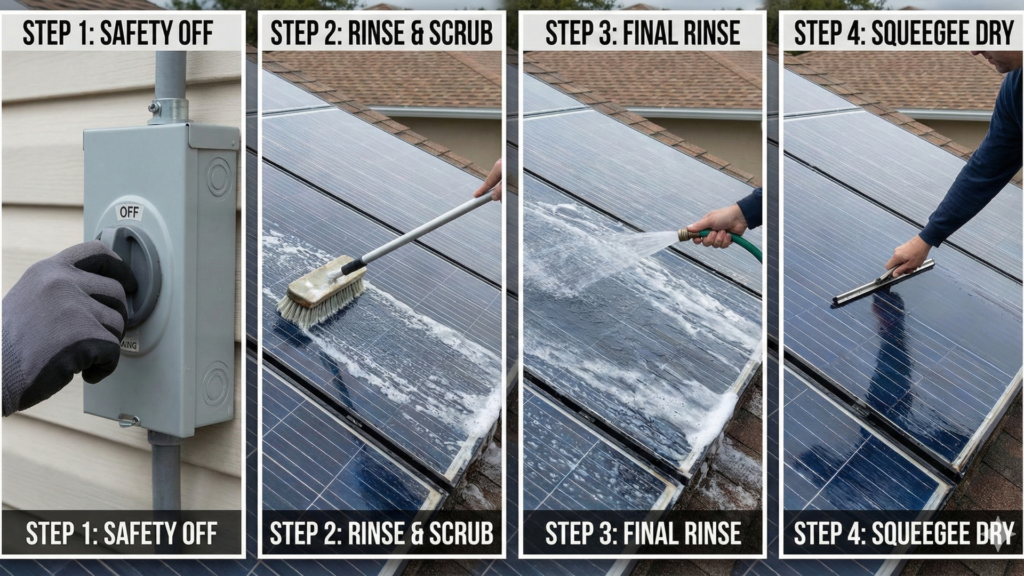
Now, let’s get to the core of the guide. Follow these steps to clean your panels effectively without causing damage.
Step 1: Turn Off Your Solar System
As mentioned in the safety section, ensure the system is off. This protects you from electrical shock and protects the equipment.
Step 2: Rinse with Clean Water
Start by spraying the panels with a garden hose. This initial rinse will remove loose dust, leaves, and dirt. For many homeowners, a simple rinse is enough. If the panels still look dirty, proceed to the next step.
- Pro Tip: If you have hard water (water high in mineral content), consider using a filter attached to your hose or using distilled water for the final rinse to avoid calcium spots.
Step 3: Mix Your Cleaning Solution
If you need soap, mix a small amount of mild, non-abrasive dish soap with water in a bucket. Do not use harsh chemicals, bleach, or heavy detergents, as these can strip the anti-reflective coating on the glass.
Step 4: Gently Scrub the Panels
Dip your soft brush or sponge into the soapy water. Gently scrub the glass surface. Focus on areas with bird droppings or stuck-on pollen.
- Technique: Use long, sweeping strokes. Do not press too hard. Let the soap do the work.
- Caution: Never use abrasive pads (like steel wool) or harsh scrubbing brushes. Solar glass is durable but can be scratched, which permanently reduces efficiency.
Step 5: Rinse Thoroughly
Once you have scrubbed the grime away, hose down the panels again to remove all soap suds. Any remaining soap residue can attract dirt, making the panels get dirty faster.
Step 6: Dry the Panels (Optional but Recommended)
If you let the panels air dry, water spots may form. Use a squeegee on an extension pole to wipe the water off. This ensures a streak-free finish that allows maximum sunlight penetration.
Common Mistakes to Avoid When Learning How to Clean Solar Panels
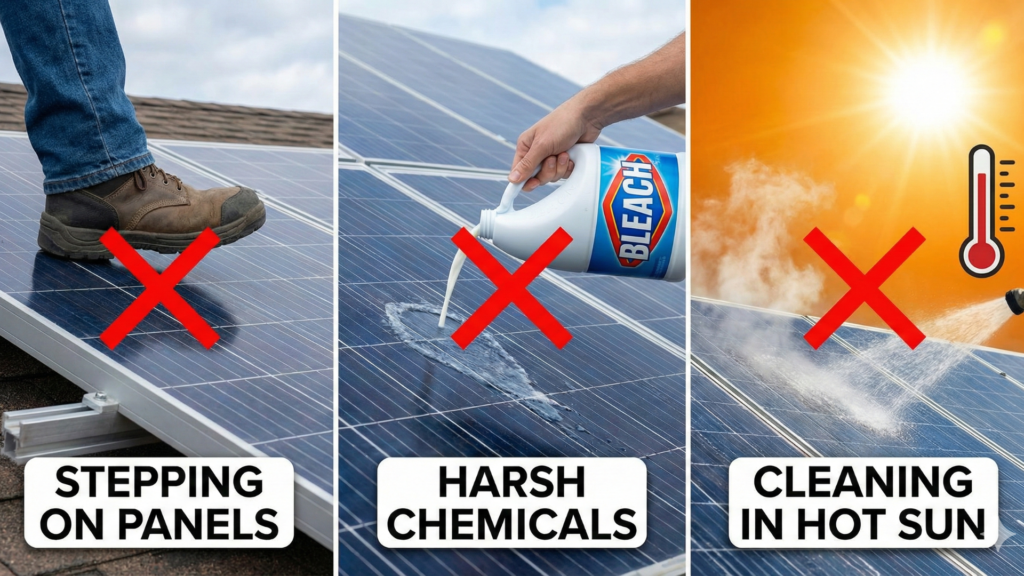
When learning how to clean solar panels, knowing what not to do is just as important as knowing what to do.
1. Stepping on the Panels
Solar panels are designed to withstand snow and wind loads, not the concentrated weight of a human foot. Stepping on them can cause micro-cracks in the solar cells that aren’t visible to the naked eye but will severely degrade performance over time.
2. Using Harsh Chemicals
Vinegar, ammonia, and industrial glass cleaners are generally too harsh for solar panels. They can damage the delicate anti-reflective coating or the aluminum frame. Stick to water and mild soap.
3. Cleaning During Peak Sun
As discussed, cleaning hot panels leads to rapid evaporation and potential glass breakage. Always wait for the cool parts of the day.
A Guide on How Often to Clean Solar Panels
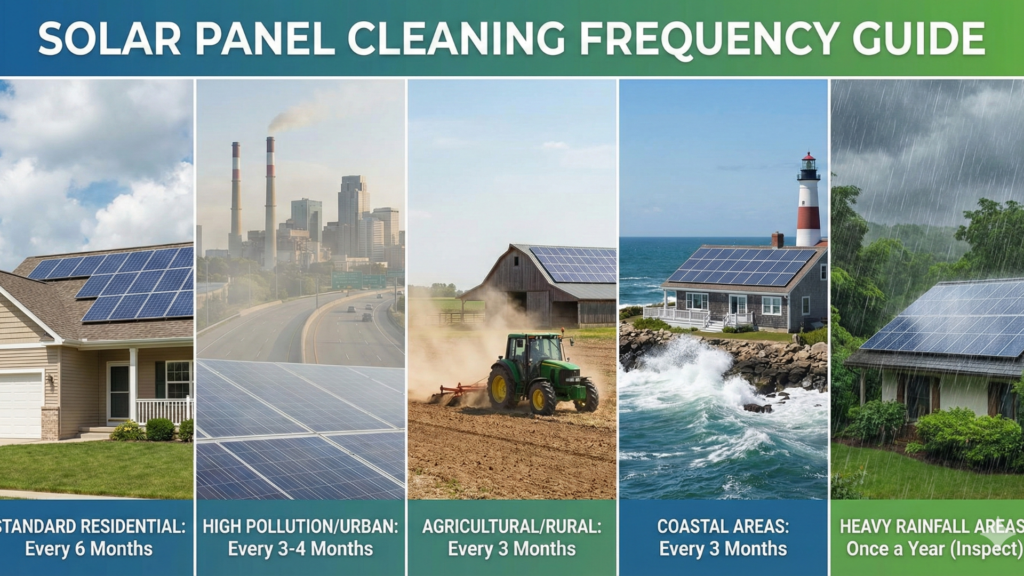
How often should you perform this task? It depends heavily on your environment. Use the table below to determine your schedule.
| Environment Type | Characteristics | Recommended Frequency |
| Standard Residential | Moderate dust, regular rainfall. | Every 6 months (Spring & Fall). |
| High Pollution/Urban | Near highways, factories, or airports. | Every 3 to 4 months. |
| Agricultural/Rural | High dust, pollen, and farming debris. | Every 3 months. |
| Coastal Areas | Salt mist accumulation. | Every 3 months (to prevent corrosion). |
| Heavy Rainfall Areas | Frequent rain naturally cleans panels. | Once a year (check for moss/debris). |
Hiring Professionals vs. DIY Options for How to Clean Solar Panels
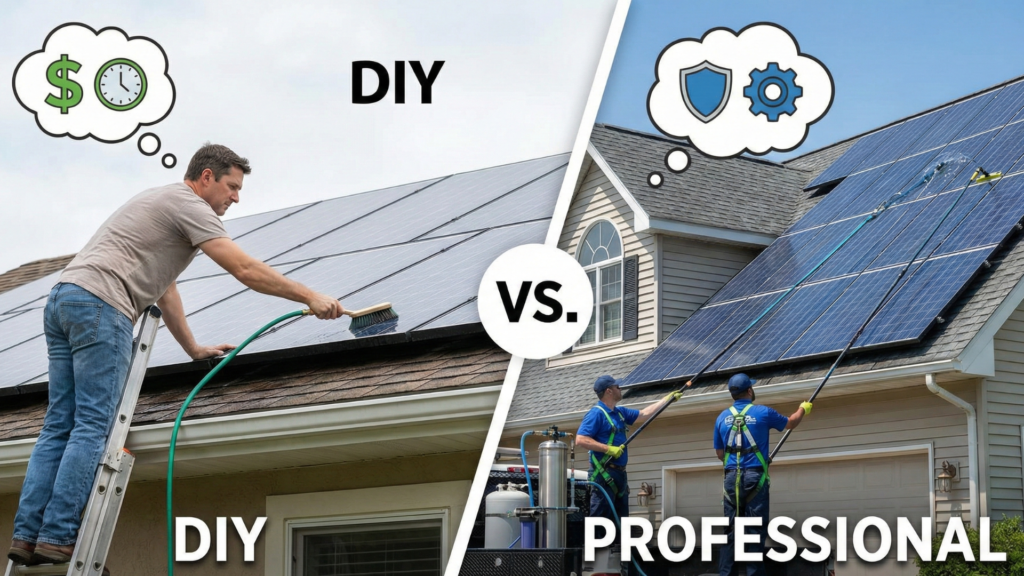
You have learned how to clean solar panels yourself, but should you? Here is a quick comparison to help you decide.
The DIY Route
- Pros: It is free (minus the cost of a brush/hose) and you can do it on your own schedule.
- Cons: It carries safety risks (falling from ladders), requires purchasing equipment, and you risk damaging the panels if done incorrectly.
The Professional Route
- Pros: Professionals use de-ionized water systems (spot-free), have insurance, and can spot system damages you might miss. They have the safety gear to handle steep roofs.
- Cons: It costs money. Prices vary, but you might pay anywhere from ₹150 to ₹500 per panel.
Recommendation: If you have a one-story house and a flat roof, DIY is a great option. If you have a steep, two-story roof or are uncomfortable with heights, the cost of a professional is worth the safety assurance.
Conclusion: Final Thoughts on How to Clean Solar Panels
Maximizing the return on your solar investment doesn’t require complex engineering; it just requires a bit of maintenance. By understanding how to clean solar panels safely—using the right tools, the right timing, and the right techniques—you can ensure your system continues to produce clean, free energy at maximum capacity for decades.
Remember, the goal is to let the light in. Whether you choose to grab a hose and do it yourself or hire a local expert, keeping those panels sparkling is the key to energy independence.
Are you ready to boost your solar efficiency? Check your weather forecast, grab your soft brush, and give your panels the care they deserve this weekend!
Frequently Asked Questions (FAQ) About How to Clean Solar Panels
Q1: Can I use vinegar to clean my solar panels?
A: It is generally not recommended. While vinegar is a great household cleaner, it is acidic and can potentially damage the aluminum frame or the anti-reflective coating on the glass over time. It is safer to use mild dish soap and water when learning how to clean solar panels.
Q2: Do solar panels need cleaning in winter?
A: Generally, no. Snow usually slides off on its own (taking dirt with it). However, if snow accumulates and blocks the panels for days, you may want to use a soft roof rake to gently pull the snow off to restore production.
Q3: Is rain enough to clean solar panels?
A: Rain is helpful, but it isn’t a deep clean. Think of your car windshield; if you leave it for months, rain will clear some dirt, but a film of grime will remain. The same applies to solar panels. A manual clean is needed to remove sticky pollen and bird droppings.
Q4: Will cleaning my solar panels void the warranty?
A: Usually, no—provided you do it correctly. However, if you use high-pressure washers or walk on the panels and cause damage, that will likely void the warranty. Always check your specific manufacturer’s manual regarding how to clean solar panels to stay compliant.
Q5: How much efficiency do I lose if I don’t clean them?
A: On average, homeowners lose about 5-10% efficiency due to dirt. However, in dry, dusty climates or areas with heavy bird activity, efficiency losses can reach up to 25%.