Installing a solar energy system is one of the smartest financial investments a homeowner can make. You have taken the step to reduce your carbon footprint and slash your electricity bills. However, simply installing the panels is not enough. To ensure your system operates at peak efficiency for the next 25 to 30 years, understanding solar panel maintenance is critical.
Many homeowners operate under the misconception that solar panels are “set it and forget it.” While they are durable and require less care than a car or an HVAC system, neglect can lead to significant efficiency drops. Dust, debris, bird droppings, and potential electrical issues can silently eat away at your energy savings.In this ultimate guide, we will cover everything you need to know about solar panel maintenance, from cleaning schedules and safety tips to cost analysis and troubleshooting.
Why Is Routine Solar Panel Maintenance Crucial?
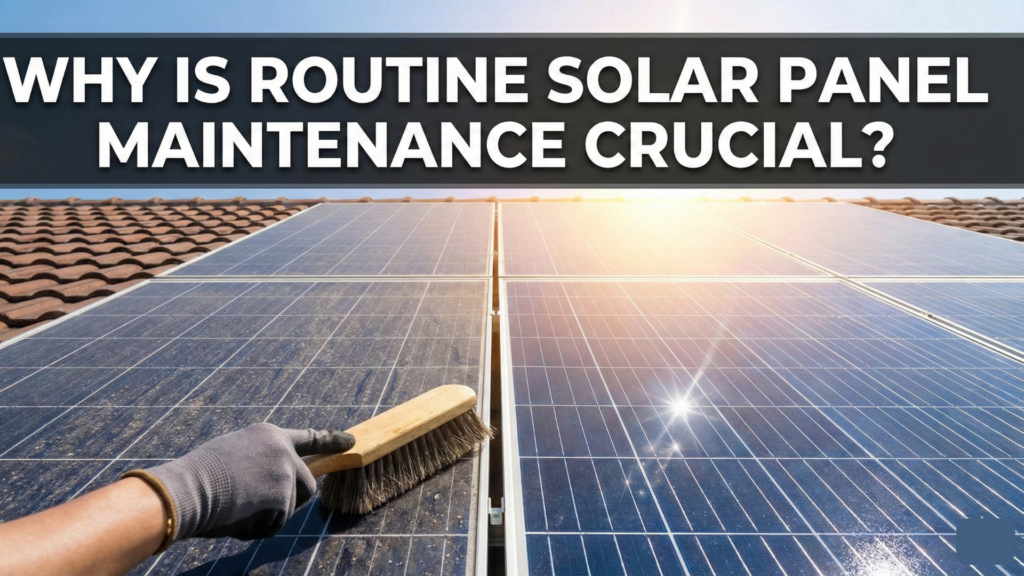
Before diving into the how, it is essential to understand the why. Solar panel maintenance is primarily about protecting your Return on Investment (ROI).
According to the National Renewable Energy Laboratory (NREL), dirty solar panels can lose anywhere from 15% to 25% of their efficiency if not cleaned regularly. This phenomenon, known as “soiling loss,” means your system generates less electricity, forcing you to draw more expensive power from the grid.
Here are the key benefits of a consistent maintenance plan:
- Maximized Energy Production: Clean glass allows more sunlight to reach the photovoltaic cells.
- Extended Equipment Lifespan: Early detection of issues like micro-cracks or loose wiring prevents catastrophic failure.
- Warranty Protection: Many manufacturers require proof of regular solar panel maintenance to honor their warranties.
- Safety: Regular inspections ensure there are no exposed wires or fire hazards.
Your Essential Solar Panel Maintenance Checklist
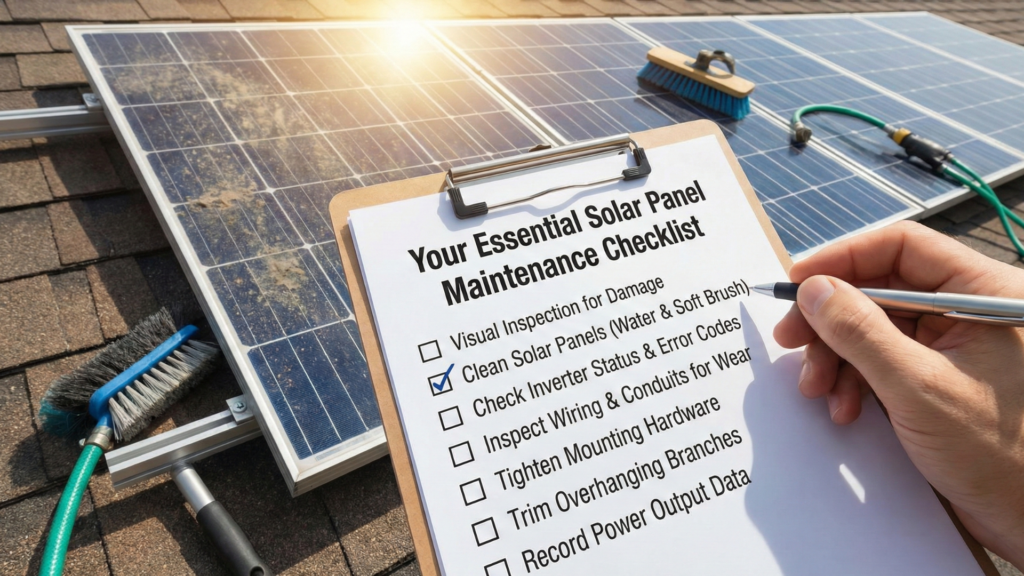
Effective maintenance goes beyond just washing the glass. A complete solar care routine involves inspecting the mechanical and electrical components of the system.
Here is a breakdown of what a thorough solar panel maintenance routine should look like.
1. Visual Inspection
You can do this from the ground. Look for physical damage to the panels, such as cracks or discoloration. Check the racking system to ensure the panels are securely fastened and not sagging.
2. Debris Removal
Leaves, pollen, and bird droppings are the enemies of solar efficiency. If you have trees nearby, your solar panel maintenance schedule must include clearing leaves from under and around the panels to prevent “hotspots” and airflow blockage.
3. Inverter and Electrical Checks
The inverter is the brain of your system. Check the display for error codes. Ensure all conduit and wiring are intact and haven’t been chewed on by squirrels or rodents.
Table 1: Recommended Solar Panel Maintenance Schedule
To keep things organized, use this schedule to plan your maintenance tasks.
| Frequency | Maintenance Task | DIY or Professional? |
| Weekly | Monitor energy output via your solar app. Look for sudden drops in production. | DIY |
| Monthly | Visual inspection from the ground. Check for heavy dust buildup or debris accumulation. | DIY |
| Quarterly | Wash panels if you live in a high-dust or low-rain area. Check inverter status lights. | DIY / Pro |
| Annually | Full solar panel maintenance inspection. Includes electrical testing, wire management check, and deep cleaning. | Professional |
| Post-Storm | Immediate visual check after hail, hurricanes, or heavy snowstorms. | DIY |
DIY vs. Professional Solar Panel Maintenance
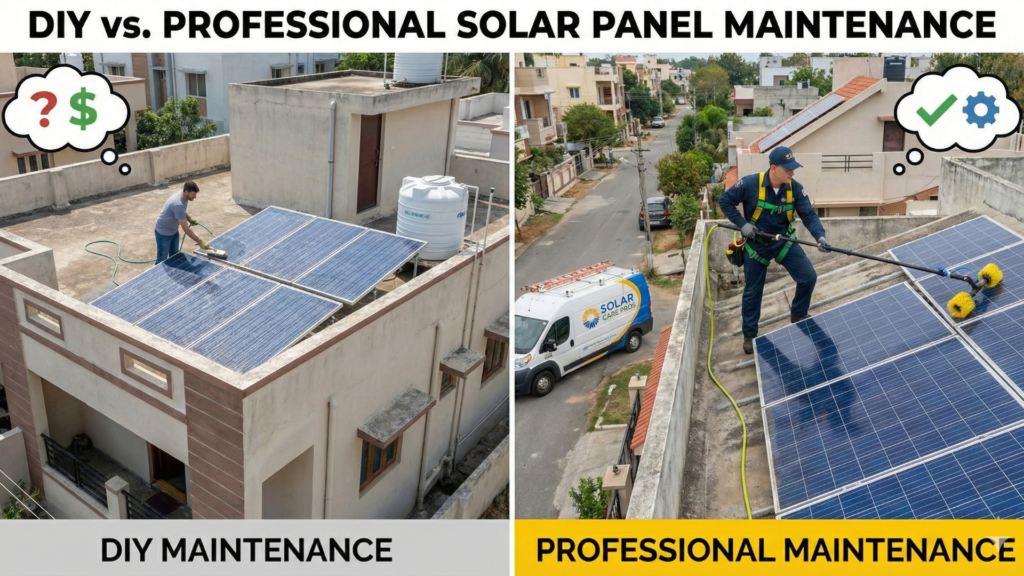
One of the most common questions homeowners ask is whether they should handle solar panel maintenance themselves or hire a pro. The answer depends on your roof pitch, your physical ability, and the complexity of the job.
The Case for DIY Maintenance
If you have a one-story home with a flat or low-pitch roof, DIY cleaning is manageable. It saves money and allows you to keep a close eye on your investment. However, you must prioritize safety. Never walk on the panels, and avoid using harsh chemicals.
The Case for Professional Services
For two-story homes, steep roofs, or large arrays, professional solar panel maintenance services are safer and more thorough. Professionals use de-ionized water systems that leave no spots, and they have the electrical tools to test the system’s amperage and voltage, which a homeowner cannot do safely.
How to Perform DIY Solar Panel Maintenance Safely
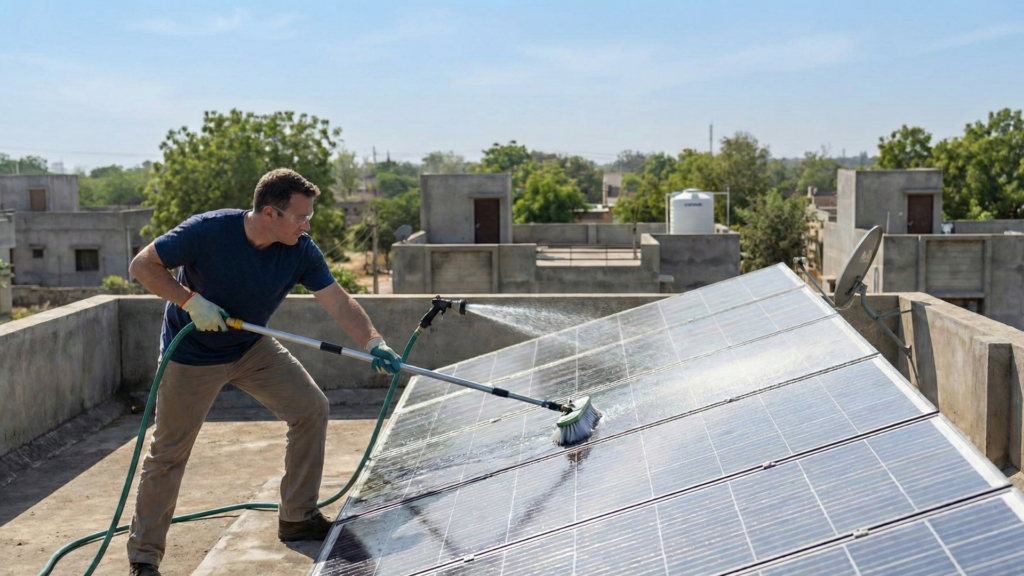
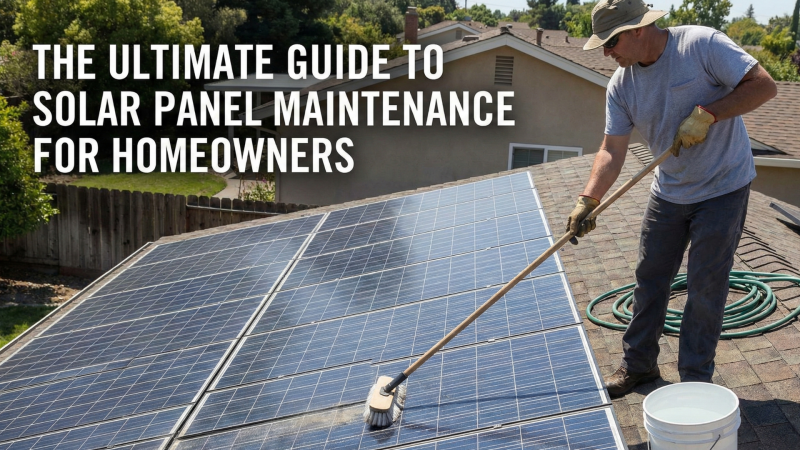
If you decide to clean your panels yourself, following the correct procedure is vital to avoid damaging the glass or voiding your warranty. Follow this step-by-step guide for safe solar panel maintenance.
Step 1: Safety First
Always clean your panels early in the morning or late in the evening. Cleaning hot panels with cold water can cause thermal shock, cracking the glass. Turn off the solar supply at the inverter or breaker box before you begin.
Step 2: Gather the Right Equipment
You do not need expensive machinery. You will need:
- A garden hose with a standard nozzle (Do NOT use a high-pressure washer).
- A soft sponge or a soft-bristle brush with a long extension pole.
- A squeegee.
- A bucket of water mixed with a mild, non-abrasive soap (like dish soap). Note: Many manufacturers recommend water only.
Step 3: Rinse and Scrub
Gently rinse the panels with the hose to remove loose dirt. Dip your brush into the soapy water and gently scrub the glass. Do not press hard. The goal is to remove the layer of grime blocking the light.
Step 4: Final Rinse
Rinse the soap off thoroughly. Any soap residue left behind will attract dirt faster than before.
Step 5: Drying
If accessible, squeegee the panels dry. If not, let them air dry. Monitor your system’s app the next day; you should see an immediate spike in production.
Common Solar Panel Maintenance Issues and Solutions
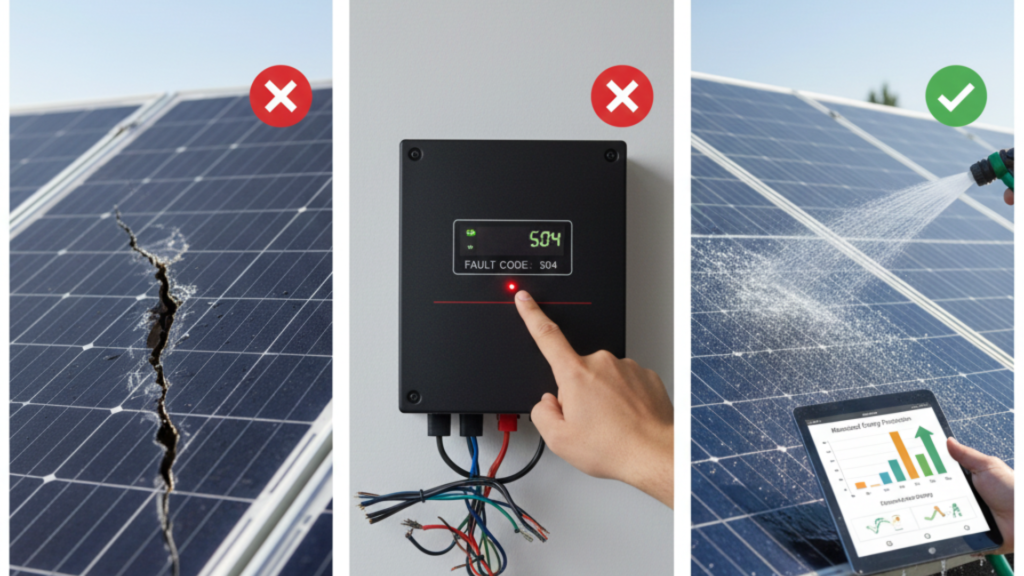
Even with regular cleaning, technical issues can arise. Recognizing these early is a key part of solar panel maintenance.
The most common non-cleaning issue is an inverter failure. Inverters typically have a shorter lifespan (10-15 years) than the panels themselves (25+ years). Another frequent issue is “snail trails”—discoloration on the panel that indicates micro-cracks in the cells.
Table 2: Troubleshooting Common Solar Issues
| Symptom | Potential Cause | Recommended Solution |
| Zero Power Production | Tripped breaker or blown fuse. | Check your main electrical panel and reset the solar breaker. If it trips again, call a pro. |
| Low Power Production (Gradual) | Soiling (Dirt/Pollen). | Perform a standard cleaning as part of your solar panel maintenance routine. |
| Low Power Production (Sudden) | Shading or String Failure. | Check for new tree growth casting shadows. If no shade, a bypass diode may have failed. |
| Inverter Red Light | System Error / Grid Fault. | Record the error code displayed on the screen and consult your manual or installer. |
| Visible Moisture Inside Panel | Seal Failure / Delamination. | This cannot be fixed. The panel usually needs to be replaced under warranty. |
Understanding Solar Panel Maintenance Costs in India
Budgeting for maintenance is part of responsible homeownership. While solar panels are relatively low-cost to maintain, they are not free.
1. Professional Cleaning Costs In India, a standard professional cleaning service typically charges between ₹500 and ₹1,500 per visit for a standard residential system (3kW to 5kW). If you have a larger system, companies might charge around ₹150 to ₹250 per panel.
2. Annual Maintenance Contracts (AMC) Many homeowners prefer an AMC (Annual Maintenance Contract) for peace of mind. A comprehensive AMC in India typically costs between ₹4,000 and ₹8,000 per year for a home system. This usually includes:
- 3 to 4 cleaning visits per year.
- 1 detailed electrical inspection.
- System performance check-ups.
3. Inspection and Repair Costs A one-time electrical inspection by a certified technician might cost between ₹500 and ₹1,500. If a major part like an inverter needs replacement after its warranty period (usually 5-10 years), it can cost anywhere from ₹20,000 to ₹45,000 depending on the brand and capacity.
ROI Check: When calculating the cost, weigh it against the savings. If a dirty system in a dusty city like Jaipur loses ₹5,000 to ₹8,000 worth of generated electricity a year, paying ₹1,000 for a few professional cleanings is a clear net profit.
Conclusion
Solar energy is a robust and reliable technology, but it requires a proactive approach to yield the best results. By implementing a regular solar panel maintenance strategy, you ensure that your system produces clean, free energy for decades to come.
Whether you choose to grab a hose and do it yourself or hire a certified professional, the key is consistency. Keep an eye on your production data, visually inspect your roof after storms, and keep that glass clean. A well-maintained solar system is not just an energy generator; it is a financial asset that increases the value of your home.
Start your maintenance log today, and enjoy the full benefits of the sun!
Frequently Asked Questions (FAQ)
Q1. How often is solar panel maintenance required?
A. generally, you should clean your panels every six months to a year. However, if you live in an area with high pollution, dust storms, or frequent wildfires, you may need to clean them every three months.
Q2. Can I use a pressure washer for solar panel maintenance?
A. No. You should never use a high-pressure washer on solar panels. The intense pressure can force water behind the seals and damage the sensitive photovoltaic cells. A standard garden hose is sufficient.
Q3. Does rain clean my solar panels?
A. Rain helps rinse away loose dust, but it is not a substitute for proper solar panel maintenance. Rain typically does not remove bird droppings, pollen, or grime. In fact, light rain can turn dust into mud, making the panels dirtier.
Q4. Will DIY maintenance void my warranty?
A. Usually, no, as long as you do not damage the system. However, some leasing agreements or specific warranties require proof of professional maintenance. Always check your contract before attempting DIY work.
Q5. How do I know if my solar panels need maintenance?
A. The best indicator is your electricity bill or monitoring app. If you see a significant drop in energy production compared to the same month last year (and the weather is similar), it is likely time for maintenance.