If you are a homeowner in India considering solar power, you have likely heard that the “inverter” is the heart of your solar system. While traditional string inverters have been the standard for years, Microinverter Systems are rapidly gaining popularity for their superior efficiency and safety.
But what exactly is a microinverter system, and is it worth the extra investment for your home? This complete guide breaks down everything you need to know, from how they work to their specific advantages in the Indian climate.
What Are Microinverter Systems?
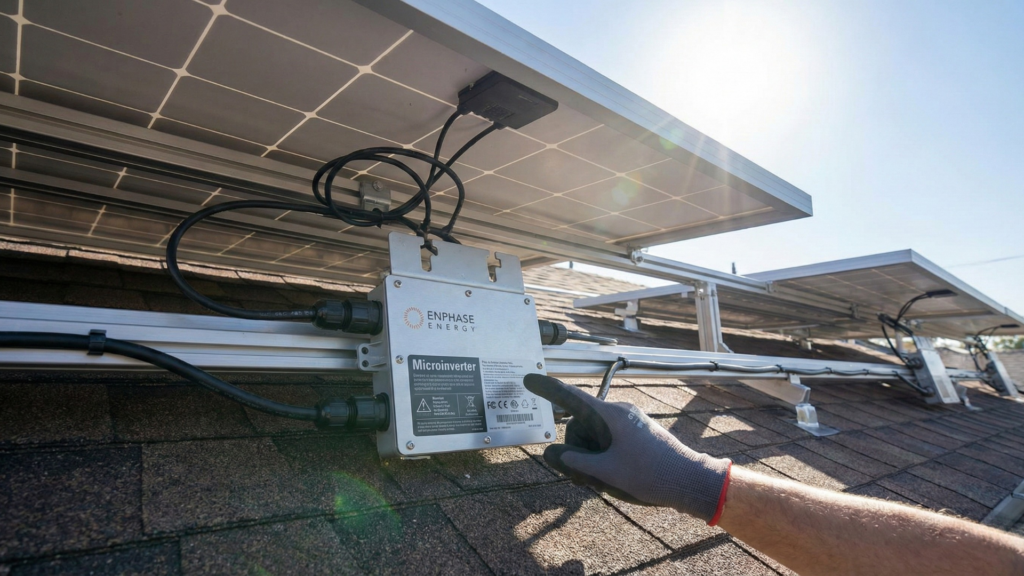
A Microinverter System is a type of solar energy architecture where a small inverter is attached directly to each individual solar panel (or sometimes a pair of panels). Unlike a traditional string inverter system, which connects all your panels to a single large inverter box on your wall, Microinverter Systems decentralize the power conversion process.
In simple terms:
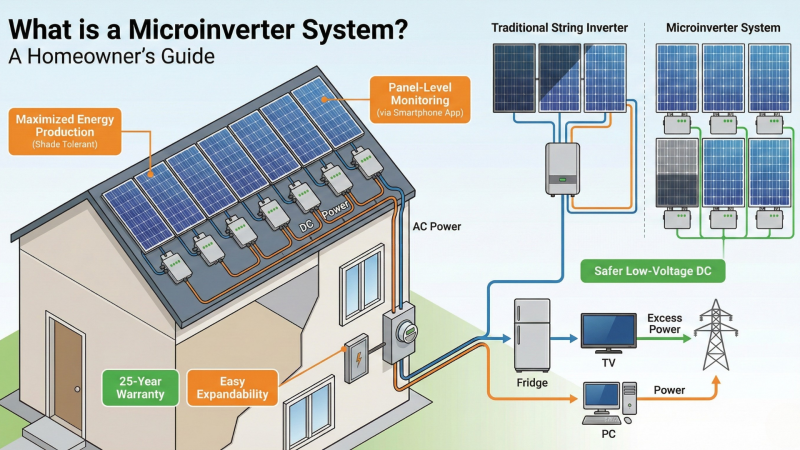
- String Inverters: All panels act like a single chain. If one link (panel) is weak (shaded/dusty), the whole chain suffers.
- Microinverter Systems: Each panel acts independently. If one panel is shaded, the others continue to generate maximum power.
This independence is crucial for Indian homes where rooftops often have shadows from water tanks, nearby buildings, or trees.
How Do Microinverter Systems Work?
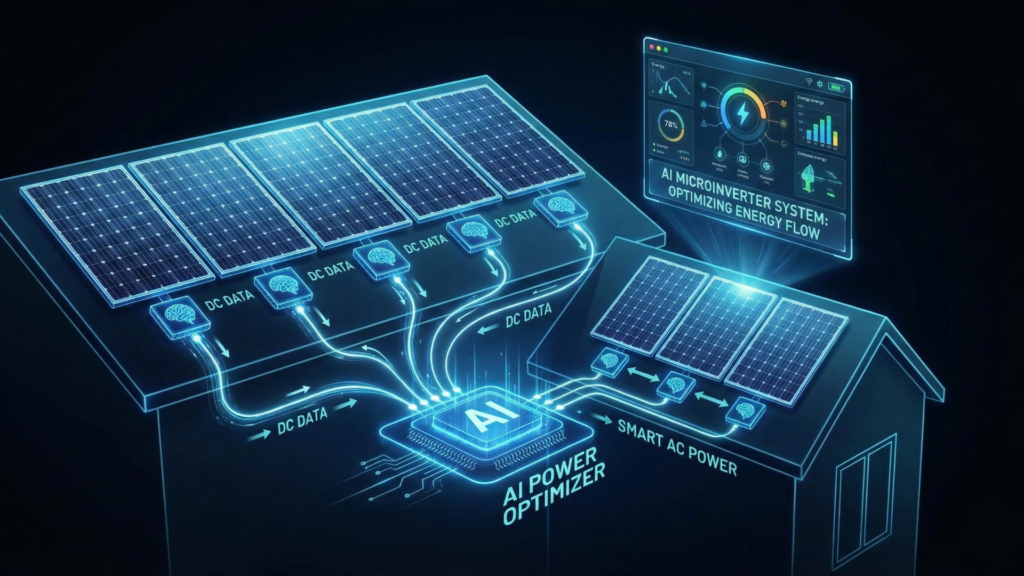
Solar panels generate Direct Current (DC) electricity. However, your home appliances and the power grid run on Alternating Current (AC).
In Microinverter Systems, the conversion from DC to AC happens right on the roof, beneath each solar panel. This means:
- AC Power on the Roof: The electricity traveling down the wires to your home is already safe, usable AC power.
- Maximum Power Point Tracking (MPPT): Each microinverter tracks the solar intensity of its specific panel and optimizes it independently.
Key Components of Microinverter Systems
- The Microinverter Unit: Small devices (about the size of a book) mounted under panels.
- The Gateway/Combiner Box: A communications hub that collects data from each microinverter and sends it to the cloud for monitoring.
- Monitoring App: Software that lets you see exactly how much energy each panel is producing in real-time.
Why Choose Microinverter Systems? (Benefits for Indian Homes)
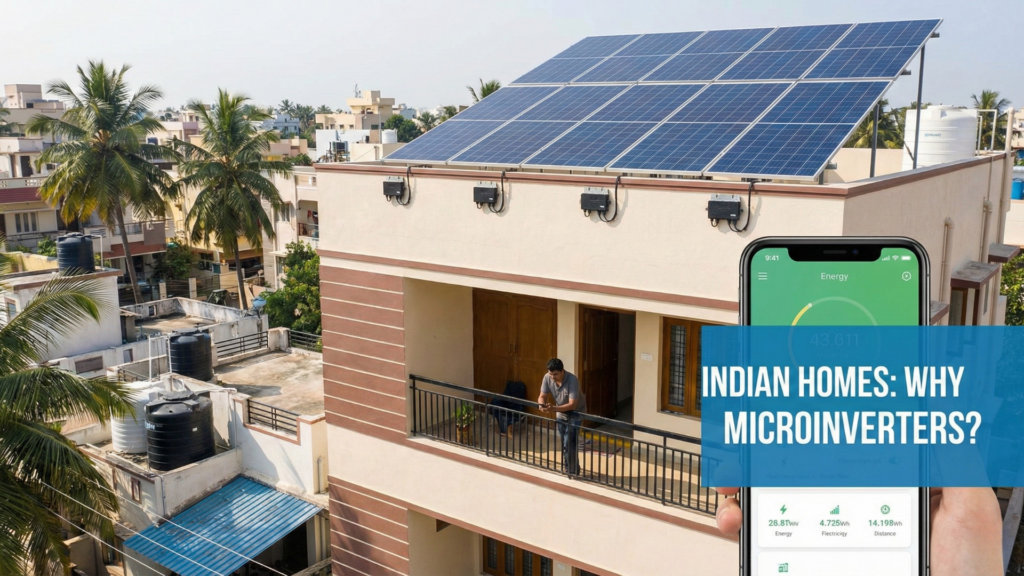
For Indian homeowners, Microinverter Systems offer distinct advantages over older technology.
1. Superior Performance in Shade
India has abundant sunshine, but local obstructions are common. A shadow from a neighbor’s chimney or a mango tree can kill the output of a string inverter system. Microinverter Systems ensure that if one panel is in the shade, the other 9 panels keep running at 100% capacity.
2. Enhanced Safety
In traditional systems, high-voltage DC electricity (often up to 600-1000 Volts) runs across your roof. This creates a risk of DC arc faults, which can lead to fires. Microinverter Systems convert power to AC immediately, keeping the roof voltage much lower and safer for your family and property.
3. Panel-Level Monitoring
With a microinverter, you can track the health of every single panel. If one panel malfunctions or gets covered in bird droppings, the app will tell you exactly which one it is. This is a game-changer for maintenance.
4. Longer Lifespan and Warranty
Traditional string inverters typically last 10-12 years. In contrast, Microinverter Systems are built to last 25 years or more. Leading brands often offer 25-year warranties, matching the lifespan of your solar panels.
5. Easy Expandability
Want to start small with 3kW and upgrade to 5kW later? With string inverters, this is difficult and expensive. With Microinverter Systems, you can simply add more panels and microinverters one by one as your budget allows.
Comparison: Microinverter Systems vs. String Inverters
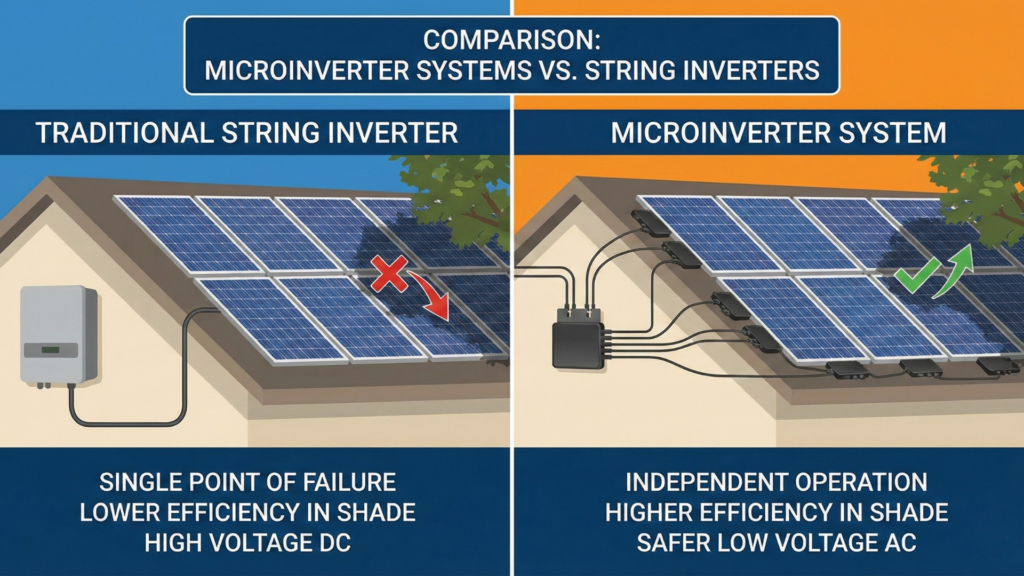
To help you decide, here is a direct comparison of the two technologies.
Table 1: Technology Comparison
| Feature | String Inverter System | Microinverter Systems |
| Power Conversion | Centralized (one inverter for all panels) | Decentralized (one per panel) |
| Shade Tolerance | Low (entire system drops if one panel is shaded) | High (only the shaded panel is affected) |
| Safety Voltage | High DC Voltage (600V-1000V) | Low DC Voltage (Safe AC on roof) |
| Monitoring | System-level only | Panel-level monitoring |
| Warranty | Typically 5-10 years | Typically 20-25 years |
| Expandability | Difficult | Very Easy |
| Initial Cost | Lower | Higher (approx. 20-30% more) |
Top Brands and Pricing in India
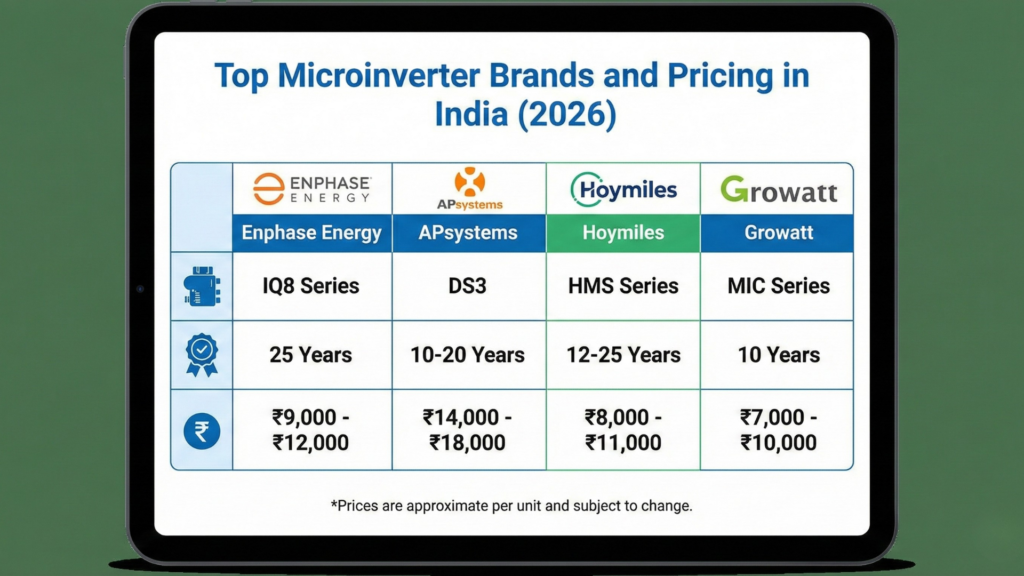
The market for Microinverter Systems in India is growing. While they are more expensive upfront, the long-term ROI is often higher due to increased generation and negligible maintenance.
Table 2: Popular Microinverter Brands & Estimated Pricing
| Brand | Model Series | Warranty | Estimated Price (Per Unit)* |
| Enphase Energy | IQ7A / IQ8 Series | 25 Years | ₹9,000 – ₹12,000 |
| APsystems | DS3 (Dual Module) | 10-20 Years | ₹14,000 – ₹18,000 (Controls 2 panels) |
| Hoymiles | HMS Series | 12-25 Years | ₹8,000 – ₹11,000 |
| Growatt | MIC Series | 10 Years | ₹7,000 – ₹10,000 |
> Note: Prices are approximate and vary based on taxes (GST), distributor rates, and installation complexity. Always consult a local installer for a final quote.
Is a Microinverter System Right for You?
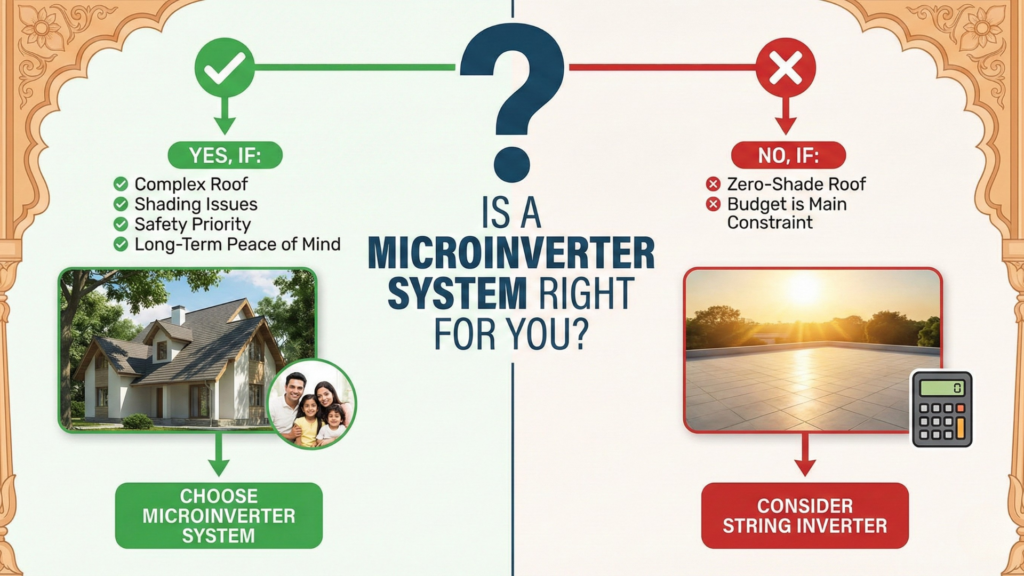
While Microinverter Systems are technologically superior, they aren’t the right choice for every Indian home.
You should choose a Microinverter System if:
- You have a complex roof: Your roof has multiple angles, or panels face different directions (East/West).
- You have shading issues: There are trees, water tanks, or taller buildings nearby that cast shadows during the day.
- Safety is a priority: You want to eliminate high-voltage DC wiring from your roof.
- You want long-term peace of mind: You prefer a “fit it and forget it” system with a 25-year warranty.
You might stick to a String Inverter if:
- You have a zero-shade roof: Your roof is flat, large, and has zero obstructions from 9 AM to 5 PM.
- Budget is the main constraint: You are looking for the lowest possible upfront cost and don’t mind slightly lower efficiency.
Conclusion
Investing in solar is a big decision for any Indian household. While Microinverter Systems come with a higher initial price tag, they offer unmatched reliability, safety, and efficiency. For the unique conditions of Indian cities—where dust, pollution, and urban shading are common—microinverters ensure you get the maximum value out of every ray of sunshine.
If you are planning to stay in your home for decades, the extended warranty and superior daily generation of Microinverter Systems usually make them the smarter financial choice in the long run.
Frequently Asked Questions (FAQs)
1. Are Microinverter Systems successful in the Indian climate?
Yes. Modern microinverters (especially from brands like Enphase) are IP67 rated and tested to withstand the high heat and humidity of Indian summers, as well as heavy monsoons.
2. Can I run my AC directly on a Microinverter System?
Yes, but you need an “On-Grid” or “Hybrid” setup. The microinverter converts solar power to AC, which powers your home distribution board. If your solar production matches the AC’s consumption, it runs on solar; otherwise, it pulls the balance from the grid.
3. How much more expensive is a Microinverter System compared to a normal inverter?
Generally, a Microinverter System will increase your total solar project cost by about 20% to 30%. However, this cost is often recovered within 3-4 years through higher energy generation.
4. Do Microinverter Systems work during a power cut?
Standard on-grid microinverters will shut down during a power cut for safety (anti-islanding). However, newer technology (like the Enphase IQ8) has sunlight backup capabilities, though this requires specific expensive hardware setups.
5. What maintenance is required for Microinverter Systems?
Very little. Since there is no central fan-cooled inverter to clean, the system is mostly maintenance-free. You only need to ensure your solar panels are cleaned of dust regularly. The monitoring app will alert you if any specific microinverter fails.
6. Can I install microinverters on an old solar system?
It is difficult to retrofit microinverters onto an old string inverter setup because the wiring architecture is completely different. It is best to choose Microinverter Systems at the time of new installation or during a complete system overhaul.