
Bifacial solar panels represent one of the most significant technological leaps in the solar industry this decade, promising greater efficiency and power generation. If you are exploring solar energy for your home or business, you have undoubtedly encountered this term. Put simply, unlike their traditional counterparts, bifacial solar panels capture sunlight from both the front and the back.
This comprehensive beginner’s guide will clearly explain what bifacial solar panels are, how this dual-sided technology works to maximize energy capture, the key factors that influence their performance, and whether they are the right choice for your next solar investment in 2025.
Understanding Bifacial Solar Panels: Core Definition and Design
To truly understand the advantage of a bifacial solar panel, one must first acknowledge the limitation of a conventional solar panel. Standard panels, known as monofacial panels, have an opaque backsheet, which means any sunlight hitting the rear of the panel is wasted. Bifacial solar panels, conversely, are engineered to actively utilize this light.
The Fundamental Structure of a Bifacial Solar Module
A bifacial solar panel is fundamentally defined by its ability to generate electricity from solar cells on both the front and rear surfaces. This dual functionality is achieved through specific, advanced design elements:
- Active Rear Cells: The solar cells within the module are specially designed to be functional on both sides. This ensures that light entering from the back can successfully generate power.
- Transparent Encapsulation: The traditional opaque backsheet is replaced with a clear material, typically tempered glass or a transparent polymer backsheet. This is crucial as it allows reflected light to reach the rear-facing cells.
- Increased Energy Output (Bifacial Gain): The additional power harvested from the rear side is referred to as “bifacial gain.”
Bifacial vs. Monofacial Solar Panels: A Quick Comparison
The fundamental difference is light utilization. While a monofacial panel depends only on direct sunlight (irradiance) hitting the front surface, the bifacial solar panel adds the capture of albedo—the light reflected off the ground or the surface beneath the array.
| Feature | Monofacial Solar Panels | Bifacial Solar Panels |
| Light Capture Capability | Front side (Direct Sunlight) only | Front & Rear sides (Direct + Reflected Light) |
| Rear Material | Opaque Polymer Backsheet | Transparent Glass or Clear Backsheet |
| Average Efficiency Range | 19% – 21.5% | 20% – 23% (Plus Bifacial Gain) |
| Typical Warranty Period | 25 Years | 30 Years (Due to Dual-Glass Design) |
How Do Bifacial Solar Panels Work? Decoding Dual-Sided Energy Capture
The mechanics of a bifacial solar panel are rooted in the same photovoltaic effect used by all solar cells, but the structure is optimized for 360-degree light harvesting. This process allows the panel to effectively double its potential light intake surface area.
Understanding Albedo and the Bifacial Gain
Albedo is arguably the single most important factor for maximizing the performance of bifacial solar panels. Albedo is a scientific measurement (ranging from 0 to 1) that describes how much light is reflected by a surface.
- Front-Side Power: This is the baseline power output, generated by direct sunlight.
- Rear-Side Power: This is the bonus power. When light hits the ground (e.g., concrete, grass, or snow), it bounces back toward the sky. Since the rear of the bifacial solar panel is transparent, this reflected light is captured and converted into additional electricity. Consequently, a light-colored, highly reflective surface greatly enhances the overall system output.
Calculating Performance: The Bifaciality Factor
Manufacturers use the Bifaciality Factor to quantify a panel’s performance. It is simply the ratio of the rear-side efficiency to the front-side efficiency. For example, if a panel’s rear side is 70% as efficient as the front, its bifaciality factor is 70%.
This factor helps system designers accurately predict the energy boost that can be expected from a specific bifacial solar panel model in various installation environments. When comparing modules, a higher bifaciality factor generally indicates a better performing bifacial solar technology.
Optimizing Installation for Bifacial Solar Technology
The installation approach for bifacial solar panels is fundamentally different from traditional panels, especially when seeking the maximum “bifacial gain.” The system design must actively prioritize light reflection and minimize shading on the rear side.
Essential Design Principles for Bifacial Solar Panel Systems
Standard mounting hardware can actually compromise a bifacial solar panel’s performance by creating shade on the rear cells. Therefore, specialized racking is generally required.
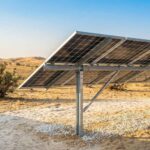
- Module Elevation (Height): Bifacial solar panels must be mounted higher off the ground than standard panels. Increasing the height (ideally 1 to 1.5 meters) is recommended. This allows reflected light to be more uniformly distributed across the panel’s backside. Consequently, the power boost increases significantly.
- Minimal Shading from Racking: Mounting rails and electrical components (like the junction box) are specifically designed to be thin and light-colored. They should be placed only at the edges. This setup prevents casting shadows on the active rear cells.
- Optimal Tilt and Spacing: In large arrays, greater distance between parallel rows is essential. This ensures that one row does not shade the reflected light needed by the row behind it. Additionally, the tilt angle is carefully engineered to maximize rear-side light capture.
Ideal Applications for Bifacial Solar Panels
While bifacial solar panels can technically be installed anywhere, their economic advantage shines brightest in specific scenarios:
- Utility-Scale Solar Farms: These are large ground-mounted systems. They often use single-axis solar trackers that follow the sun. These setups see massive energy gains. They often achieve up to 30% more output than a comparable monofacial system.
- Commercial Flat Roofs: Raising the array over a white, highly-reflective roof membrane is beneficial. This method allows for excellent rear-side light capture. It makes bifacial solar panels a viable commercial solar solution.
- Carports and Canopies: The open structure of these systems is a key advantage. It inherently maximizes light reaching the panel’s underside. This makes the systems both highly effective and aesthetically pleasing.
- Areas with Snow Cover: Snow has an extremely high albedo (reflectivity). Consequently, in snowy regions, bifacial solar panels can achieve exceptional performance, as the ground becomes a natural, high-performance reflector.
The Economics of Bifacial Solar Panels: Cost, ROI, and Durability
It is widely known that bifacial solar panels generally have a higher initial upfront cost—often 5% to 10% more expensive than monofacial counterparts. However, a novice investor must look beyond the sticker price to the long-term return on investment (ROI).
Calculating Long-Term Value and LCOE
The higher initial cost is often quickly offset by two key economic factors. First, since the panels produce more energy per square meter, fewer physical panels are needed to achieve the same total system capacity. This frequently reduces costs related to land usage, racking, wiring, and labor (Balance of System costs). Second, the higher energy production effectively lowers the Levelized Cost of Energy (LCOE), which is the true measure of a solar project’s value.
The Durability Factor: Glass-on-Glass Construction
The robust construction of bifacial solar panels contributes significantly to their superior durability, which should be seriously considered by buyers. Traditional panels have a glass front and a polymer (plastic) backsheet, which can degrade over time due to UV exposure and thermal stress. Conversely, bifacial solar panels are increasingly designed with a dual-glass (glass-on-glass) structure, where the solar cells are encapsulated between two sheets of tempered glass.
- Mechanical Strength: The dual-glass design offers much higher resistance to heavy snow loads, strong winds, and microcracking caused by rough handling. This makes the panels extremely robust against environmental stress.
- Protection Against PID: Potential Induced Degradation (PID) is a common issue where voltage differences can cause power loss in solar cells. Dual-glass construction largely eliminates this issue, ensuring stable long-term performance and high module reliability.
Bifacial Gain by Surface Type
Understanding the surface underneath the bifacial solar module is crucial for accurate ROI prediction.
| Surface Type Beneath Panel | Typical Albedo Value | Expected Bifacial Gain (Approximate) |
| Fresh Snow | 0.80 to 0.90 | 20% to 30% |
| White/Light-Colored Gravel | 0.50 to 0.60 | 10% to 15% |
| Desert Sand | 0.30 to 0.40 | 8% to 12% |
| Concrete/Asphalt | 0.10 to 0.25 | 5% to 8% |
| Dark Grass/Soil | 0.05 to 0.10 | 0% to 5% |
Frequently Asked Questions (FAQ) about Bifacial Solar Technology
Q1: Can I use bifacial solar panels on my residential roof?
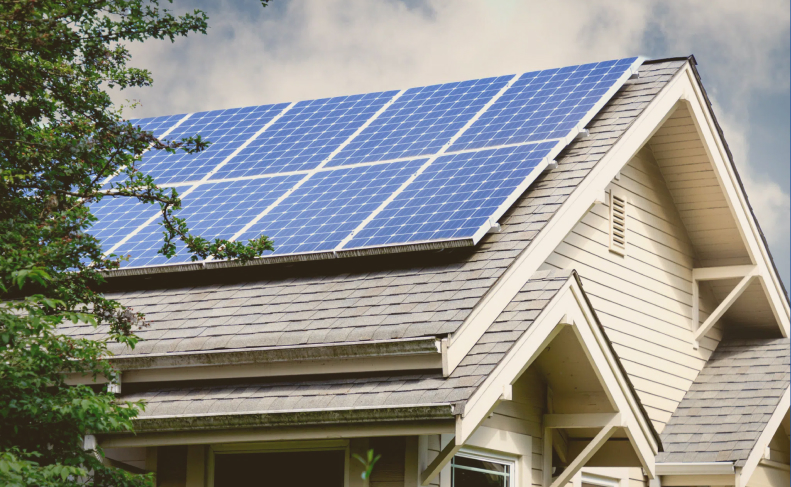
A: Yes, you can, but the extra energy gain will likely be minimal if the panels are flush-mounted against a dark roof surface. Bifacial solar panels are most beneficial on ground mounts or flat roofs where they can be elevated to maximize light reflection (albedo) from the surface below.
Q2: Do bifacial solar panels produce double the energy of normal panels?
A: No, that is a common misconception about bifacial solar technology. While they utilize both sides, the rear side receives only reflected light, which is less intense than the direct sunlight hitting the front. The total energy gain typically ranges from 5% to 30% above the front-side rating.
Q3: Are these modules heavier than standard panels?
A: Yes, due to the additional tempered glass layer in the dual-glass design, bifacial solar modules are slightly heavier. This may require a stronger mounting structure, which is a factor to consider during the installation planning phase.
Q4: What is the biggest installation challenge with bifacial panels?
A: The biggest challenge is ensuring the rear side is not shaded. Even a thin mounting rail casting a shadow can negate a portion of the bifacial gain. Therefore, careful system design and component selection are absolutely crucial to maximize the benefits of bifacial solar technology.
Conclusion: Bifacial Solar Panels are the Future of High-Efficiency Solar
Bifacial solar panels are rapidly becoming standard. They are transitioning from a niche technology to the mainstream. Their unique ability to harvest sunlight from both surfaces translates directly into a higher energy yield. This makes them inherently more efficient. It also presents a more powerful investment.
For beginners, the slightly higher upfront cost of a bifacial solar panel system is thoroughly justified. They offer superior durability. They also come with extended 30-year warranties. Furthermore, a significant boost in power production is achieved in optimal installations. Industry trends suggest bifacial solar panels will dominate new installations by the decade’s end. Choosing this technology today is a decision that truly future-proofs your solar investment.