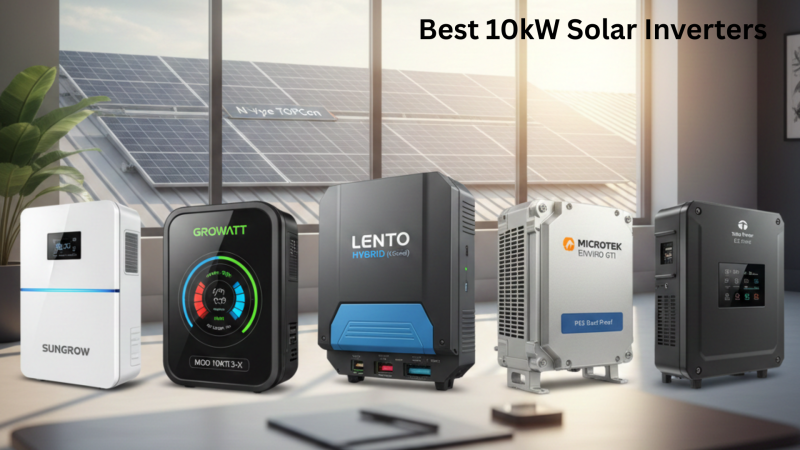
As we step into 2026, the Indian solar industry has reached a pinnacle of technological maturity. With electricity prices soaring across DISCOMs in Rajasthan, the shift toward residential and commercial solar power is no longer a luxury—it is a financial necessity. To maximize energy savings, choosing the Best Solar Inverter for 10kW system 2026 has become the primary goal for owners of large independent houses, luxury villas, and small-to-medium enterprises (SMEs) in Jaipur and beyond.
However, the efficiency of your entire solar plant depends on one critical component: the inverter. If the solar panels are the “heart” that gathers energy, the inverter is the “brain” that converts, manages, and optimizes that energy. Finding the Best Solar Inverter for 10kW system 2026 requires a sophisticated understanding of modern electronics, thermal endurance for the harsh Rajasthan heat, and seamless smart-grid integration to ensure the highest return on investment.
The Evolution of Solar Technology in 2026
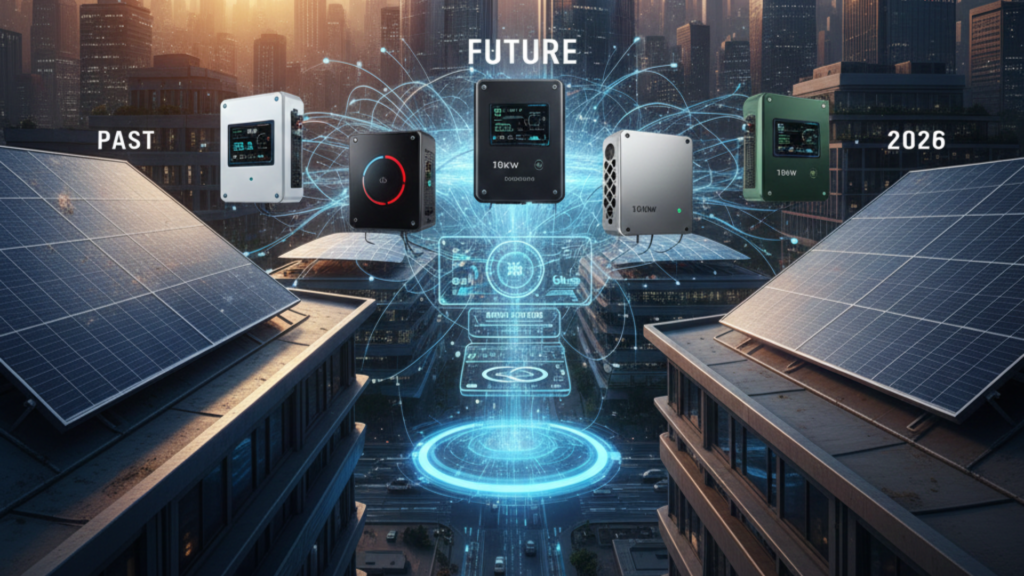
Before we dive into the specific models, it is essential to understand why 2026 is a landmark year for solar technology. We have moved past the era of simple Polycrystalline panels. Today, the market is dominated by N-Type TOPCon and Bifacial modules. These panels offer higher efficiency but also produce a higher DC current.
If you choose an outdated inverter, you will face “clipping”—a phenomenon where the inverter cannot handle the peak power produced by modern panels, leading to significant energy loss. Therefore, the Best Solar Inverter for 10kW system 2026 must be “future-proofed” to handle these high-current inputs while providing seamless connectivity to the Internet of Things (IoT).
In-Depth Comparison of the Best Solar Inverter for 10kW system 2026
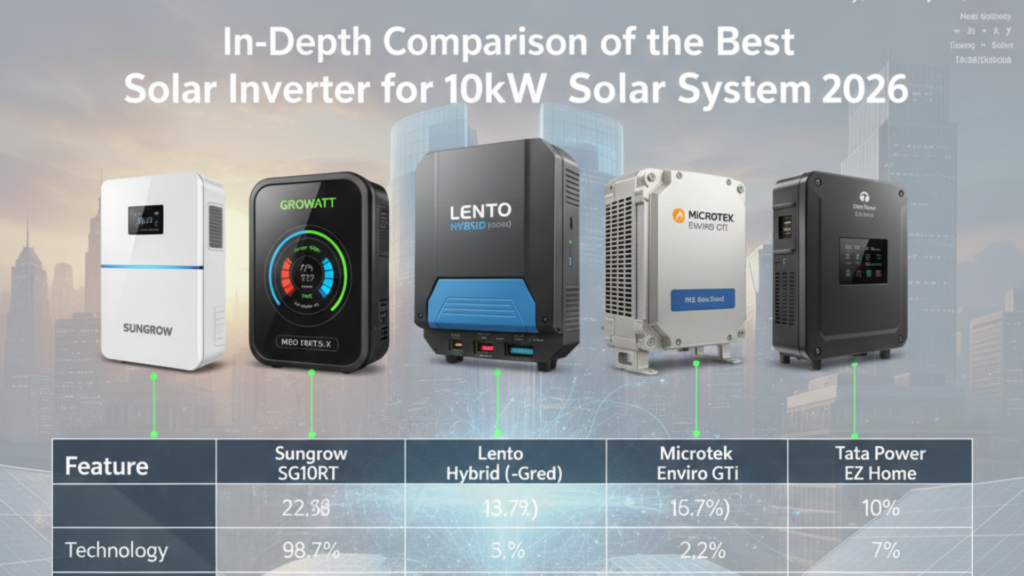
To provide clarity, we have categorized the top performers in the Indian market. These brands have been selected based on their performance in Rajasthan’s extreme climate, where summer temperatures frequently exceed 48°C.
Table 1: Technical Specifications & Performance Matrix
| Feature | Sungrow SG10RT | Growatt MOD 10KTL3-X | Lento Hybrid (i-Grid) | Microtek Enviro GTi | Tata Power EZ Home |
| Technology | String (On-Grid) | String (On-Grid) | Hybrid (Battery-Ready) | String (On-Grid) | String (Premium) |
| Max. Efficiency | 98.5% | 98.6% | 97.9% | 98.7% | 98.1% |
| Start-up Voltage | 180V | 140V | 150V | 160V | 185V |
| MPPT Range | 160V – 1000V | 140V – 1100V | 120V – 950V | 150V – 1000V | 200V – 950V |
| Protection Rating | IP65 + Type II SPD | IP66 | IP65 | IP65 | IP65 |
| Weight | 18 kg | 12.5 kg | 28 kg | 19 kg | 22 kg |
| App Support | iSolarCloud | ShinePhone | Lento Smart | Microtek Solar | Tata EZ App |
Detailed Brand Analysis: Finding Your Best Solar Inverter for 10kW system 2026
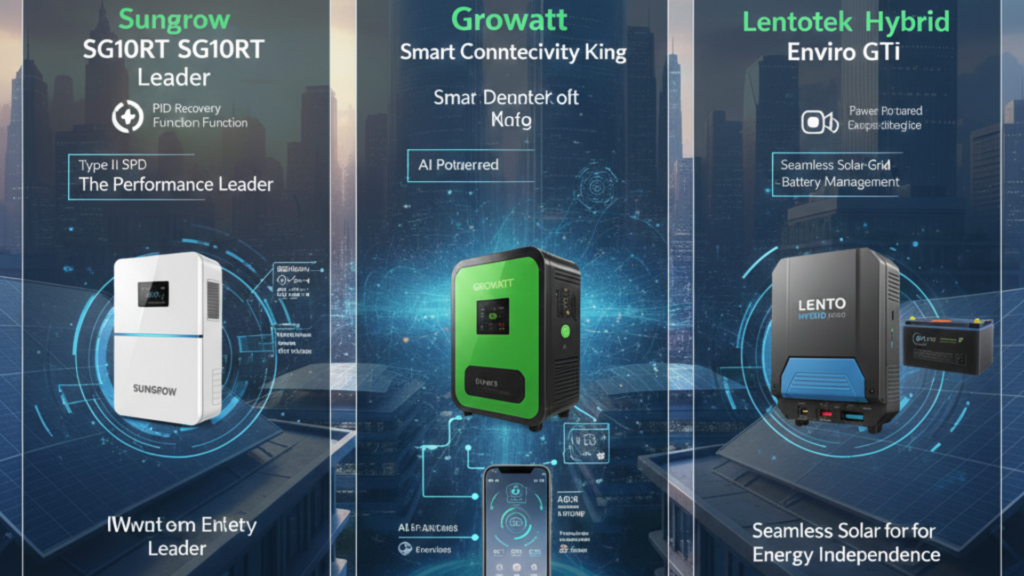
1. Sungrow SG10RT: High Performance 10kW Solar Inverter for 2026
Sungrow has consistently held the title of the world’s most bankable inverter brand. In 2026, the SG10RT model stands out for its Multi-MPPT design.
- Why it fits Rajasthan: The SG10RT features a unique “PID Recovery” function. In humid or dusty environments like Kota or Udaipur, Potential Induced Degradation (PID) can reduce panel life. This inverter helps mitigate that.
- Expert Verdict: It is arguably the Best Solar Inverter for 10kW system 2026 for those who prioritize long-term reliability over the lowest initial cost.
2. Growatt MOD 10KTL3-X: Smartest 10kW Solar Inverter in 2026
Growatt has captured a massive share of the Jaipur and Jodhpur markets. Their MOD series is incredibly compact—almost the size of a laptop—making it ideal for urban homes with limited wall space.
- Key Feature: The 1.5 DC/AC ratio. This means you can install up to 15kW of solar panels on a 10kW inverter. Why would you do this? To ensure that even on cloudy days or during the winter months, your inverter still operates at its full 10kW capacity.
3. Lento Hybrid Series: Best for Energy Independence
For users in rural Rajasthan or areas with frequent grid instability, an on-grid system is useless during a power cut. This is where the Lento Hybrid becomes the Best Solar Inverter for 10kW system 2026.
- Functionality: It can manage power from Solar, the Grid, and a Battery bank simultaneously. During the day, it runs your ACs; at night, it draws from the batteries.
Critical Factors When Choosing the Best Solar Inverter for 10kW system 2026
Choosing an inverter for a 10kW system is a 15-year commitment. You must look beyond the brochure.
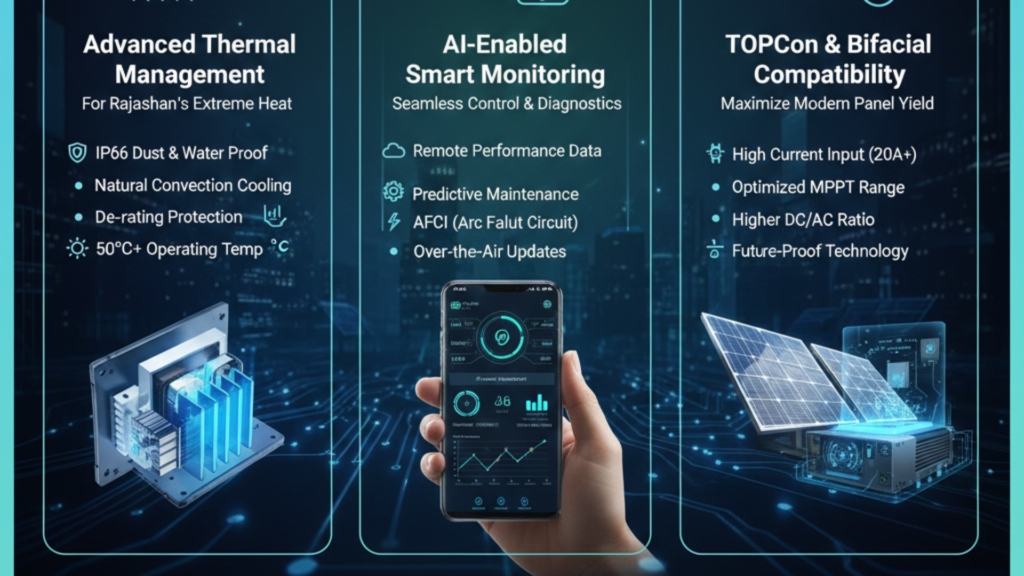
Thermal Management in Extreme Heat
Rajasthan’s heat is the biggest enemy of power electronics. When an inverter gets too hot, it “de-rates,” meaning it intentionally lowers its power output to protect its internal circuits.
- Passive Cooling: Brands like Growatt use high-grade aluminum heatsinks for natural convection.
- Active Cooling: Brands like Tata Power use smart fans.
For 2026, we recommend inverters with IP66 protection and a wide operating temperature range (up to 60°C).
The Role of AI and IoT in 2026 Inverters
The Best Solar Inverter for 10kW system 2026 is no longer a “dumb” box. It is an AI-driven device. Modern inverters now offer:
- AFCI (Arc Fault Circuit Interrupter): This uses AI to detect tiny electrical sparks in your wiring that could cause a fire, shutting down the system in milliseconds.
Remote Firmware Updates: Your inverter can get smarter over time via Wi-Fi updates, optimizing its algorithms for better energy harvest.
Pricing and ROI: A Rajasthan Perspective
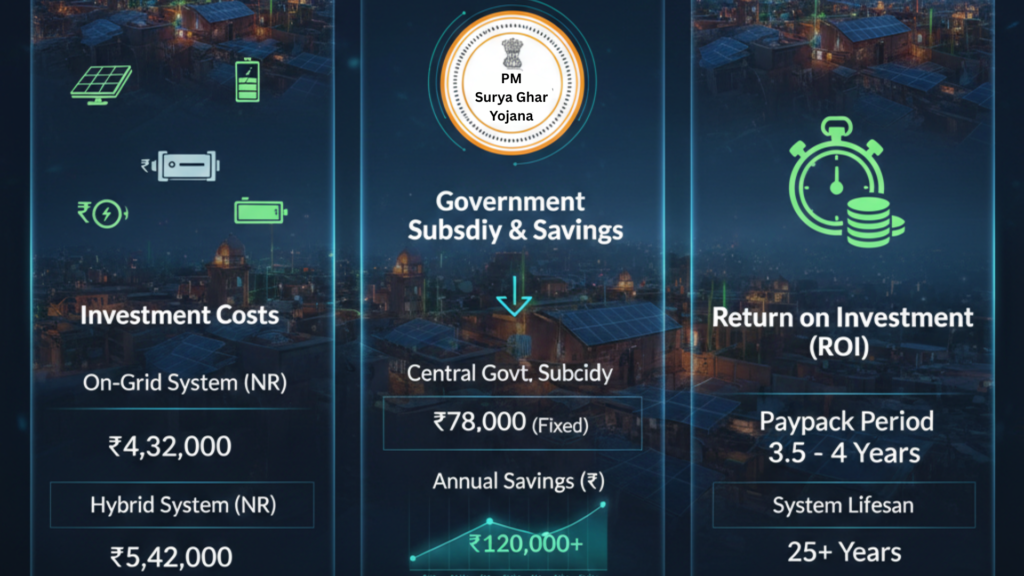
The cost of a 10kW solar system has stabilized in 2026, but the inverter remains a significant portion of the budget.
Table 2: Estimated 10kW System Economics in Rajasthan
| Item | On-Grid System (INR) | Hybrid System (with Battery) |
| Inverter Cost | ₹70,000 – ₹90,000 | ₹1,50,000 – ₹1,90,000 |
| Panel Cost (10kW) | ₹3,20,000 – ₹3,60,000 | ₹3,20,000 – ₹3,60,000 |
| Installation & BOS | ₹1,20,000 | ₹1,50,000 |
| Total Gross Cost | ₹5,10,000 – ₹5,70,000 | ₹6,20,000 – ₹7,00,000 |
| Subsidy (PM Surya Ghar) | – ₹78,000 | – ₹78,000 |
| Net Investment | ₹4,32,000 – ₹4,92,000 | ₹5,42,000 – ₹6,22,000 |
Energy Generation Fact: In Rajasthan, a 10kW system will generate approximately 15,000 to 16,500 units (kWh) per year. At a commercial rate of ₹8 per unit, you save roughly ₹1,20,000 per year, leading to a payback period of just 3.5 to 4 years.
Installation Best Practices for 10kW Systems in Rajasthan
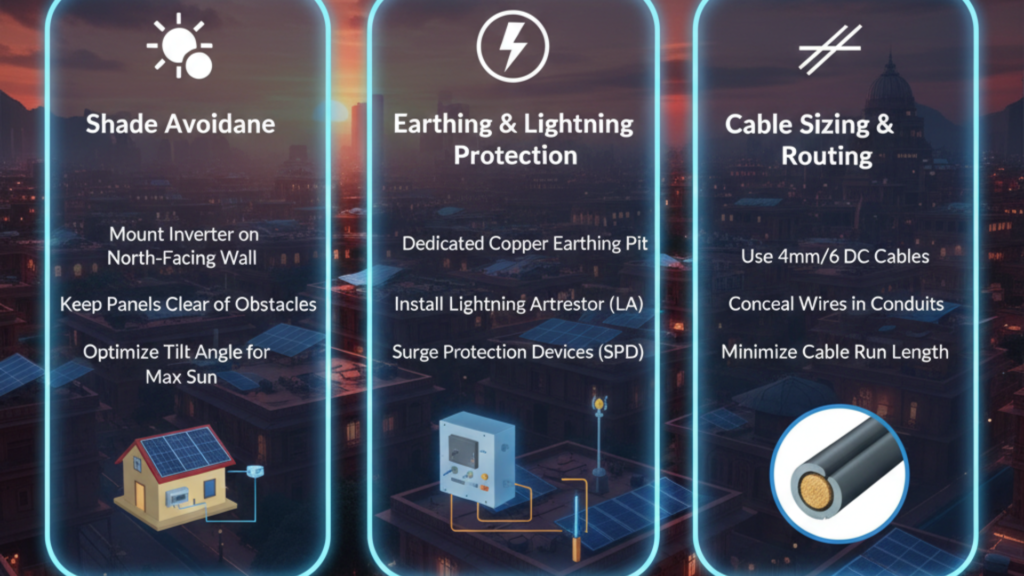
Even the Best Solar Inverter for 10kW system 2026 will fail if installed poorly.
- Shade Avoidance: Ensure the inverter is installed in a shaded area, preferably on a North-facing wall, to keep it out of direct sunlight.
- Earthing & Lighting Protection: Rajasthan is prone to dust storms and lightning. Use dedicated copper earthing for the inverter and a high-quality Lightning Arrestor (LA).
- Cable Sizing: For a 10kW system, ensure that the DC cables are at least 4mm or 6mm (depending on the run length) to minimize voltage drop.
The Impact of the PM Surya Ghar Muft Bijli Yojana
Under the 2026 guidelines, the Indian government has streamlined the subsidy process. For any system above 3kW, the subsidy is capped at ₹78,000. To avail of this, your Best Solar Inverter for 10kW system 2026 must be from a manufacturer that is “ALMM Approved” (Approved List of Models and Manufacturers). All the brands mentioned in Table 1 are currently compliant with Indian grid standards (BIS/MNRE).
Conclusion: Making the Final Decision
Selecting the Best Solar Inverter for 10kW system 2026 involves balancing your current budget with your future energy goals.
- The Enthusiast’s Choice: If you want the absolute best technology and have the budget, Sungrow or SMA are the gold standards.
- The Budget-Conscious Choice: For most residential users in Rajasthan, Growatt or Microtek offers the perfect balance of price, performance, and local service support.
- The Business Choice: For factories or warehouses where power uptime is critical, go for a Hybrid Lento or Su-Kam system with lithium-ion battery integration.
Investing in a 10kW system today is not just about saving money; it’s about energy sovereignty. With the right inverter, your home becomes a mini-power plant, contributing to a greener Rajasthan.
FAQs: Frequently Asked Questions
Q1: Can I use a 10kW inverter with only 5kW of panels initially?
Yes, most 10kW inverters have a wide MPPT voltage range. However, ensure the minimum start-up voltage is met. You can add more panels later as your budget allows.
Q2: Is a Hybrid Inverter better than an On-Grid Inverter?
In Rajasthan, if you face power cuts of more than 2 hours a day, a Hybrid inverter is better. If your grid is stable, an On-Grid inverter is more cost-effective and offers a faster ROI.
Q3: What happens to the inverter during a Rajasthan dust storm?
Top-tier inverters are rated IP65 or IP66, meaning they are dust-tight. However, the external heatsink can get covered in dust, which reduces cooling. It is recommended to gently wipe the exterior of the inverter after a heavy storm.
Q4: Does a 10kW system require a 3-phase connection?
Yes, in India, any solar installation above 5kW generally requires a 3-phase electrical connection as per DISCOM regulations.
Q5: How do I monitor my 10kW inverter’s performance?
All “Best Solar Inverter for 10kW system 2026” models come with built-in Wi-Fi or GPRS. You can download the brand’s app (e.g., ShinePhone for Growatt) to see real-time generation on your smartphone.