Switching to solar energy is one of the smartest investments a homeowner can make in 2025. It offers energy independence, significantly lower utility bills, and increased property value. However, for many, the journey from signing a contract to flipping the switch feels like a mystery. If you are considering making the switch, understanding the residential solar installation timeline is crucial. It helps manage expectations and ensures you know exactly what is happening on your roof.
This guide breaks down the entire residential solar installation process into actionable steps, demystifying the engineering, permitting, and construction phases so you can go solar with confidence.
Phase 1: Evaluation and Design
Before a single panel goes up, a significant amount of work happens behind the scenes. This phase ensures your home is actually suitable for a residential solar installation.
The Site Audit and Assessment
Once you have selected a solar provider, they won’t just guess how many panels you need. They must conduct a physical or virtual site audit.
- Roof Inspection: Engineers check the condition of your shingles or tiles. A residential solar installation is designed to last 25+ years, so your roof needs to be in good shape to match that lifespan.
- Shading Analysis: Installers look for trees, chimneys, or neighboring buildings that might cast shade and reduce efficiency.
- Electrical Panel Check: Your main breaker box needs to be modern enough to handle the amperage of the new solar energy flow.
Pro Tip: If your roof is over 15 years old, ask your installer if it makes sense to re-roof before the solar installation to save money on labor later.
System Engineering and Design
Using the data from the site audit, engineers create a custom blueprint for your residential solar installation. This isn’t just a sketch; it is a complex electrical diagram (CAD drawing) that specifies:
- Where every panel will sit to maximize sun exposure.
- How the wiring will run through your attic or along the siding.
- Where the inverters and battery storage (if applicable) will be mounted.
Phase 2: Navigating Permits for Your Residential Solar Installation
This is often the longest part of the residential solar installation process, yet it requires the least amount of effort from you. Your installer should handle all of this.
Local Permitting and Zoning
You cannot perform a legitimate residential solar installation without permission from your local government. Your installer will submit the engineering plans to your city or county planning department. They check for:
- Structural Integrity: Can your roof hold the weight?
- Electrical Safety: Does the wiring meet the National Electric Code (NEC)?
- Zoning Laws: Are there setbacks or aesthetic rules?
Utility Interconnection Application
Simultaneously, an application is sent to your utility company (grid operator). Since your residential solar installation will likely be grid-tied (allowing you to sell excess power back via Net Metering), the utility needs to approve the equipment to ensure it won’t destabilize the local grid.
Table 1: Estimated Timeline for Residential Solar Installation Steps
Note: Timelines vary heavily by local government efficiency.
| Project Phase | Description | Estimated Time |
| Site Audit | Measuring roof, checking electrical panel. | 1-2 Days |
| Engineering Design | Creating CAD drawings and electrical schematics. | 3-7 Days |
| Permitting | City/County review and approval of plans. | 2-8 Weeks |
| Installation | Physical construction of the system. | 1-3 Days |
| Inspection & PTO | Final city check and Utility “Permission to Operate”. | 2-4 Weeks |
Phase 3: The Physical Residential Solar Installation
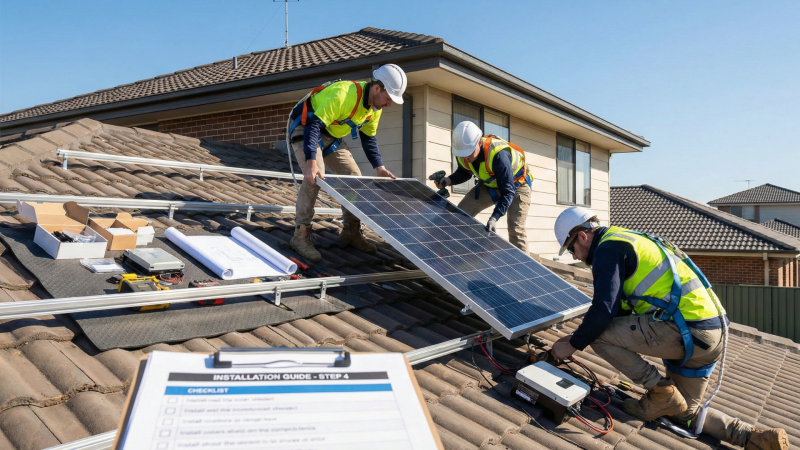
This is the exciting part. Once permits are approved, the crew arrives. Most standard residential solar installation projects take between one to three days, depending on system size.
Racking and Mounting
The first thing installers do is prepare your roof. They will measure and mark the exact layout based on the engineering plans.
- Flashings: To prevent leaks, installers slip “flashings” under your shingles. These are waterproof attachments that bolt into the rafters.
- Rails: Metal racking rails are attached to these flashings. These rails form the skeleton that will hold your panels in place.
Installing Inverters and Wiring
Your panels produce Direct Current (DC) electricity, but your home uses Alternating Current (AC). You need an inverter to make the switch.
- Microinverters: These are small boxes attached to the back of each panel. They are popular in modern residential solar installation projects because if one panel is shaded, the others keep working perfectly.
- String Inverters: A central inverter is installed on the side of your house (usually near the main meter).
Mounting the Solar Panels
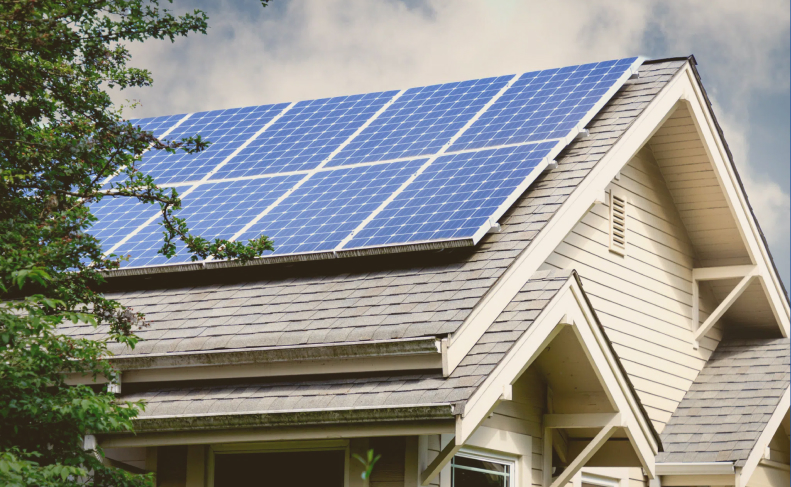
Finally, the photovoltaic (PV) panels are clamped onto the racking rails. The crew connects the wires, managing them neatly so they aren’t visible or exposed to the wind.
Phase 4: Final Inspection and Activating Your Residential Solar Installation
The panels are on the roof, but you cannot turn them on yet. There are two final hurdles in the residential solar installation journey.
The City Inspection
A local government inspector will visit your home to verify that the residential solar installation matches the approved plans and meets all safety codes. They will check the wiring, grounding, and mounting hardware. If it passes, you get the “green tag.”
Utility Connection and PTO (Permission to Operate)
The final step is receiving PTO. Your utility company may install a “bi-directional meter” that can count electricity flowing out of your house as well as in. Once they give the official thumbs up, you can flip the switch and start generating power.
Table 2: Key Components of a Residential Solar Installation
Understanding what you are buying helps you verify the quote.
| Component | Function | Why Quality Matters |
| PV Panels | Captures sunlight and converts it to DC electricity. | Higher efficiency panels produce more power in less space. |
| Inverter | Converts DC to usable AC electricity for your home. | The “brain” of the system; crucial for system reliability. |
| Racking System | Attaches panels to the roof. | Must withstand high winds and prevent roof leaks. |
| Monitoring App | Tracks energy production on your phone. | Allows you to spot issues immediately if production drops. |
| Battery (Optional) | Stores excess energy for use at night. | Provides backup power during grid outages. |
Benefits of Professional Residential Solar Installation
While DIY kits exist, hiring a certified professional for your residential solar installation is strongly recommended for safety and longevity.
- Warranty Coverage: Pros offer workmanship warranties (usually 10-25 years) that cover roof leaks or wiring issues.
- Permit Handling: They navigate the bureaucratic red tape so you don’t have to.
- Safety: Working with high-voltage electricity on a sloped roof is dangerous without proper training.
Conclusion
A residential solar installation is a multi-step process that transforms your home into a mini power plant. While the paperwork phase can feel slow, the physical installation is surprisingly fast. By understanding these steps—from the initial site audit to the final Permission to Operate—you can navigate the project with patience and confidence.
The result is a sustainable energy system that reduces your carbon footprint and insulates your wallet from rising energy costs for decades to come.
Frequently Asked Questions (FAQ)
Q1. How long does a residential solar installation take from start to finish?
A. While the actual construction usually takes 1 to 3 days, the entire process (including design, permitting, and utility approval) typically takes 2 to 4 months. The timeline depends heavily on how fast your local government processes permits.
Q2. Will a residential solar installation damage my roof?
A. No, if done correctly by professionals. Installers use watertight flashings and sealants to ensure the roof remains leak-proof. In fact, the panels can actually protect the portion of the roof they cover from UV damage and weather.
Q3. Do I need to be home during the installation?
A. Yes, you usually need to be home to give the crew access to your electrical panel or attic, but you generally do not need to be there for the entire duration of the work on the roof.
Q4. What happens if I move after my residential solar installation?
A. Solar panels typically increase the value of a home. You can sell the home with the system included (asking a higher price due to the energy savings), or in some cases, transfer the solar lease to the new buyer.