The landscape of high-end living is undergoing a seismic shift. For decades, opulence was defined by “more”—more gilding, more branding, and more visible expense. However, in 2026, the elite world has pivoted toward a philosophy known as “Quiet Luxury.” This movement is the antithesis of “fast fashion” interiors. It is a disciplined approach to Luxury Residential Interior Design that prioritizes the soul of a space over its price tag.
In this comprehensive guide, we will explore how to master this understated elegance, ensuring your home remains a sanctuary of sophistication for decades to come.
Defining the Core of Modern Luxury Residential Interior Design
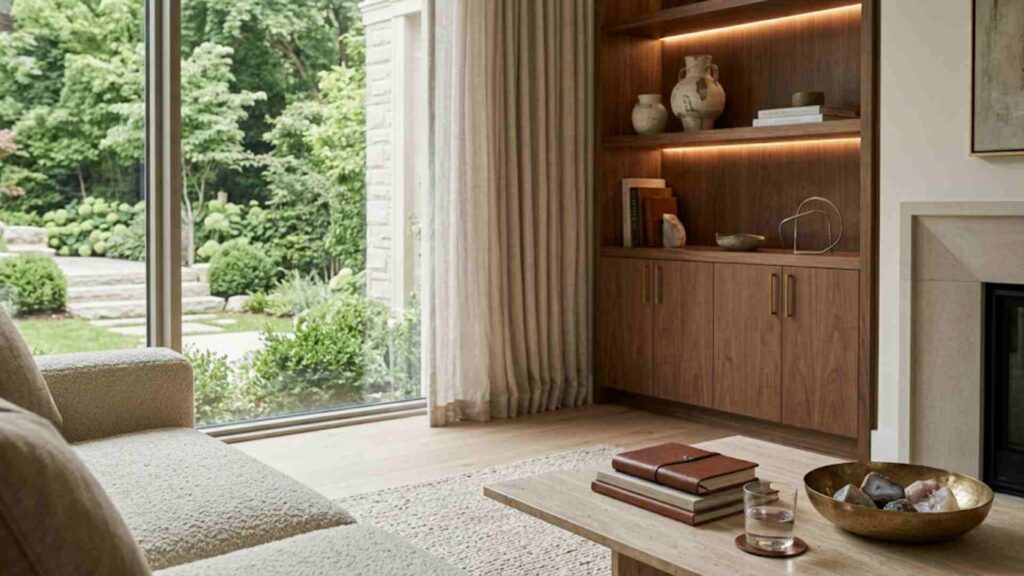
Before picking up a fabric swatch or a floor plan, one must understand that “Quiet Luxury” is not a lack of wealth, but a refinement of it. It is often called “Stealth Wealth.” In the context of Luxury Residential Interior Design, this means creating an environment that feels expensive to the touch and the spirit, rather than just to the eye.
The Psychology of Understated Luxury Residential Interior Design
Why are homeowners moving away from flashy designs? The modern world is loud, digital, and fast. A luxury home should be the opposite: quiet, tactile, and slow. The goal is “emotional ergonomics”—designing a room that subconsciously lowers your heart rate the moment you enter.
The “If You Know, You Know” Factor
Prestige relies on exclusivity through craftsmanship. Instead of a logo-heavy throw blanket, it is the hand-stitched hem of a vicuña wool drape. In bespoke architecture, true value is found in the details that only a connoisseur would notice.
Materiality: The Foundation of Luxury Residential Interior Design
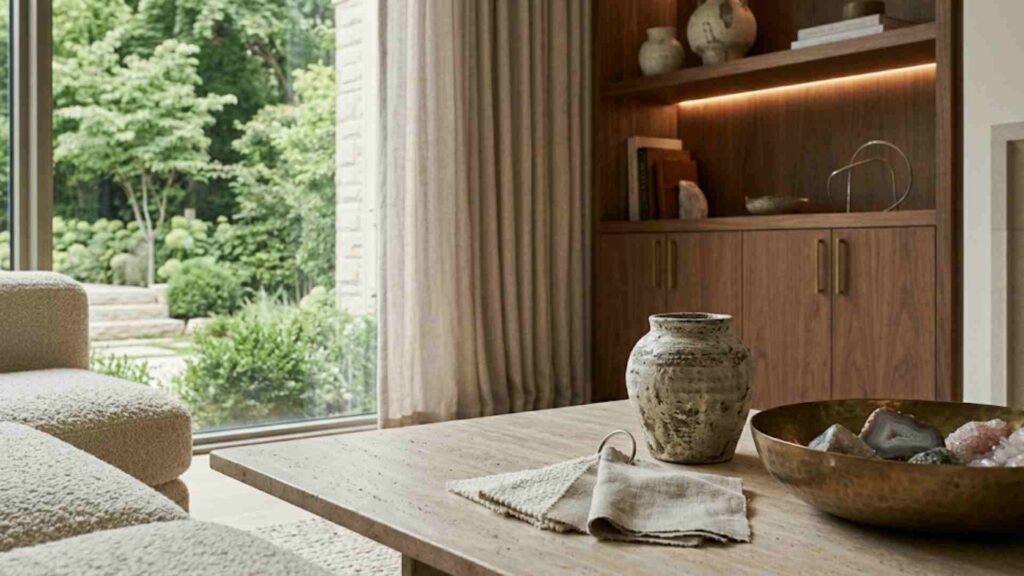
In a minimalist or quiet luxury setting, there is nowhere for low-quality materials to hide. Every surface must be authentic.
1. The Stone Selection
Move beyond basic polished marble. Today’s Luxury Residential Interior Design favors honed, leathered, or tumbled finishes.
- Travertine: Its porous, matte look provides an ancient, grounded feeling.
- Quartzite: For those who want the beauty of marble with the durability of granite.
- Pietra Serena: A grey sandstone used in Italian palaces that brings a soft, architectural weight to a room.
2. The Timber Narrative
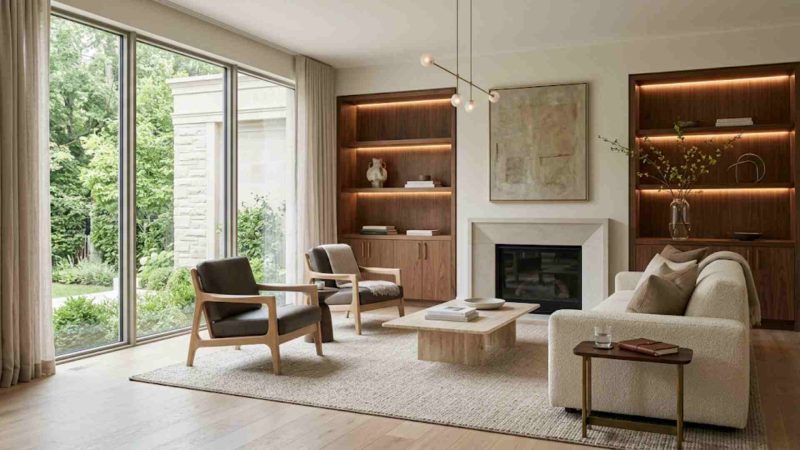
Wood should feel like it was grown for the room. Wide-plank European Oak, reclaimed Walnut, and charred Shou Sugi Ban are staples of high-end design. The focus is on the “grain story”—ensuring the wood’s natural pattern flows seamlessly across cabinetry and flooring.
3. High-Performance Textiles
In Luxury Residential Interior Design, “touch” is a primary sense.
- Linen: Heavyweight Belgian linen for curtains provides a soft, filtered light.
- Mohair: For upholstery that is incredibly durable yet has a subtle, sophisticated sheen.
- Silk-Wool Blends: The ultimate for rugs, offering the softness of silk with the resilience of wool.
The Role of Color and Texture in Luxury Residential Interior Design
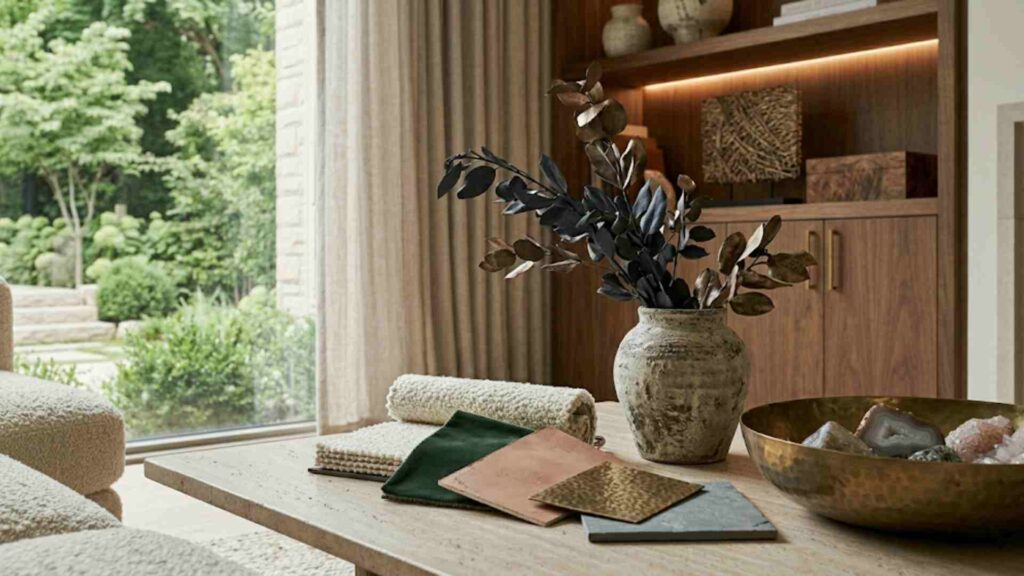
A common misconception is that quiet luxury is synonymous with “all white.” In reality, it is about a Tonal Palette.
Mastering the Monochromatic Layers
To keep a neutral room from feeling flat, you must layer textures. A cream plaster wall, a beige bouclé sofa, and a tan sisal rug create depth through shadow rather than color contrast. This is a hallmark of high-level aesthetic planning.
Using “Earth-Tone” Accents
When color is used, it should be derived from nature. Think of:
- Terracotta and Ochre: For warmth.
- Deep Forest Green: To bring the outdoors in.
- Muted Slate: To provide a cool, intellectual grounding.
Comparison: Elements of High-End Design Styles
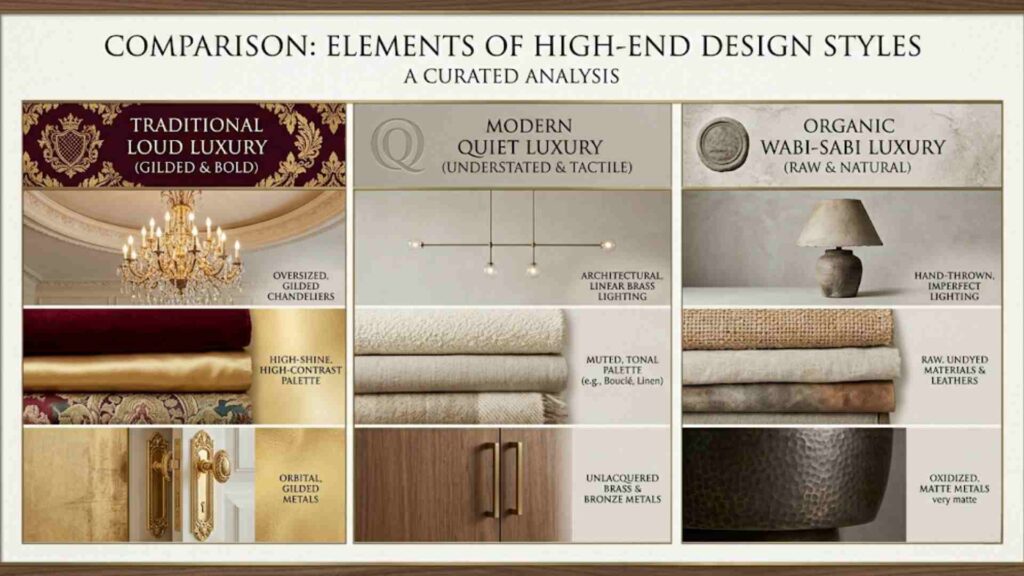
| Feature | Loud/Traditional Luxury | Quiet/Modern Luxury |
| Metal Finishes | High-shine Chrome or Gold | Unlacquered Brass, Bronze, or Blackened Steel |
| Furniture Style | Trend-heavy, “Statement” pieces | Heirloom quality, Sculptural, Bespoke |
| Wall Treatment | Glossy paint or busy wallpaper | Lime-wash, Plaster, or Silk wallcoverings |
| Flooring | High-gloss tile or wall-to-wall carpet | Natural stone or wide-plank hardwood |
| Tech Integration | Visible gadgets and screens | Invisible, “Hidden” smart home tech |
Spatial Architecture in Luxury Residential Interior Design
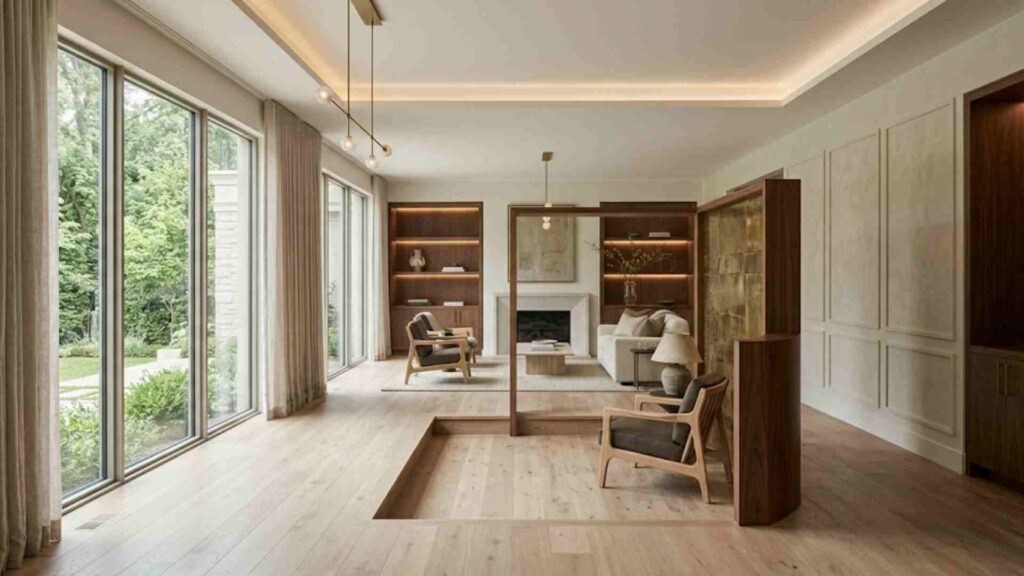
How a room breathes is as important as how it looks. Sophisticated interiors are defined by the intelligent use of “Negative Space.”
The Art of Decluttering through Architecture
True elegance requires the absence of clutter. You achieve this through Invisible Storage. Custom-built cabinetry that blends into the walls allows you to hide the chaos of daily life, leaving only curated art on display.
Ceiling and Vertical Volume
Often overlooked, the “fifth wall” (the ceiling) is a playground for architects. Coffered ceilings or hand-applied plaster moldings add grandeur without needing a single piece of furniture.
Lighting: The Jewelry of Luxury Residential Interior Design
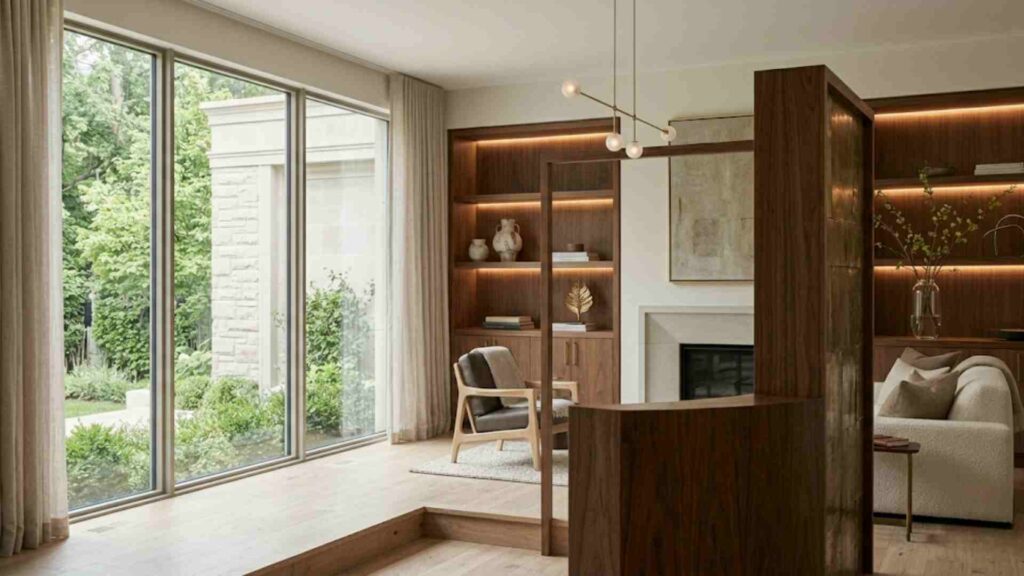
Lighting should never be an afterthought. In high-end residential projects, lighting is handled in three distinct layers to create a “glow” rather than a “glare.”
- Ambient Layer: Recessed “pinhole” lights that are nearly invisible but provide a warm wash of light.
- Task Layer: Artisanal desk lamps or reading lights made of hand-blown glass or hand-stitched leather.
- Accent Layer: Picture lights that highlight fine art, making the home feel like a private gallery.
Sustainable Practices in Luxury Residential Interior Design
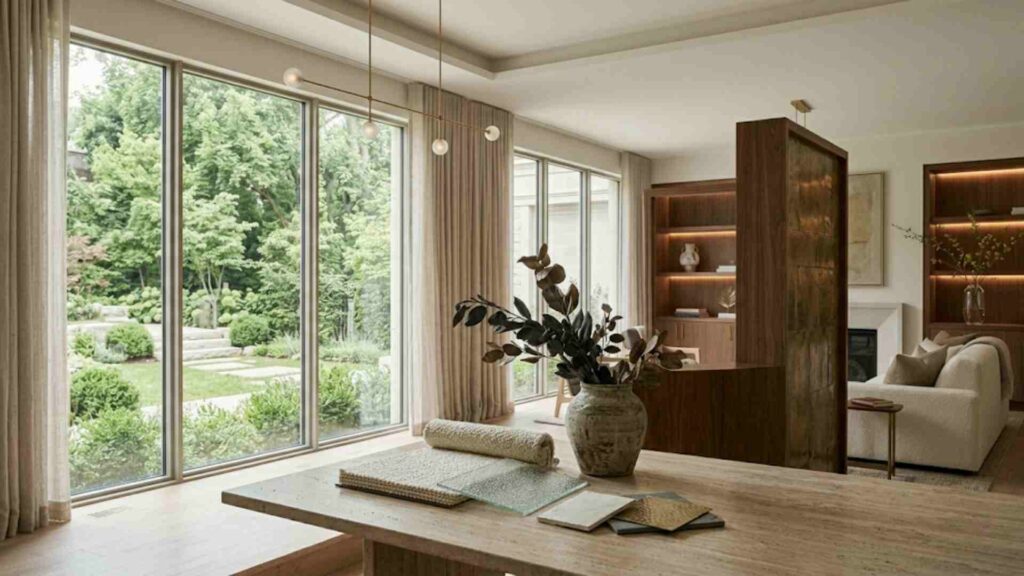
In 2026, luxury is synonymous with responsibility. A home that harms the planet cannot truly be a place of peace.
- Eco-Ethical Sourcing: Knowing exactly where your marble was quarried and ensuring the workers were treated fairly.
- Indoor Air Quality: Using non-VOC (Volatile Organic Compound) paints and natural ventilation systems.
- Longevity: The most sustainable act in Luxury Residential Interior Design is creating a space that won’t be demolished or remodeled for 50 years.
The Importance of Bespoke Furniture
Why buy from a store when you can commission a piece? Bespoke furniture is the ultimate expression of Luxury Residential Interior Design.
- Tailored Dimensions: A dining table built exactly to the scale of your room.
- Personalized Function: A desk with hidden compartments for your specific tech needs.
- Artisanal Connection: Knowing the name of the carpenter who hand-finished your bed frame.
Conclusion: The Future of Timeless Living
The rise of “Quiet Luxury” is a celebration of the human element. It is a rejection of the mass-produced and a return to the artisanal. When you approach Luxury Residential Interior Design with a focus on quality, texture, and light, you aren’t just decorating a house—you are crafting an experience.
True elegance does not need to shout to be heard. It whispers through the quality of the stone, the soft click of a solid brass door handle, and the perfect silence of a well-insulated room.
FAQ: Navigating Luxury Residential Interior Design
Q: How do I start a Luxury Residential Interior Design project?
Start with the “Hero” element. Whether it is a view, a piece of art, or a specific material (like a rare marble), build the rest of the room’s texture and color around that one focal point.
Q: Can “Quiet Luxury” feel cold or clinical?
Only if you forget texture. To keep a luxury home warm, always mix hard surfaces (stone, metal) with soft surfaces (wool, velvet, plants).
Q: What is the ROI on Luxury Residential Interior Design?
High-end design using natural materials significantly increases property value. Unlike “trendy” designs that look dated in five years, quiet luxury is timeless, meaning you won’t need to reinvest in a remodel for decades.
Q: How do I choose the right designer for this style?
Look for a portfolio that shows variety and a focus on “materiality” rather than just one specific “look.” A great luxury designer listens to your lifestyle needs and translates them into a bespoke environment.