Agriculture in India is not just an occupation; it is the backbone of our economy. However, for the modern Indian farmer, rising input costs—specifically diesel and electricity—are becoming a massive hurdle. With erratic grid power supply in rural areas and diesel prices hovering near ₹90-95 per liter, the profit margins for farming are shrinking. This is where the revolution of Solar Energy in Agriculture steps in.
It is no longer just a “futuristic concept.” From the sun-drenched fields of Rajasthan to the fertile plains of Punjab, solar power is changing how India farms. By leveraging India’s 300+ sunny days a year, farmers are not only cutting costs but also securing a reliable power source that works for them, not against them.
1. Massive Cost Reduction using Solar Energy in Agriculture
The most immediate and tangible benefit of adopting Solar Energy in Agriculture is the drastic cut in operational expenses.
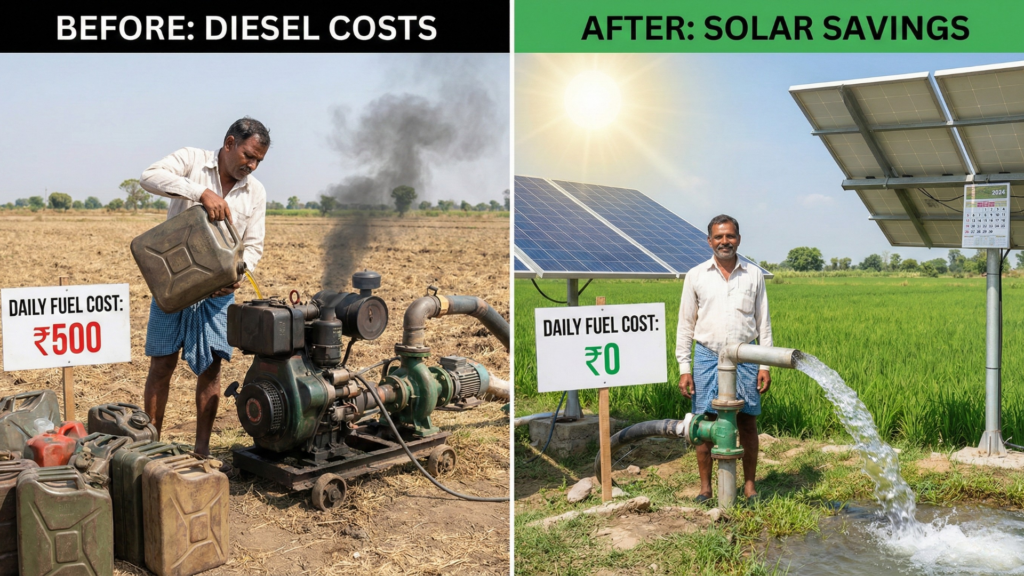
For decades, Indian farmers have relied heavily on diesel generators (DG sets) to run irrigation pumps. A standard 5HP diesel pump consumes roughly 1 liter of diesel per hour. If you run your pump for 6-8 hours a day during the irrigation season, the costs add up to ₹1.5 to ₹2 Lakhs annually.
Solar power eliminates this fuel cost entirely. Once the system is installed, the “fuel” (sunlight) is free.
The “Free Energy” Advantage
- Zero Fuel Dependability: No need to travel kilometers to buy diesel or worry about fluctuating global oil prices.
- Grid Independence: Commercial agricultural electricity tariffs in some states can be high. Solar offsets this completely.
- Quick ROI: While the initial investment is higher, the Return on Investment (ROI) for a solar pump in India is typically 3-4 years. After this, the energy is virtually free for the remaining 20+ years of the panel’s life.
Pro Tip: For farmers using drip irrigation, solar systems are even more efficient as they provide consistent low-pressure pumping which matches drip requirements perfectly.
2. Solar Energy in Agriculture Ensures Reliable Irrigation
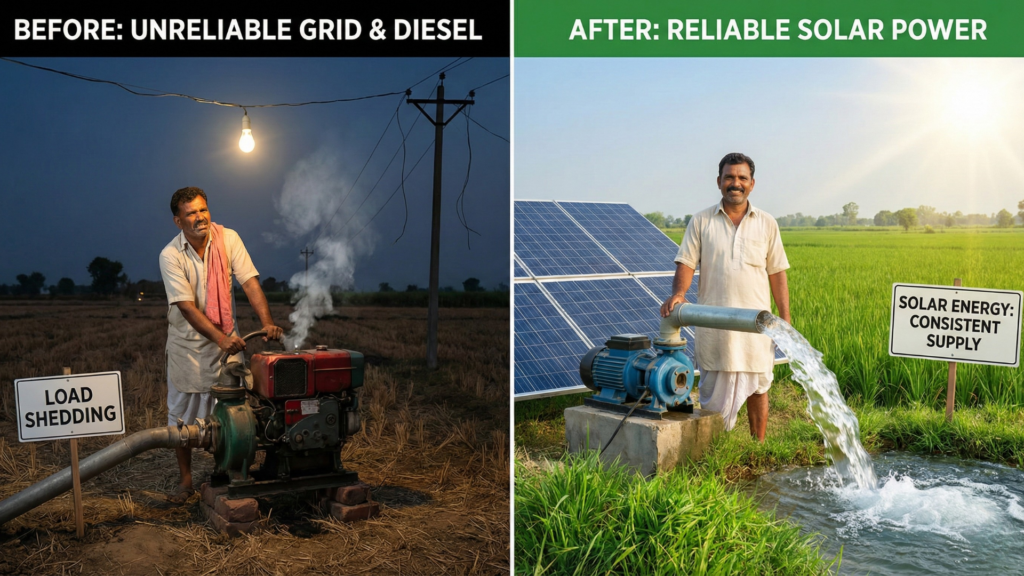
One of the biggest headaches for farmers in rural India is “load shedding.” Grid electricity is often available only at odd hours—sometimes late at night—forcing farmers to wake up at 2:00 AM just to water their crops. This erratic supply damages pump motors and disrupts the crop water cycle.
Solar Energy in Agriculture Ensures Independence
By installing a standalone solar water pump, you generate your own power during the day—exactly when crops need water the most (transpiration is highest during sunny hours).
- Daytime Irrigation: No more night shifts for watering fields.
- Voltage Stability: Solar inverters provide clean, stable voltage, unlike rural grids which often suffer from voltage fluctuations that burn out motors.
- Drought Resilience: In dry regions, having a reliable pump means you can utilize groundwater or stored water efficiently without waiting for the grid to come back online.
3. Low Maintenance Benefits of Solar Energy in Agriculture
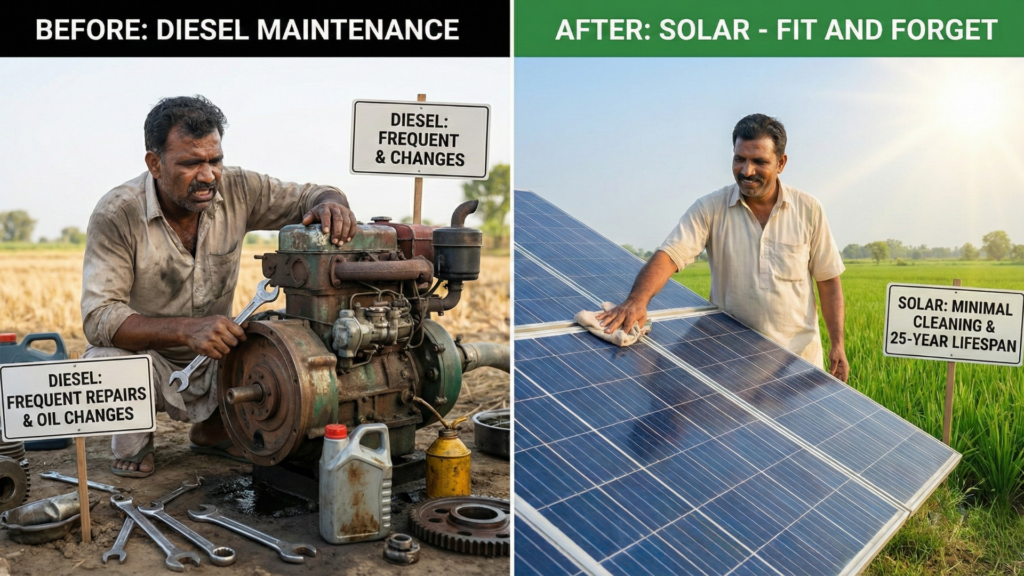
Farmers are busy people; they cannot afford technology that requires constant repairing. This is where solar shines over diesel engines.
Diesel engines are mechanical beasts. They vibrate, heat up, and have hundreds of moving parts. They require frequent oil changes, filter replacements, and engine overhauls.
Why Solar is “Fit and Forget”
Solar panels have no moving parts. This means there is no wear and tear in the generation unit.
- Warranty: Tier-1 solar panels come with a 25-year performance warranty.
- Minimal Upkeep: The only maintenance required is wiping the dust off the panels every few weeks to ensure maximum sunlight absorption.
- Robust Technology: Modern solar pumps are designed to withstand Indian heat, dust, and monsoons.
Table 1: Solar vs. Diesel Pump Comparison
Here is a quick look at why Solar Energy in Agriculture is winning the battle against diesel.
| Feature | Solar Water Pump | Diesel Engine Pump |
| Fuel Cost | Zero (Sunlight is free) | High (₹90+/liter & rising) |
| Maintenance | Low (Cleaning panels only) | High (Oil, filters, repairs) |
| Lifespan | 20-25 Years | 5-8 Years (with repairs) |
| Reliability | Excellent (Works when sun shines) | Moderate (Breakdowns common) |
| Noise/Pollution | Silent & Eco-friendly | Noisy & Polluting |
| Operation | Automatic (Sunup to Sundown) | Manual start/stop required |
4. Additional Income Source (Selling Power)
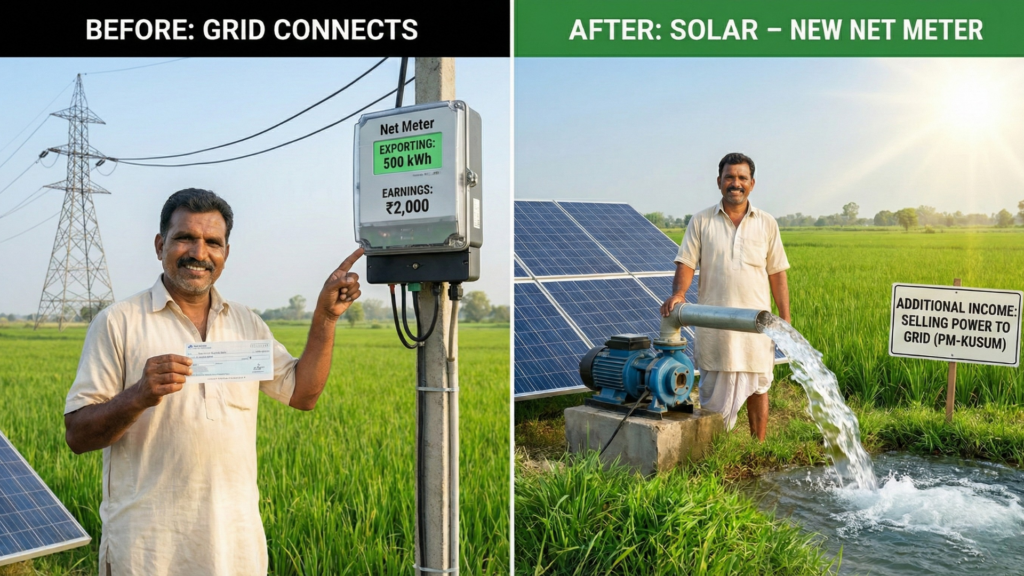
This is a game-changer for the Indian agricultural sector. Under new policies, Solar Energy in Agriculture is not just about saving money; it’s about making money.
If you have a grid-connected solar pump (under PM-KUSUM Component C), you can feed the excess electricity generated back to the grid when you are not running the pump. The local DISCOM (Distribution Company) pays you for this surplus power.
“Solar Farming”
Even if you are not irrigating, your land can generate revenue.
- Off-Season Earnings: When fields are fallow or between crop cycles, the solar plant continues to generate electricity which is sold to the government.
- Barren Land Utilization: Farmers with infertile or rocky land can lease it for setting up small solar power plants (500 kW to 2 MW) under PM-KUSUM Component A.
5. Eco-Friendly and Sustainable Farming
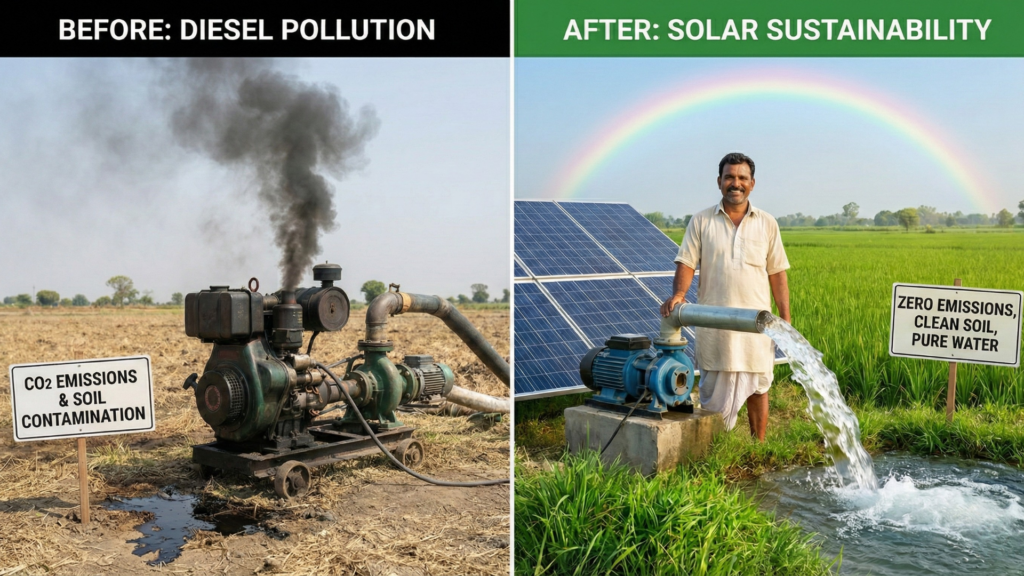
Indian agriculture is increasingly facing the brunt of climate change—unpredictable monsoons and heatwaves. Adopting solar is a way for farmers to contribute to the solution.
- Carbon Reduction: A single 5HP solar pump prevents approximately 5 tonnes of CO2 emissions per year compared to a diesel pump.
- Noise Pollution: Diesel generators are deafeningly loud, disturbing the peace of the rural environment and harming livestock health. Solar is silent.
- No Spillage: Diesel handling often leads to fuel spillage, which can contaminate the soil and groundwater. Solar is 100% clean.
Solar Energy in Agriculture: The Agrivoltaics Trend
One emerging trend you should know about is Agrivoltaics. This involves installing solar panels at a height (stilt-mounted) so that crops can be grown underneath them.
- Double Yield: You get electricity from the panels and crops from the ground.
- Water Saving: The shade from panels reduces evaporation from the soil, keeping the ground moist for longer—perfect for water-scarce states like Rajasthan and Gujarat.
- Crop Protection: The panels protect sensitive crops (like vegetables) from scorching heat and heavy rain.
Government Support: The PM-KUSUM Scheme
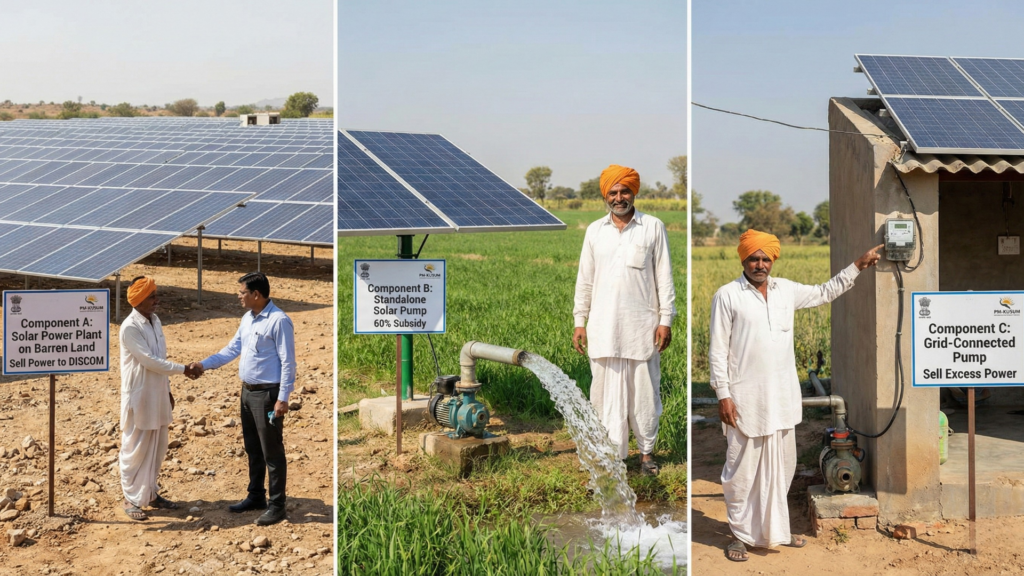
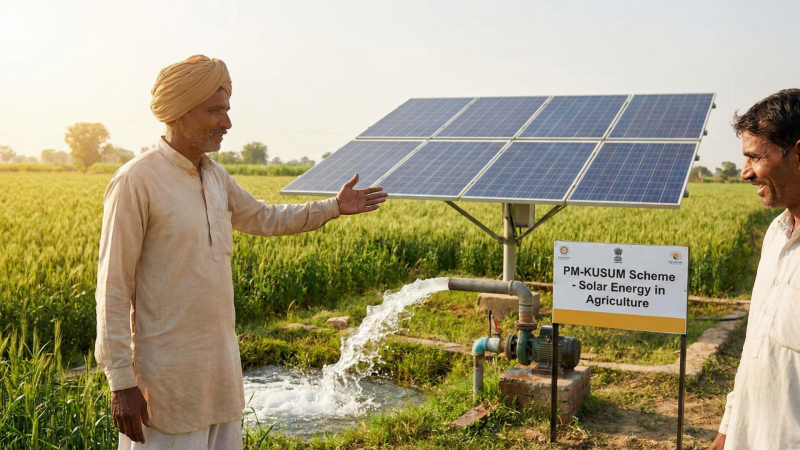
The transition to solar can be expensive, but the Government of India has launched the Pradhan Mantri Kisan Urja Suraksha evam Utthaan Mahabhiyan (PM-KUSUM) to help.
This scheme is crucial for anyone looking to adopt Solar Energy in Agriculture. It significantly lowers the entry barrier through heavy subsidies.
Table 2: Snapshot of PM-KUSUM Scheme Benefits
| Component | Purpose | Beneficiary | Financial Support (Subsidy) |
| Component A | Set up Solar Power Plants (500 kW – 2 MW) on barren land. | Individual Farmers / Co-ops / Panchayats | Earn by selling power to DISCOM. (Procurement Based Incentive). |
| Component B | Install Standalone Solar Agriculture Pumps (Off-grid). | Farmers with no grid connection | 30% Central + 30% State = 60% Subsidy. Farmer pays only 10% (30% is bank loan). |
| Component C | Solarization of existing Grid-connected Pumps. | Farmers with existing electric pumps | 60% Subsidy (Central + State). Sell excess power to grid for extra income. |
Note: Subsidy percentages can vary slightly by state (e.g., higher subsidies in North-Eastern states). Always check with your State Renewable Energy Nodal Agency.
Conclusion
The future of Indian farming lies in sustainability and efficiency. By switching to solar, you are not just buying a piece of machinery; you are insulating yourself from rising fuel prices, ensuring your crops get water on time, and potentially creating a secondary income stream.
Solar Energy in Agriculture empowers the “Annadata” (food provider) to become an “Urjadata” (energy provider).
Whether you start with a small solar water pump or invest in a larger grid-connected system, the long-term benefits for your wallet and the environment are undeniable.
Frequently Asked Questions (FAQ)
1. Is solar energy reliable for agriculture during the monsoon?
Yes, modern solar panels rely on UV rays, not just direct heat. While generation drops by 15-20% on heavily cloudy days, they still produce enough power to run pumps, especially since water requirements for crops are usually lower during rainy periods.
2. What is the cost of a 5HP solar water pump in India?
Without subsidy, a 5HP solar pumping system costs approx. ₹2.5 Lakhs to ₹3 Lakhs. However, under the PM-KUSUM Component B, you may only need to pay 10% upfront (approx. ₹25,000 – ₹30,000) with the rest covered by subsidy and bank loans.
3. Can I run my existing AC pump on solar?
Yes. You will need a solar inverter (VFD – Variable Frequency Drive) which converts the DC power from panels into AC power for your existing pump. This is covered under PM-KUSUM Component C.
4. How much space do I need for a solar pump?
A 5HP pump typically requires about 400-500 square feet of shadow-free area for the solar panels. This can be installed on a small patch of fallow land or near the farm pond.
5. How do I apply for the solar pump subsidy?
You need to visit the official PM-KUSUM portal of your respective state (e.g., Rajasthan Renewable Energy Corporation in Rajasthan). Applications are usually invited online. Avoid third-party agents; always use official government portals.