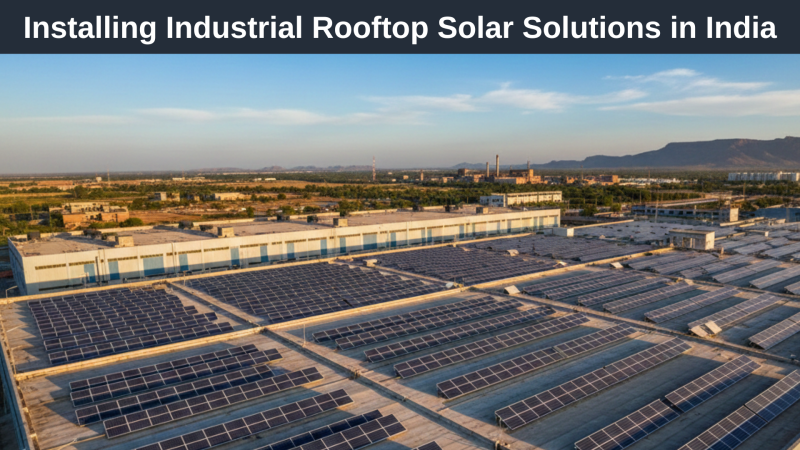
In the current economic climate, Indian industries are facing a dual challenge: the rising cost of grid electricity and the global pressure to reduce carbon footprints. For a business owner, energy is no longer just a utility; it is a strategic variable. This is where Industrial Rooftop Solar Solutions India come into play. Particularly in a high-irradiation state like Rajasthan, solar power has transitioned from a “green luxury” to a financial necessity.
The Strategic Importance of Industrial Rooftop Solar Solutions India
India’s industrial sector consumes approximately 40% of the nation’s total electricity. With commercial tariffs in states like Rajasthan hovering between ₹8 to ₹11 per unit, the operational expenditure (OPEX) for factories is soaring.
By adopting Industrial Rooftop Solar Solutions India, companies can lock in their electricity costs for the next 25 years. In cities like Jaipur, Jodhpur, and Udaipur, the solar potential is among the highest globally, offering a Capacity Utilization Factor (CUF) that ensures maximum return on investment.
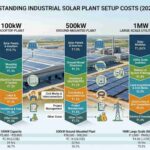
Table 1: Technical & Financial Feasibility Matrix (Industrial Scale)
| System Capacity | Roof Space Required | Avg. Daily Generation | Estimated Project Cost |
| 100 kW | 10,000 Sq. Ft. | 400 – 450 Units | ₹38 Lakh – ₹45 Lakh |
| 250 kW | 25,000 Sq. Ft. | 1,000 – 1,125 Units | ₹90 Lakh – ₹1.1 Crore |
| 500 kW | 50,000 Sq. Ft. | 2,000 – 2,250 Units | ₹1.7 Crore – ₹2.1 Crore |
| 1 MW | 1,00,000 Sq. Ft. | 4,000 – 4,500 Units | ₹3.4 Crore – ₹4.0 Crore |
Planning Your Industrial Rooftop Solar Solutions India Project
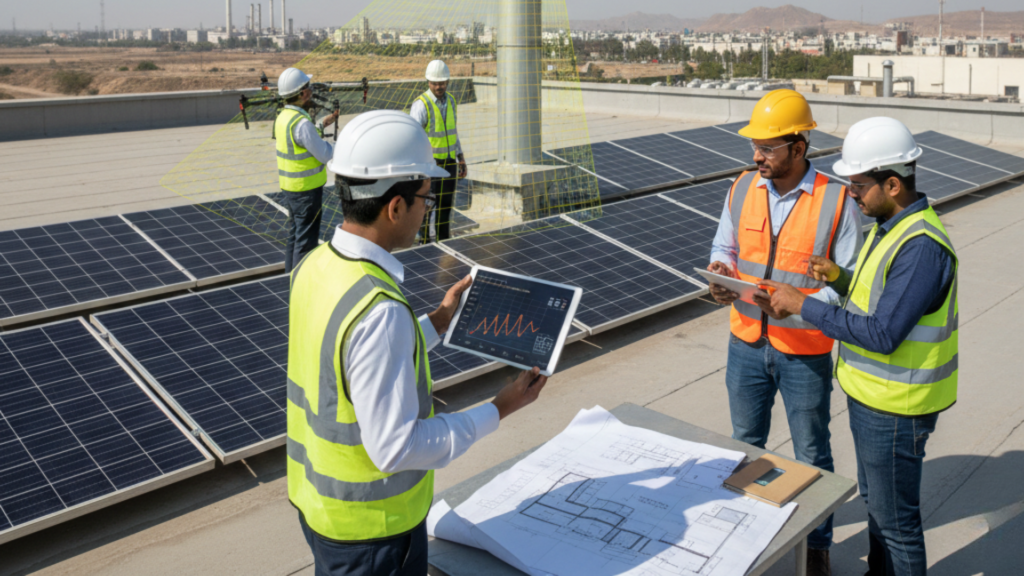
Planning an industrial-grade solar plant is vastly different from a residential setup. It requires a multi-disciplinary approach involving structural engineering, electrical synchronization, and legal compliance.
1. Structural Integrity and Load Testing
Before installing thousands of kilograms of solar panels, a structural stability certificate is mandatory. Industrial sheds in Rajasthan, often made of pre-engineered building (PEB) structures, must be analyzed for wind uplift forces, especially considering the high-velocity dust storms (Andhi) common in the region.
2. Shadow Mapping and 3D Modeling
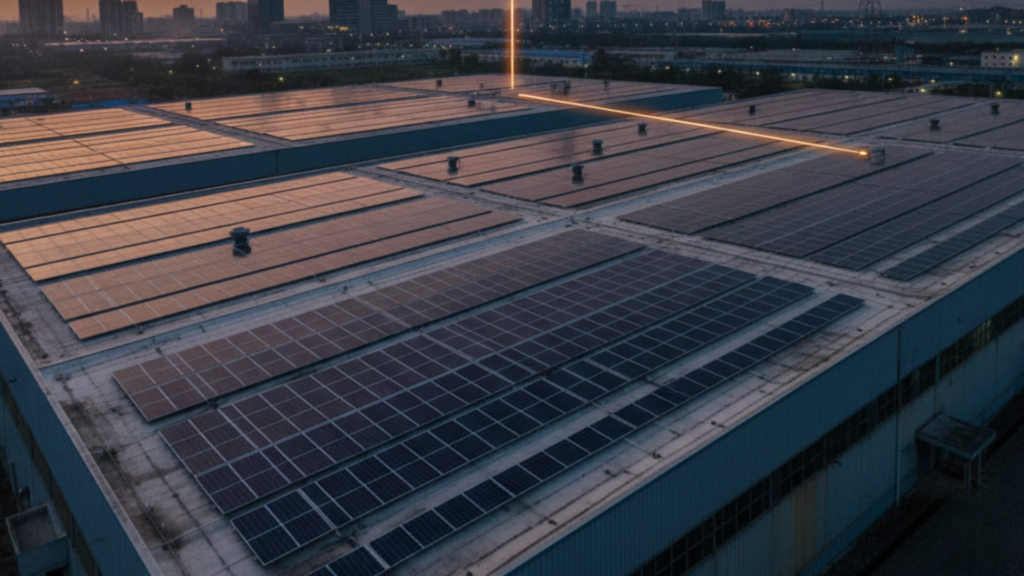
Using LiDAR or drone-based mapping, engineers create a 3D twin of your factory. This ensures that chimneys, vents, or neighboring buildings do not cast shadows on the panels. For Industrial Rooftop Solar Solutions India, even a 10% shadow can lead to a 30% drop in energy yield due to the “hotspot” effect in solar cells.
3. Energy Load Profiling
We analyze your last 12 months of electricity bills to determine your “Base Load” and “Peak Load.” The goal is to design a system where the solar generation curve matches your factory’s shift timings, maximizing “Behind-the-Meter” consumption.
Analyzing the Cost of Industrial Rooftop Solar Solutions India
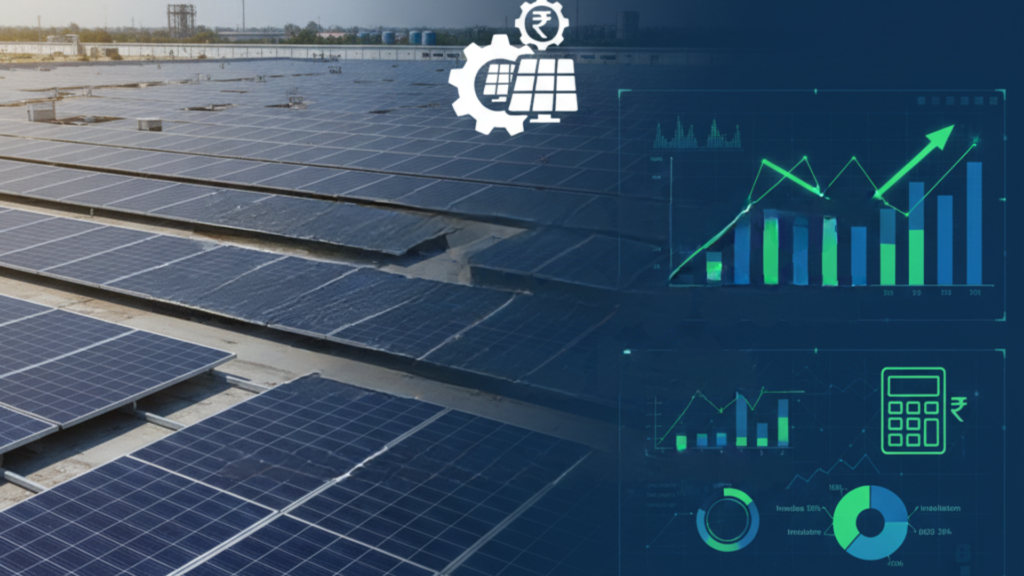
The “Levelized Cost of Energy” (LCOE) for solar in India is now approximately ₹2.50 to ₹3.00 per unit. Compare this to the ₹9.00 you might be paying to the DISCOM, and the savings are evident.
Components of the Project Cost:
- Solar Modules (The Panels): Bifacial modules are becoming the standard for Industrial Rooftop Solar Solutions India. They capture sunlight from both sides, increasing yield by up to 15% in sandy terrains like Rajasthan.
- Inverters: For industrial scales, String Inverters or Central Inverters with high efficiency (98%+) are used.
- Module Mounting Structures (MMS): Hot-dip galvanized steel is used to prevent corrosion, crucial for industries involved in chemical processing or textile dyeing.
Table 2: Comparative Financial Models (CAPEX vs. RESCO)
| Feature | CAPEX (Own Investment) | RESCO (OPEX Model) |
| Upfront Cost | High (Paid by the Business) | Zero (Paid by Developer) |
| Ownership | Business owns the asset | Developer owns the asset |
| Primary Benefit | Maximum long-term savings | Immediate savings without debt |
| Tax Benefit | Accelerated Depreciation | No Tax Benefit for User |
| Maintenance | Handled by owner/vendor | Handled by Developer |
Subsidies and Government Incentives for Industrial Solar
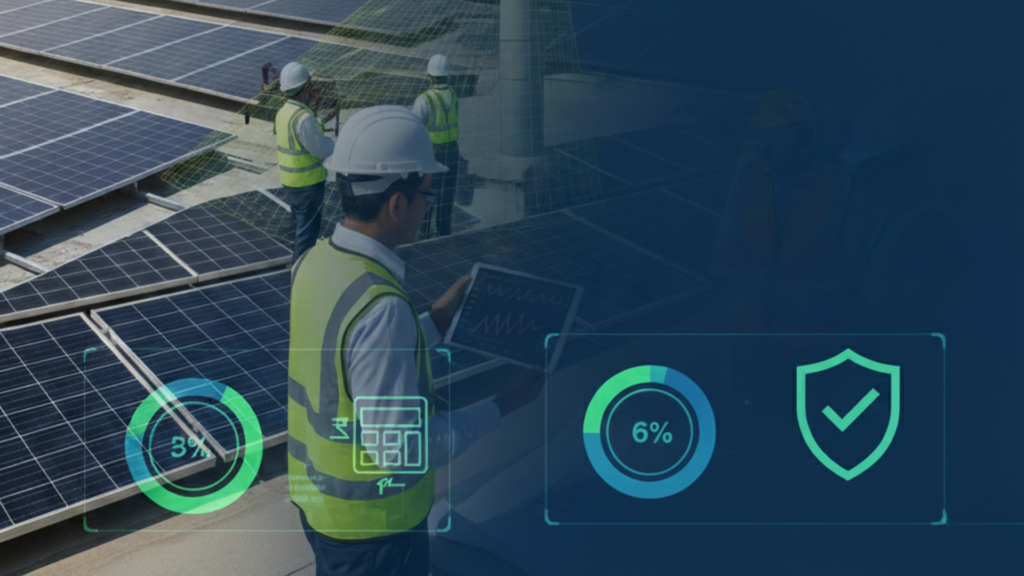
While the Indian government has phased out direct cash subsidies for large-scale industrial projects, the fiscal incentives are still massive.
1. Accelerated Depreciation (AD)
Under the Income Tax Act, businesses can claim 40% depreciation on solar assets in the first year. This is a powerful tool for profitable industries in Rajasthan to reduce their tax liability while building a green asset.
2. Renewable Purchase Obligations (RPO)
Large industries are often mandated by law to consume a certain percentage of renewable energy. Installing Industrial Rooftop Solar Solutions India helps meet these RPO targets, avoiding heavy penalties from regulatory bodies.
3. Rajasthan State Solar Policy 2023-2028
Rajasthan offers specific perks for industrial solar:
- Banking of Energy: You can “store” excess energy generated during the day in the grid and use it at night (subject to banking charges).
- Electricity Duty Exemption: Most solar installations are exempt from state electricity duties for several years.
The Installation Workflow for Industrial Rooftop Solar Solutions India
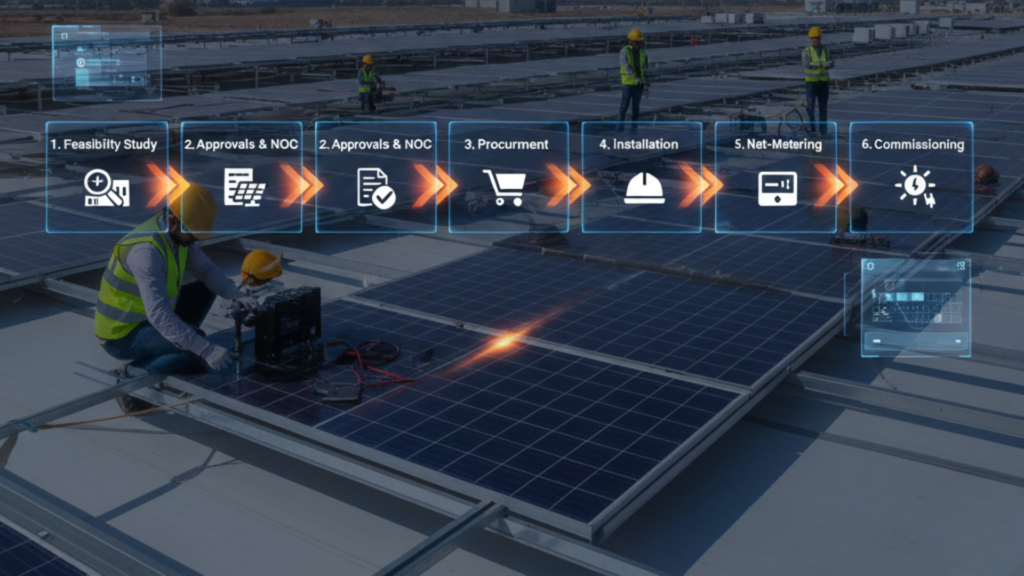
- Feasibility Study: Site visit and shadow analysis.
- Liaisoning & Approvals: Getting the “No Objection Certificate” (NOC) from JVVNL, AVVNL, or JdVVNL (Rajasthan DISCOMs).
- Procurement: Sourcing Tier-1 ALMM approved modules.
- Execution: Installation of structures, panels, and inverters.
- Net-Metering: Replacing the traditional meter with a bi-directional meter to track export/import.
- Commissioning: The plant goes live.
Table 3: Sector-Specific ROI Expectation in Rajasthan
| Industrial Sector | Typical Load | Payback Period | 25-Year Savings |
| Textiles (Bhilwara) | 500kW – 2MW | 3.8 Years | ₹15 Crores+ |
| Cold Storage | 100kW – 300kW | 3.2 Years | ₹4 Crores+ |
| Stone & Mining | 200kW – 1MW | 4.0 Years | ₹8 Crores+ |
| Auto Components | 500kW+ | 3.5 Years | ₹12 Crores+ |
Maintenance and Monitoring of Industrial Solar
In the dusty environment of Rajasthan, maintenance is the difference between a high-performing plant and a failing one.
- Automated Cleaning: Waterless robotic cleaners are ideal for Rajasthan to conserve water while keeping modules dust-free.
- Remote Monitoring: Real-time SCADA systems allow you to monitor generation from your smartphone, ensuring any technical fault is addressed within hours.
Conclusion: The Future of Industrial Rooftop Solar Solutions India
The transition to Industrial Rooftop Solar Solutions India is no longer just about sustainability; it’s about survival in a competitive market. For industries in Rajasthan, the combination of high solar insolation, favorable state policies, and the benefit of Accelerated Depreciation makes solar the highest-yielding financial instrument available today. By converting your idle factory roof into a powerhouse, you are not just saving money—you are future-proofing your business.
FAQ: Industrial Rooftop Solar Solutions India
1. How long does the installation take?
For a 100kW to 500kW project, the physical installation takes 30-45 days, while the documentation and net-metering process can take an additional 30 days.
2. Is there a warranty on the system?
Solar panels typically come with a 25-year performance warranty. Inverters usually have a 5 to 10-year warranty, which can be extended.
3. Can I expand my system later?
Yes, Industrial Rooftop Solar Solutions India are modular. As long as you have additional roof space and sanctioned load capacity, you can add more panels.
4. What happens during a power cut?
Standard Grid-Tied systems shut down during a power cut for safety (Anti-islanding). However, with “Zero Export” devices or hybrid systems, you can continue to use solar power alongside a DG set or battery bank.