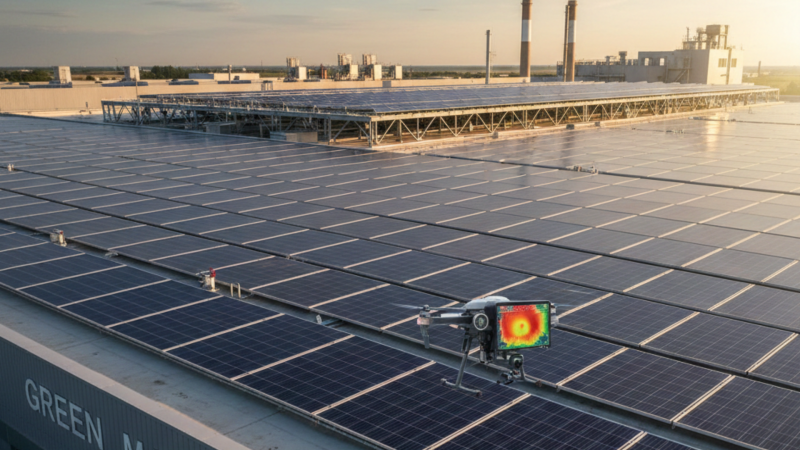
In the competitive world of modern manufacturing, operational efficiency is the thin line between profit and loss. With industrial electricity tariffs rising globally by 5-8% annually, energy has shifted from a utility bill to a strategic challenge. This is where Commercial Solar Solutions for Factories step in—not just as a “green” initiative, but as a robust financial tool to hedge against inflation and slashing overhead costs.
Transitioning a massive manufacturing plant to solar power is a complex engineering feat. This guide provides a 360-degree view of why, how, and when you should invest in solar energy to transform your factory into a self-sustaining powerhouse.
The Strategic Importance of Commercial Solar Solutions for Factories

Manufacturing units are unique energy consumers. Unlike residential buildings, they have “flat” load curves—meaning they consume massive amounts of power consistently throughout the day. This aligns perfectly with the peak generation hours of solar photovoltaic (PV) systems.
A. Drastic Reduction in Operational Expenses (OPEX)
For energy-intensive sectors like textiles, metal fabrication, and food processing, electricity can account for nearly 25% of total operating costs. By implementing Commercial Solar Solutions for Factories, a business can effectively “pre-pay” for 25 years of electricity at a fraction of the grid’s cost.
B. Tax Advantages and Financial Incentives
Governments worldwide offer “Accelerated Depreciation” (AD) for solar assets. In many regions, a factory owner can write off up to 40% of the project cost in the very first year. This creates an immediate cash flow benefit through tax savings, effectively subsidizing the transition to renewable energy.
C. Strengthening the Global Supply Chain
Modern MNCs and retailers now audit their suppliers based on Carbon Footprint scores. If your factory uses Commercial Solar Solutions for Factories, you gain a competitive edge in securing international contracts by proving your commitment to “Green Manufacturing.”
Technical Architecture: Powering Heavy Machinery
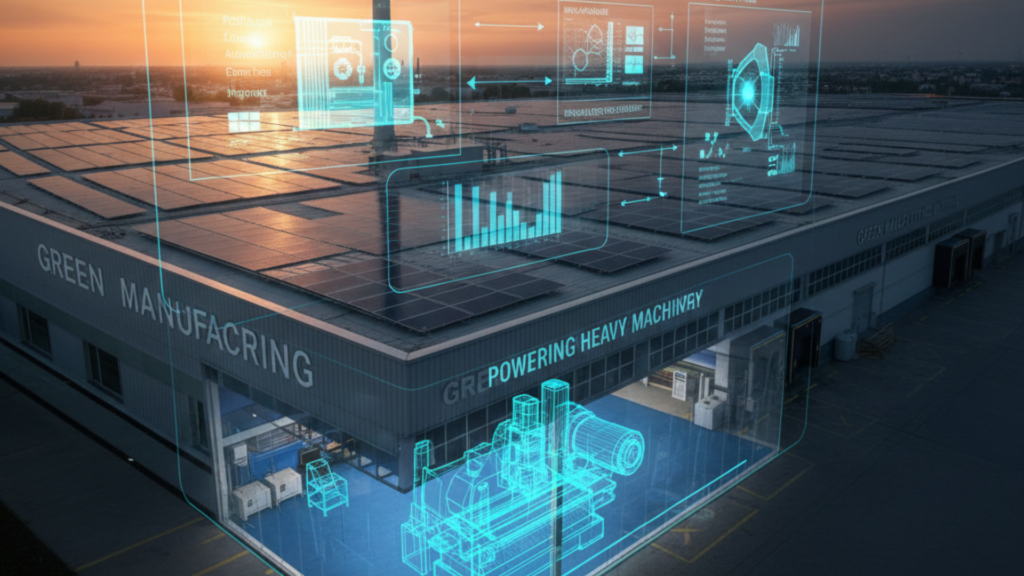
Industrial solar is vastly different from home solar. Factories use heavy motors, CNC machines, and massive HVAC systems that require stable, high-voltage power.
Core Components of Commercial Solar Solutions for Factories
To handle industrial-scale loads, the hardware must be Tier-1 grade.
- Bifacial Solar Modules: These panels capture sunlight from both the front and the back (reflecting off the roof surface). For factories with large RCC or light-colored roofs, bifacial modules can increase energy yield by 10-15%.
- Industrial String Inverters: Unlike a single home inverter, factories use a series of high-capacity string inverters. These ensure that if one string of panels has an issue, the rest of the system continues to function perfectly.
- Power Quality Filters: Heavy machinery can cause “harmonics” in the electrical system. High-end Commercial Solar Solutions for Factories include filters to ensure the solar energy is “clean” and doesn’t damage sensitive electronic equipment.
Assessing Roof Integrity for Commercial Solar Solutions for Factories
Before a single panel is bolted down, a structural engineer must certify the roof.
- Dead Load: The weight of the panels and mounting structures (approx. 15-20 kg per sqm).
- Wind Load: In industrial zones, high-velocity winds can create a “lift” effect. The mounting must be aerodynamically designed.
- Vibration Analysis: If your factory has heavy stamping or forging machines, the resulting vibrations can micro-crack cheap solar cells. Using high-quality, reinforced modules is essential.
Financial ROI of Commercial Solar Solutions for Factories

Understanding the numbers is critical for any CFO or Factory Manager. Solar is an asset that pays for itself.
The Economics of Commercial Solar Solutions for Factories
The average payback period for an industrial solar installation is currently 3 to 4.5 years. After this period, the electricity generated is essentially free for the remainder of the system’s 25-year lifespan.
| Financial Metric | Grid Electricity (Traditional) | Commercial Solar Solutions for Factories |
| Cost per Unit (kWh) | High & Variable | Low & Fixed ($0.03 – $0.05/unit) |
| Asset Depreciation | 0% | Up to 40% (First Year) |
| Maintenance Cost | Low | Low (Cleaning & Monitoring) |
| Payback Period | Never | 3 – 5 Years |
| System Lifespan | N/A | 25+ Years |
CAPEX vs. OPEX Financing Models
- CAPEX (Capital Expenditure): The factory owns the system from Day 1. You pay the full cost upfront but reap 100% of the savings and tax benefits.
OPEX (RESCO Model): A third party installs the solar on your roof. You don’t pay for the equipment; you only pay for the solar units consumed at a rate lower than the grid. This is “Zero Investment” solar.
The Installation Roadmap: From Audit to Commissioning
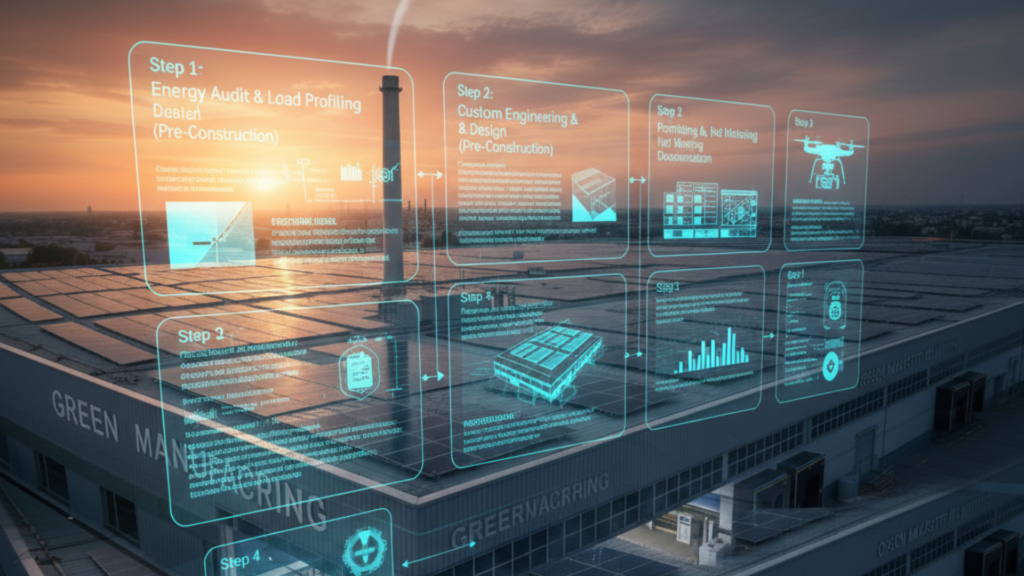
A successful installation of Commercial Solar Solutions for Factories requires a disciplined, multi-step approach to avoid downtime in production.
Step 1: Energy Audit & Load Profiling
Engineers use data loggers to track your factory’s energy spikes. We don’t just look at the bill; we look at when you use power. If your factory runs 24/7, we might suggest a hybrid system with battery storage.
Step 2: Custom Engineering Design (FEED)
Front-End Engineering Design involves 3D shadow mapping. If your factory chimney casts a shadow at 3 PM, the system layout must be adjusted so that one shadow doesn’t shut down the entire array.
Step 3: Regulatory Approvals & Net Metering
In most jurisdictions, you need a “Net Meter.” This bidirectional meter tracks how much power you take from the grid and how much your Commercial Solar Solutions for Factories send back to the grid during holidays or low-load periods.
Step 4: Seamless Integration
Installation is done in phases to ensure the factory never loses power. The final “switch-over” usually happens during a planned weekend shutdown.
Maximizing Efficiency: Maintenance and IoT Monitoring
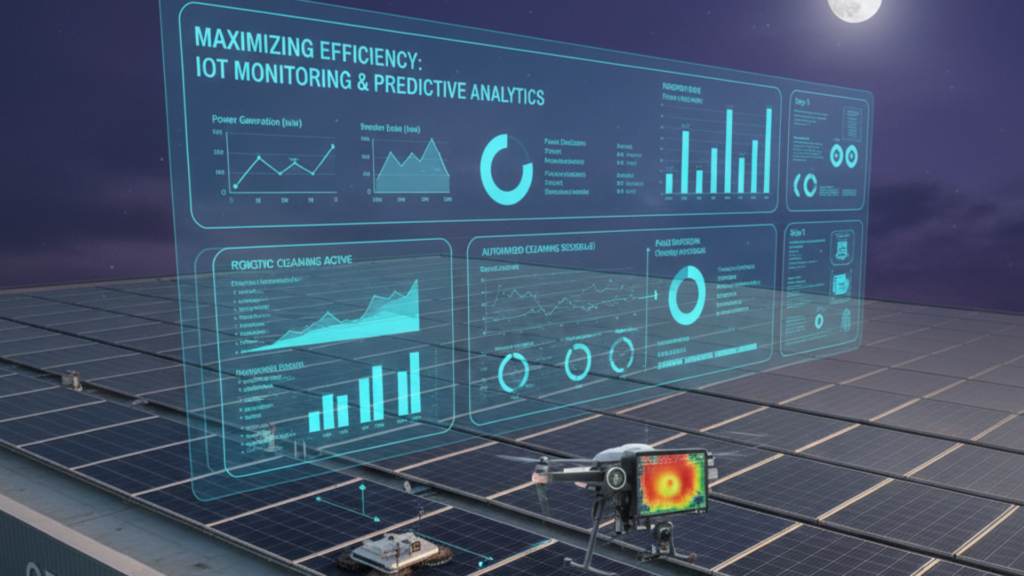
Once installed, your solar plant is a “mini power station.” To ensure it delivers the promised ROI, it must be managed actively.
Maintaining Commercial Solar Solutions for Factories
- Automated Robotic Cleaning: Large factory roofs are hard to clean manually. Robotic cleaners use minimal water to keep panels free of industrial dust and soot.
- Predictive Analytics: Modern systems use AI to compare actual generation with weather data. If the system generates less than it should on a sunny day, an alert is sent to the maintenance team.
- Thermal Imaging: Annual drone-based thermal scans can detect “hotspots” (overheating cells) that are invisible to the naked eye but can lead to fires if left unchecked.
Overcoming Common Challenges
Many factory owners hesitate due to common myths. Let’s address them directly:
- “My roof is too old”: We can install “Over-deck” structures that reinforce the roof while adding solar.
- “Solar is only for daytime”: While true, the credits you earn via Net Metering during the day can offset your expensive nighttime grid consumption.
- “Sensitive machines might trip”: By using high-quality Commercial Solar Solutions for Factories with advanced inverters, the transition between solar and grid power is millisecond-fast and completely invisible to CNC machines.
Conclusion: The Future is Solar-Powered
The manufacturing sector is at a crossroads. Those who continue to rely solely on the grid will remain vulnerable to rising energy costs and carbon taxes. By investing in Commercial Solar Solutions for Factories, you are not just buying hardware; you are buying “Energy Insurance.”
The ROI is clear, the technology is mature, and the environmental impact is undeniable. As we move toward 2030, solar-powered factories will be the standard, not the exception. The question isn’t whether you should switch to solar—it’s how much you are losing every day you wait.
Frequently Asked Questions (FAQs)
Q1: Can Commercial Solar Solutions for Factories handle 100% of my load?
While technically possible with batteries, most factories find the best ROI by offsetting 60-80% of their load with solar and using the grid as a backup/buffer.
Q2: How long does the installation take?
For a standard 500kW factory setup, the process from design to commissioning usually takes 8 to 12 weeks, with minimal disruption to your daily manufacturing operations.
Q3: What happens if there is a power cut in the grid?
Standard grid-tied Commercial Solar Solutions for Factories shut down for safety (Anti-Islanding). However, if you have a “Zero Export” device or a Hybrid Inverter with a battery bank/DG synchronization, your solar can continue to power essential loads.
Q4: Are there government subsidies for industrial solar?
Subsidies for commercial sectors are rarer than residential, but the Accelerated Depreciation and GST Input Tax Credits provide significant financial relief that often outweighs direct subsidies.
Q5: Is the roof warranty affected by solar installation?
If installed using “Non-Penetrating” mounting structures or specialized clamps for metal roofs, your original roof warranty remains valid. Always ensure your solar provider uses high-quality EPDM gaskets to prevent leakages.