Switching to solar energy is no longer just an “environmental” choice; it is one of the most stable financial investments a homeowner can make in 2026. However, before most homeowners sign a contract, the primary question remains: “What is the payback period for residential solar, and how long until my investment pays for itself?”Understanding the payback period for residential solar is the key to unlocking the true value of renewable energy. In this comprehensive guide, we will break down the mathematics of solar ROI, explore the variables that dictate your break-even point, and look at how 2026 technology is making solar more profitable than ever.
What is the Payback Period for Residential Solar?
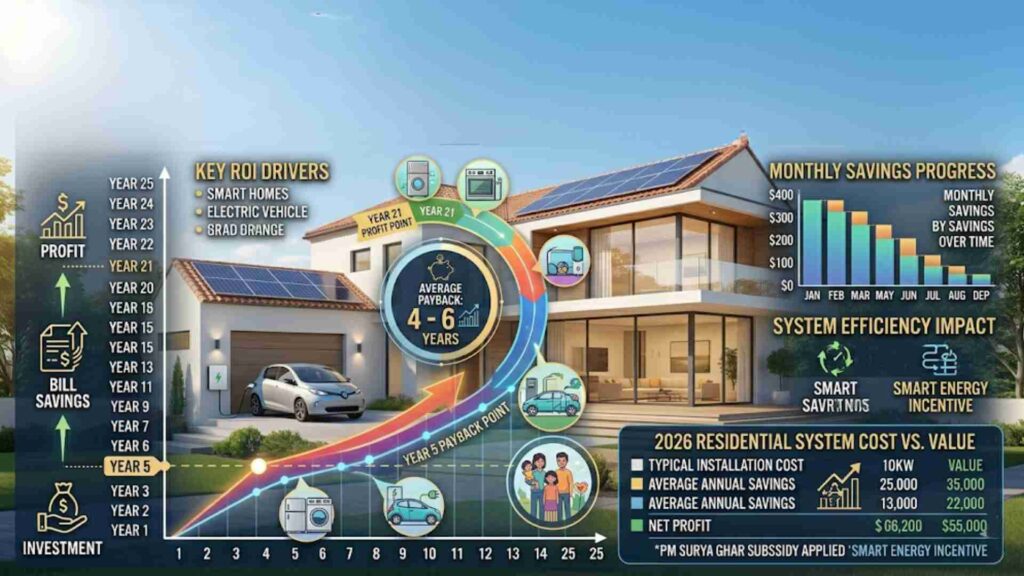
The payback period for residential solar is the time it takes for your cumulative electricity bill savings to equal the initial net cost of your solar installation. Think of it as the “break-even point.” Once you cross this threshold, every kilowatt-hour (kWh) your roof produces is essentially pure profit.
In 2026, with the rise of TOPCon and HJT (Heterojunction) cell technologies, solar systems are generating more power than their predecessors. This increased efficiency has directly influenced the payback timeline, shortening it for many homeowners despite changes in global supply chains.
The Simple Formula to Calculate Your Payback Period
While professional installers use complex software, you can estimate your payback period for residential solar using this simple formula:
P = (C – I) / S
- P = Payback Period (in years)
- C = Gross System Cost (Equipment + Labor)
- I = Total Incentives and Subsidies (Government rebates)
- S = Annual Electricity Savings (Your yearly bill reduction)
Key Factors Influencing Your Payback Period for Residential Solar in 2026
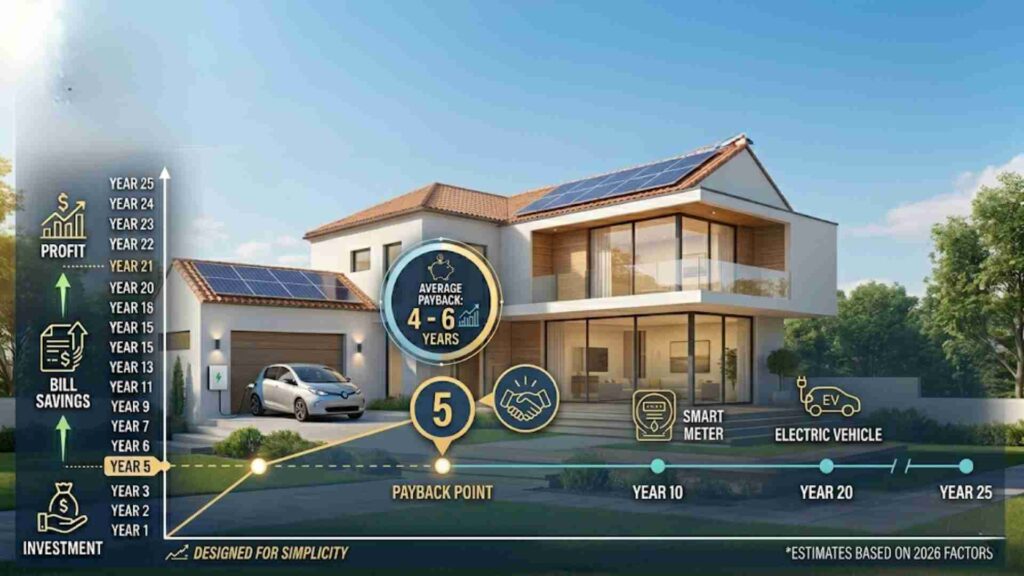
Not all roofs are created equal. Several variables can shift your ROI window by several years. Understanding these will help you optimize your system for the fastest possible return.
1. How Government Subsidies Lower the Payback Period for Residential Solar
In 2026, government programs like the PM Surya Ghar: Muft Bijli Yojana (in India) or updated federal tax credits globally continue to play a massive role. By covering a significant portion of the upfront cost, these subsidies can reduce your payback period for residential solar by 30% to 50%.
2. Local Electricity Tariffs
The higher your local utility charges per unit (kWh), the faster your solar panels “pay” you back. With grid electricity prices rising by approximately 5-7% annually in 2026, the value of “avoided cost” makes solar an incredible hedge against inflation.
3. System Efficiency and Technology (TOPCon & Bifacial)
Modern residential systems now frequently use N-Type TOPCon panels. These panels perform better in high heat and low-light conditions compared to older models. Higher efficiency means more units generated per square foot, directly accelerating your payback period for residential solar.
2026 ROI Comparison: Solar vs. Traditional Investments
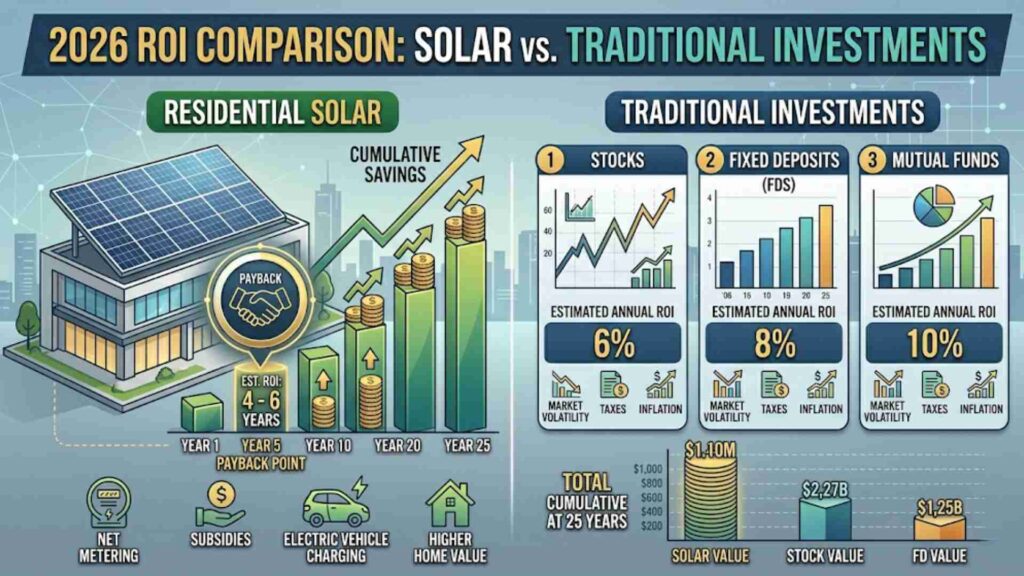
Is solar a better place for your money than a Fixed Deposit (FD) or the Stock Market? Let’s look at the numbers. While a typical FD might offer a 7% return, a well-optimized solar system in a high-tariff region can offer an annual ROI of 25% to 35%.
| Investment Type | Average Annual Return | Risk Level | Payback/Liquidity |
| Residential Solar (2026) | 18% – 35% | Very Low | 4 – 7 Years |
| Fixed Deposits | 6.5% – 7.5% | Zero | Periodic |
| Stock Market (S&P/Nifty) | 12% – 15% | High | Variable |
| Real Estate | 8% – 10% | Moderate | Long-term |
Note: Solar is the only investment that “pays” you by reducing an unavoidable monthly expense (your power bill).
How to Shorten Your Payback Period for Residential Solar
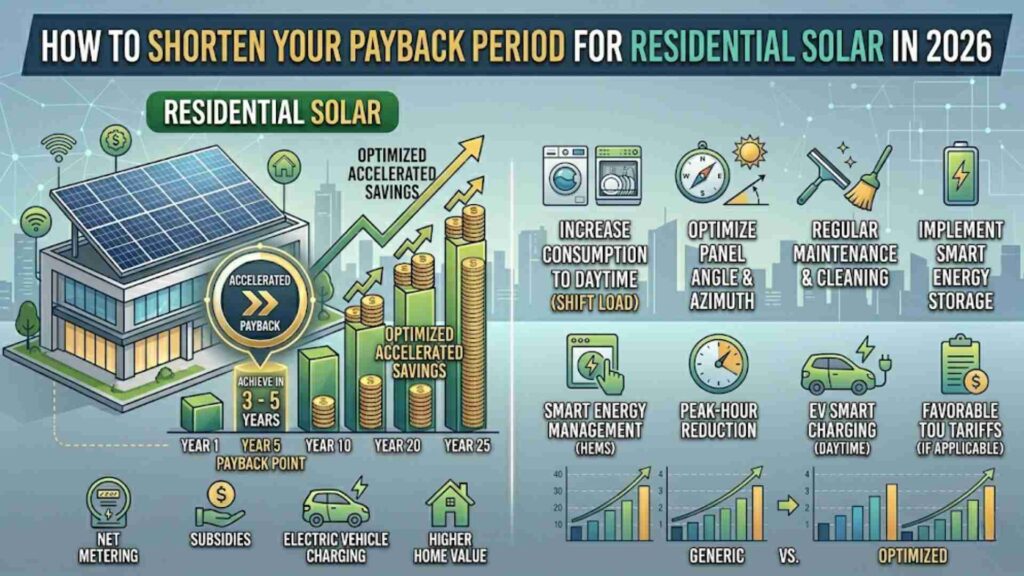
If you want to hit your break-even point faster, consider these expert strategies for 2026:
- Optimize Energy Consumption: Shift heavy appliance usage (washing machines, ACs, dishwashers) to daytime hours when your solar generation is at its peak.
- Net Metering Awareness: Ensure your local DISCOM (Utility company) has a favorable net metering policy. This allows you to sell excess energy back to the grid during the day and get credit for it at night.
- Regular Maintenance: Dust and debris can reduce efficiency by 10-15%. A simple cleaning schedule ensures you are maximizing your payback period for residential solar.
- Smart Monitoring: Use AI-based apps to track your generation in real-time. If a string of panels is underperforming, fixing it immediately prevents lost savings.
Is the Payback Period Longer with Battery Storage?
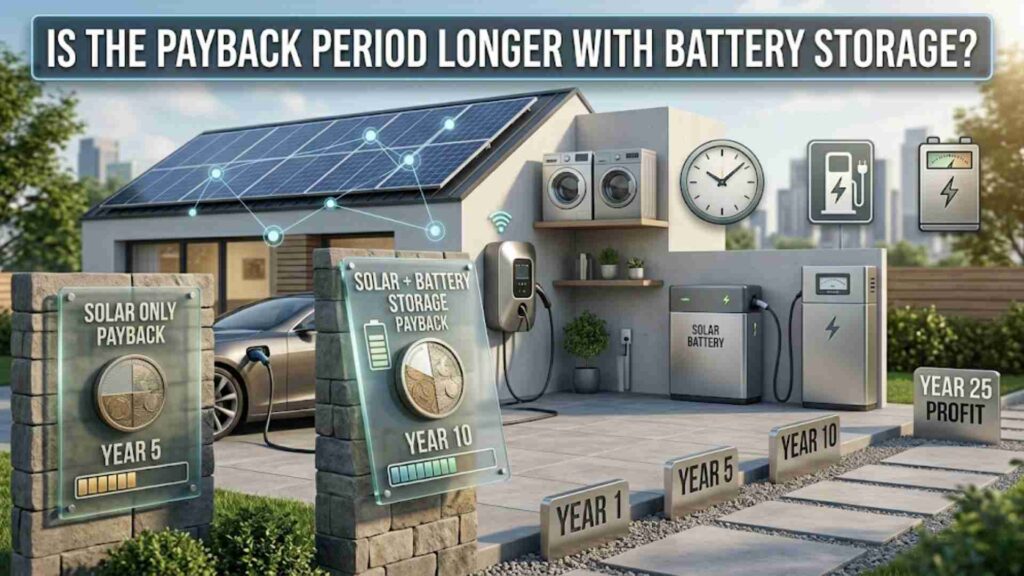
In 2026, many homeowners are opting for “Hybrid” systems (Solar + Battery). While adding a battery increases the upfront cost—thereby extending the payback period for residential solar by 2 to 3 years—it offers something “Simple Solar” cannot: Energy Independence.
With a battery, you avoid peak-hour grid prices, which are significantly higher in many regions due to Time-of-Use (TOU) billing. In the long run, the security of having power during a blackout often outweighs the slightly longer payback window.
Conclusion: A Smart Move for 2026
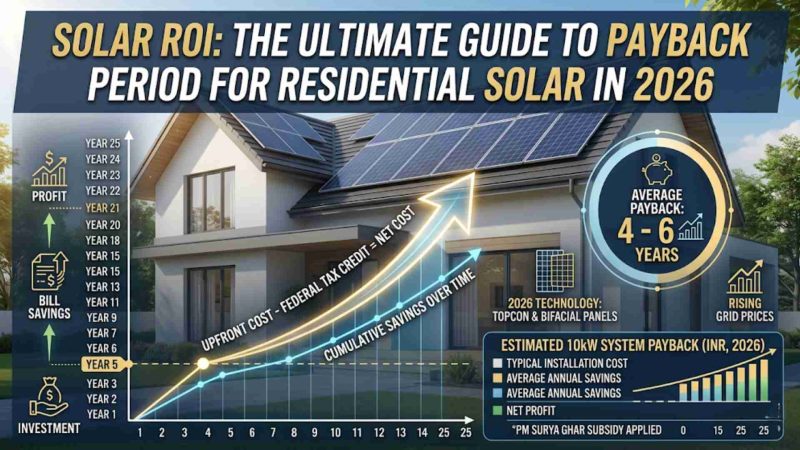
The profitability timeline for home energy systems has reached a “sweet spot” in 2026. With improved technology, robust government support, and rising utility costs, most homeowners will see their systems pay for themselves in 4 to 6 years. Given that modern panels are warrantied for 25 years, you are looking at nearly two decades of free electricity.
Investing in solar today isn’t just about saving the planet—it’s about taking control of your financial future.
Frequently Asked Questions (FAQ)
Q1: What is the average payback period for residential solar in India in 2026?
Typically, for a 3kW to 10kW system with the PM Surya Ghar subsidy, the payback period is between 3.5 to 5.5 years. Without subsidies, it may range from 6 to 8 years.
Q2: Do solar panels increase my property value?
Yes. Studies show that homes with solar installations sell for a premium. This “instant equity” can often cover the remaining cost of the system if you decide to sell your home before the payback period is over.
Q3: Will my payback period for residential solar be longer if I live in a cloudy area?
While cloudy regions produce less energy than sunny deserts, they often have higher electricity rates. This paradox often results in a similar payback period because the “value” of each unit saved is higher.
Q4: How does net metering affect my ROI?
Net metering allows you to send excess solar power to the grid in exchange for credits. Without net metering, you lose the value of the energy you don’t use during the day, which can significantly extend your payback period for residential solar.