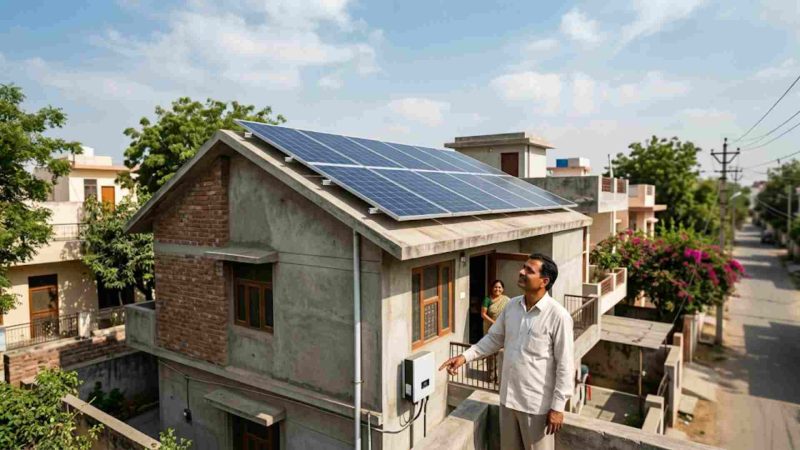
The global energy landscape is shifting beneath our feet. As traditional grid electricity prices climb higher every year, homeowners are searching for a lifeline. The answer has arrived in the form of affordable solar energy solutions for home.
In the past, solar was seen as a “green trophy” for the wealthy. Today, it is a strategic financial tool for the middle class. This 3,000-word ultimate guide explores how you can transition to clean energy without draining your savings, focusing on practical steps, hidden costs, and the massive ROI that solar offers in 2026.
The Economics of Affordable Solar Energy Solutions for Home
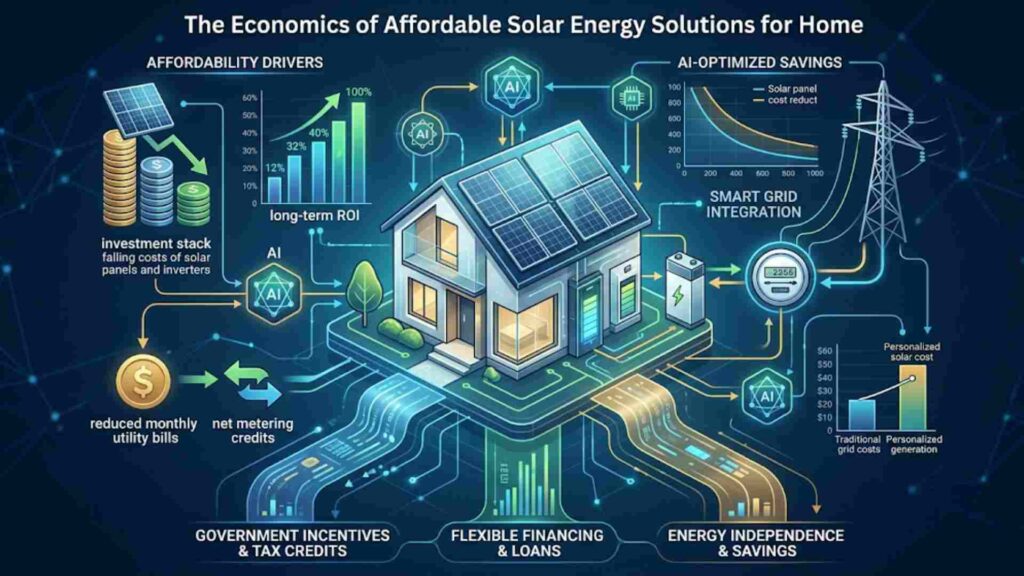
To understand why solar is now “affordable,” we have to look at the plummeting costs of photovoltaic (PV) technology. Over the last decade, the cost of solar cells has dropped by over 80%. When we talk about affordable solar energy solutions for home, we aren’t just talking about cheap panels; we are talking about a system that pays for itself in record time.
Breaking Down the Initial Investment
The upfront cost of solar is often the biggest mental barrier. However, a budget-friendly approach involves sizing your system correctly. Most middle-class homes require a 3kW to 5kW system. By focusing on essential energy needs rather than “over-provisioning,” you can keep the initial ticket price low while still wiping out your monthly electricity bill.
Long-term ROI vs. Short-term Costs
When you invest in affordable solar energy solutions for home, you aren’t “spending” money—you are “pre-paying” for 25 years of electricity at a massive discount. While a standard utility connection is a liability that costs you money every month, a solar system is an asset that generates wealth.
Top Technologies for Affordable Solar Energy Solutions for Home
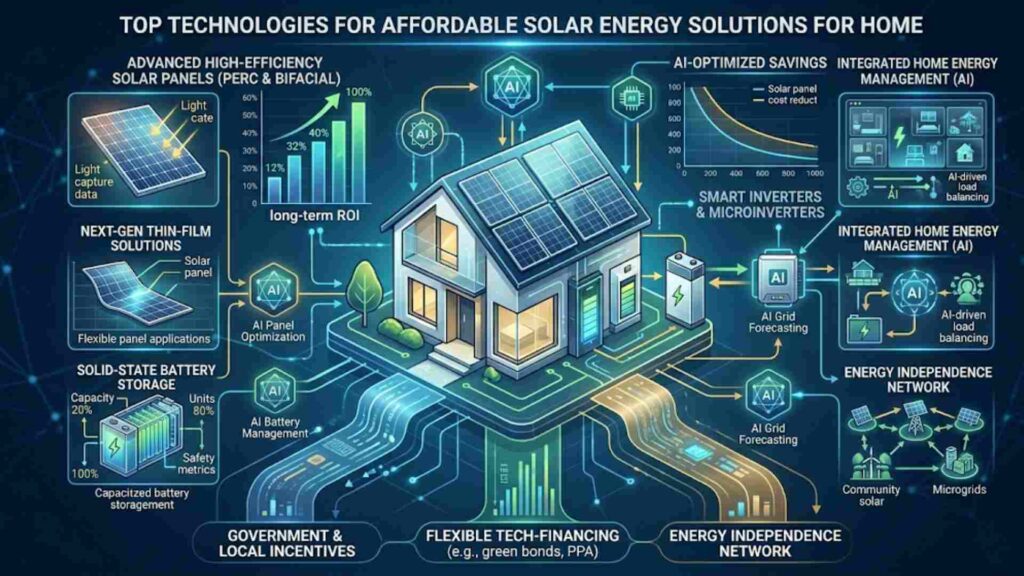
Not all solar panels are created equal. If you want to stay on a budget, you need to know where to spend and where to save.
Polycrystalline vs. Monocrystalline Panels
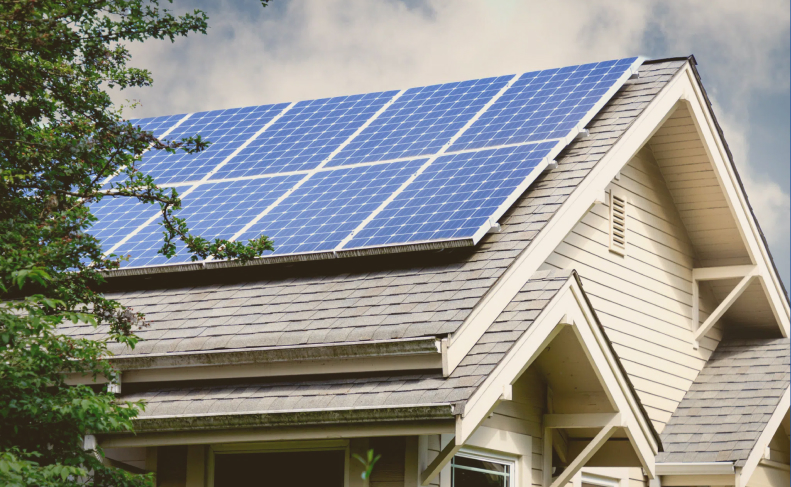
- Polycrystalline (Budget King): These are the blue-tinted panels. They are slightly less efficient but significantly cheaper. If you have plenty of roof space, these are the best affordable solar energy solutions for home.
- Monocrystalline (Efficiency King): These are black and sleek. They perform better in low light and require less space. While the upfront cost is higher, their long-term yield often makes them a better “value” over 20 years.
Bifacial Panels and Half-Cut Technology
In 2026, technology like “Bifacial” panels (which catch light from both sides) and “Half-Cut” cells (which reduce energy loss) have become standard. Integrating these into your search for affordable solar energy solutions for home ensures that your “budget” system doesn’t become obsolete in five years.
Government Subsidies: The Secret to Affordable Solar Energy Solutions for Home
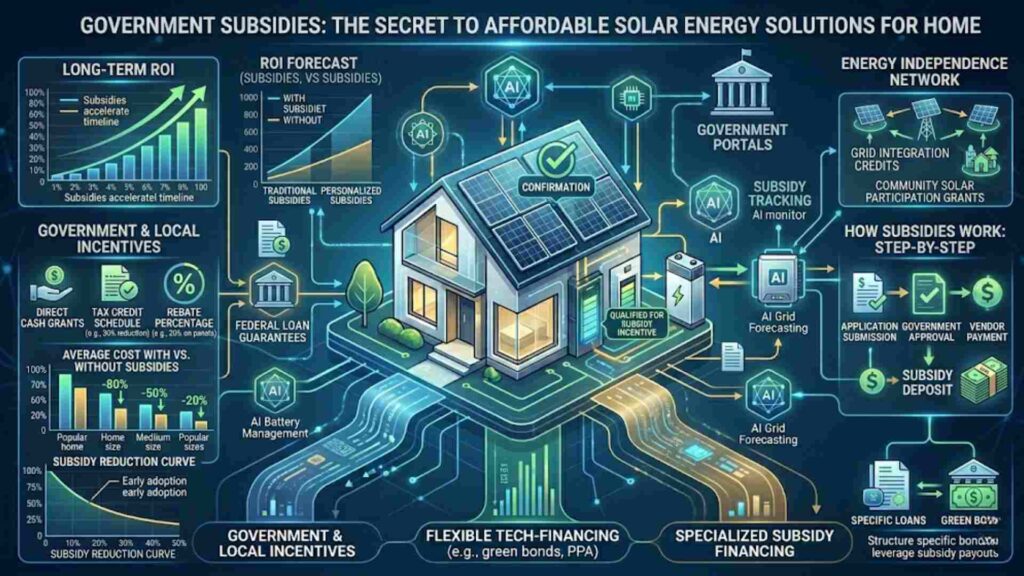
In many regions, especially India with the PM Surya Ghar: Muft Bijli Yojana, the government is literally paying you to go solar. This is the single most important factor in making solar affordable.
Direct Financial Benefits
Subsidies can cover up to 40% of your system cost. For a 3kW system, which is the “sweet spot” for residential use, the subsidy can drastically reduce your out-of-pocket expenses, bringing the payback period down to just 3 or 4 years.
The Role of Net Metering
Net metering allows you to send excess power back to the grid during the day and take it back at night for free. This eliminates the need for expensive battery storage, making it one of the most affordable solar energy solutions for home available today.
Financial Comparison: Solar vs. Traditional Power
| Feature | Traditional Grid Power | Affordable Solar System (3kW) |
| Monthly Cost | ₹3,500 – ₹5,000 (Rising 5% yearly) | ₹0 – ₹400 (Fixed grid charges) |
| Upfront Cost | ₹0 | ₹80,000 – ₹1,20,000 (After Subsidy) |
| Payback Period | Never | 3.5 Years |
| Maintenance | None (You just pay bills) | Minimal (Cleaning every 15 days) |
| 25-Year Outlook | You pay ₹15,00,000+ | You save ₹12,00,000+ |
Step-by-Step Guide to Implementing Affordable Solar Energy Solutions for Home
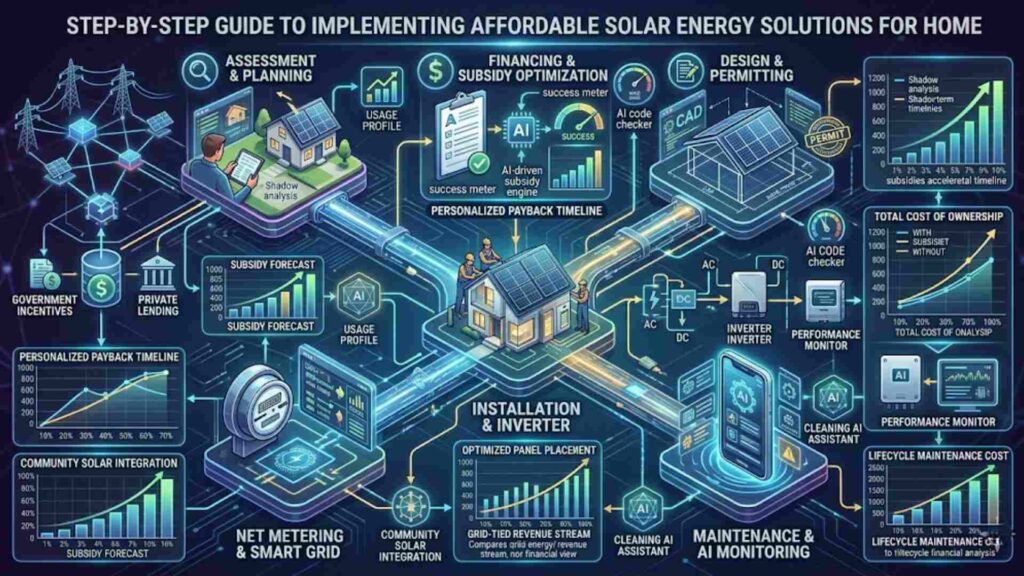
Going solar can feel overwhelming. Follow this “Budget Checklist” to ensure a smooth transition.
Step 1: Energy Audit
Before buying panels, reduce your load. Switch to LED bulbs and BLDC fans. Reducing your consumption by 20% might allow you to buy a smaller, more affordable solar energy solution for home.
Step 2: Shadow Analysis
A single shadow from a nearby tree or chimney can drop your system’s efficiency by 30%. Use a professional installer who provides a 3D shadow analysis to ensure your panels get maximum sun exposure.
Step 3: Comparing Quotes
Never take the first quote. Get at least three quotes from local installers. Ensure they are using “Tier-1” panels and ALMM-approved components to qualify for government subsidies.
Myths About Affordable Solar Energy Solutions for Home
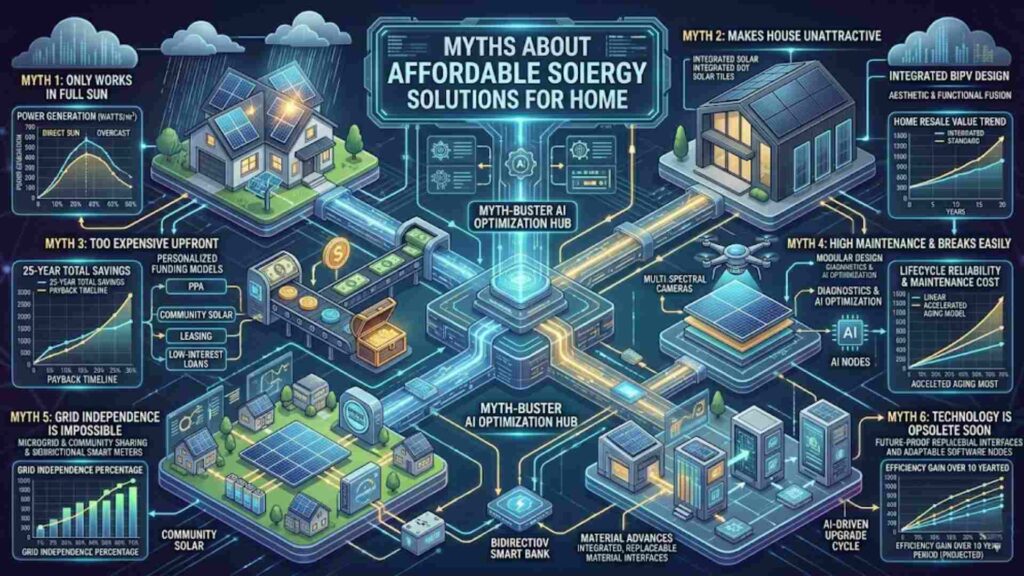
There is a lot of misinformation that prevents homeowners from switching. Let’s clear the air.
“Solar doesn’t work in the rain”
False. Modern panels use “diffused light” to generate electricity even on cloudy or rainy days. While the output is lower, your affordable solar energy solutions for home will still contribute to your energy needs.
“Maintenance is too expensive”
In reality, solar panels have no moving parts. The only maintenance required is regular cleaning with plain water. If you can clean a window, you can maintain your solar panels.
Financing Your Transition to Clean Energy
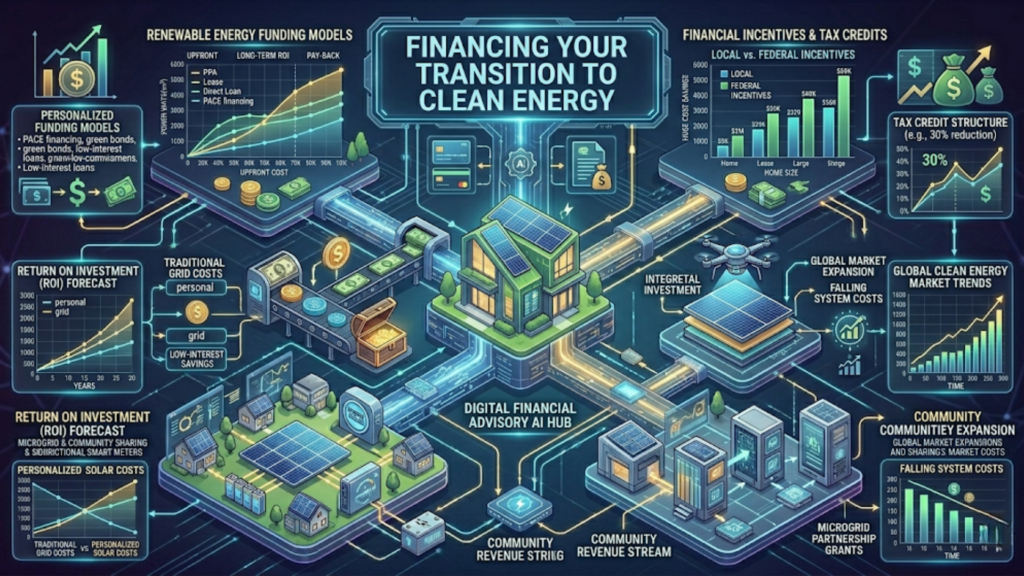
If you don’t have the cash upfront, don’t worry. The financial sector has caught up with the solar revolution.
Solar Loans and EMIs
Banks now offer specialized “Green Loans” with interest rates lower than personal loans. Often, the monthly EMI you pay to the bank is exactly the amount you save on your electricity bill, making the transition “cash-flow neutral” from day one.
Future-Proofing Your Home with Solar
As electric vehicles (EVs) become more common, having an affordable solar energy solution for home becomes even more critical. You can essentially “fuel” your car for free using the sun, saving thousands on petrol or diesel costs.
Conclusion: The Best Time to Go Solar is Now
The combination of high technology, low prices, and massive government support has created a “perfect storm” for homeowners. Affordable solar energy solutions for home are no longer a dream; they are a practical, high-yield investment that protects your family from inflation and helps the planet.
By following the steps in this guide—choosing the right technology, claiming your subsidy, and maintaining your system—you can turn your roof into a power plant and enjoy free electricity for decades to come.
FAQs (Frequently Asked Questions)
1. What is the most affordable solar energy solution for home?
The most cost-effective setup is an On-Grid (Grid-Tied) system. It avoids the high cost of batteries and uses the utility grid as a virtual backup.
2. How many panels do I need for a 3kW system?
Depending on the wattage (e.g., 550W panels), you would need approximately 5 to 6 panels.
3. Will my solar panels survive hail or storms?
Yes, Tier-1 solar panels are tempered and tested to withstand high-velocity hail and heavy wind loads.
4. Can I add more panels later?
Yes, but it is easier if you choose a slightly larger inverter upfront to accommodate future expansion.
5. How do I clean my solar panels?
Use a soft brush or sponge with water. Avoid using harsh chemicals or high-pressure washers, as they can damage the anti-reflective coating.