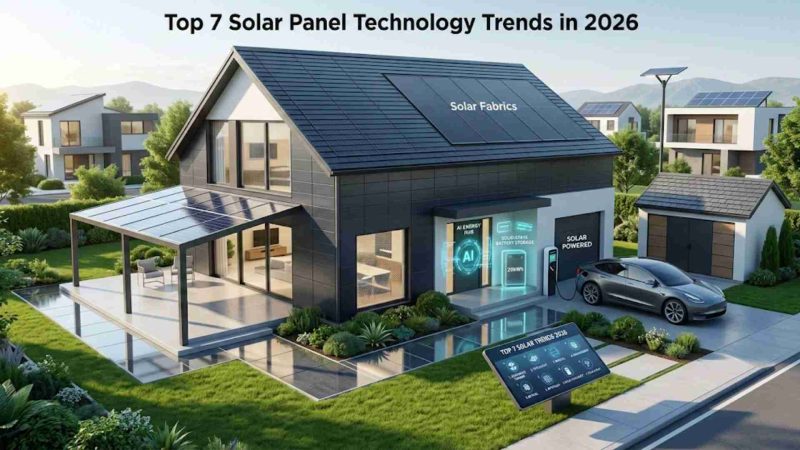
In 2026, the energy landscape is shifting faster than ever. If you are a homeowner planning to go solar, you aren’t just looking for “blue plates on the roof” anymore; you are looking for an intelligent energy ecosystem. The latest solar panel technology 2026 has brought us to a point where efficiency, aesthetics, and artificial intelligence converge to provide maximum ROI.
This guide explores the seven most significant trends that are defining the residential solar market this year. From record-breaking cell efficiencies to panels that generate power from both sides, here is what you need to know to stay ahead.
1. The Rise of Perovskite-Silicon Tandem Cells: Latest Solar Panel Technology 2026 Breakthroughs
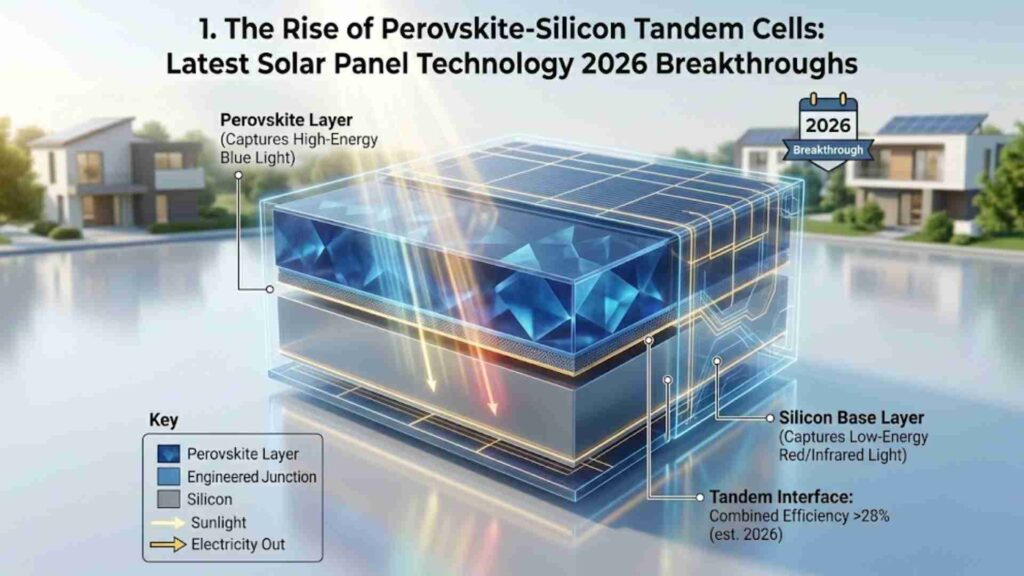
For decades, traditional silicon panels have hit an efficiency ceiling of around 22-23%. However, 2026 marks the commercial debut of Perovskite-Silicon Tandem Cells. By layering a perovskite cell on top of a standard silicon base, these panels can capture different spectrums of sunlight, pushing residential efficiency closer to the 30% mark.
Why It Matters for Homeowners
In the past, if you had a small roof, you were limited by how much power you could generate. With tandem cells, you can generate significantly more electricity from the same square footage. This means even a compact townhouse can now become 100% energy independent.
Key Performance Metrics of Tandem Cells
| Feature | Traditional Monocrystalline (2023-24) | Perovskite Tandem Cells (2026) |
| Average Efficiency | 20% – 22% | 27% – 30%+ |
| Space Required | High | Low (More power per sq. meter) |
| Low-Light Performance | Moderate | Exceptional |
| Projected Lifespan | 25 Years | 25 – 30 Years |
2. TOPCon and HJT: The New Standard for High-Efficiency Modules
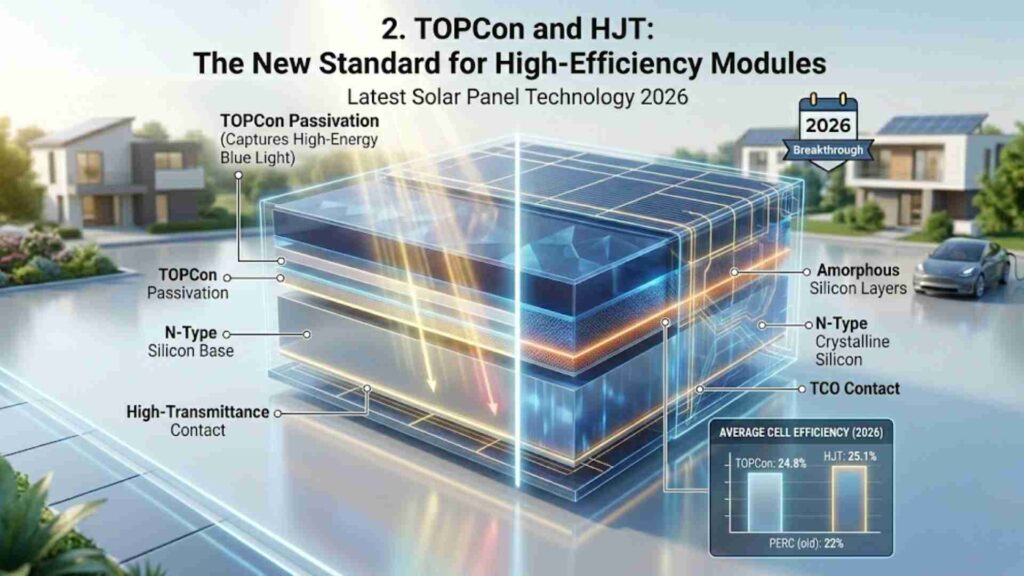
While Tandem cells are the “new kids on the block,” TOPCon (Tunnel Oxide Passivated Contact) and HJT (Heterojunction Technology) have officially dethroned the older PERC technology in 2026.
Understanding the Latest Solar Panel Technology 2026 Shift
- TOPCon Panels: These offer a better balance between cost and performance. They perform exceptionally well in high-temperature environments, making them perfect for regions with hot summers.
- HJT Panels: Known for their extreme durability and low degradation rates. HJT panels in 2026 are favored by homeowners who want the “Rolls Royce” of solar—maximum output with minimal power loss over 30 years.
3. Bifacial Panels Go Mainstream in Residential Areas
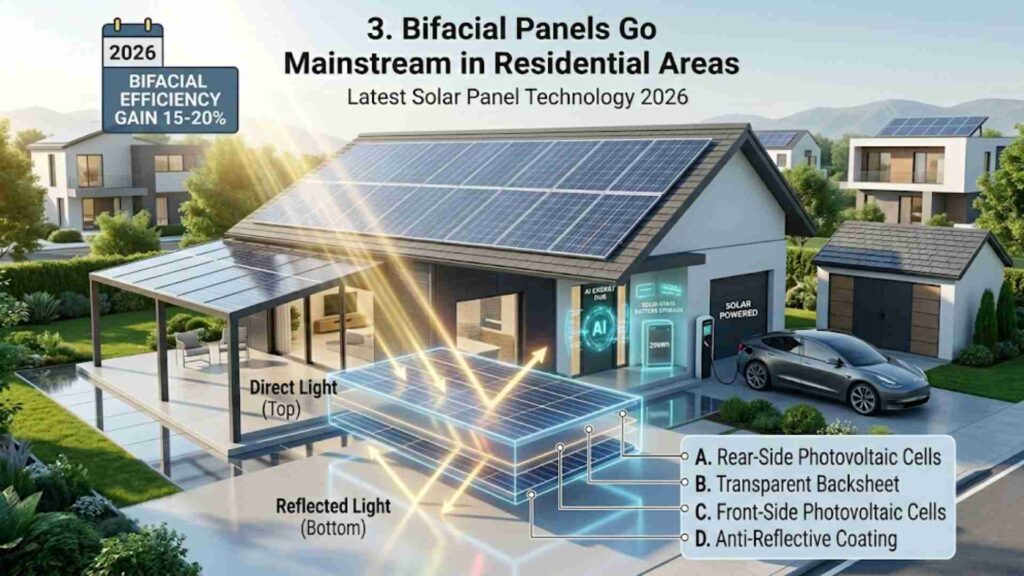
One of the most visual shifts in the latest solar panel technology 2026 is the widespread use of Bifacial Solar Panels on residential rooftops. Unlike traditional panels that only have a front-facing side, bifacial panels have a transparent back layer that captures light reflected from the roof or ground.
Maximizing Energy with Reflected Light
Homeowners are now pairing these panels with light-colored, reflective roofing materials (cool roofs). This “Albedo Effect” can increase your total energy yield by up to 15-20% without adding more panels.
Benefits of Bifacial Technology for Homes:
- Double-Sided Generation: Captures direct sunlight and reflected “ambient” light.
- Improved Durability: Most are glass-on-glass, which resists moisture and wind better than plastic backsheets.
- Aesthetic Appeal: They often look sleeker and more modern than traditional opaque panels.
4. AI-Driven Smart Monitoring: Managing the Latest Solar Panel Technology 2026 Systems
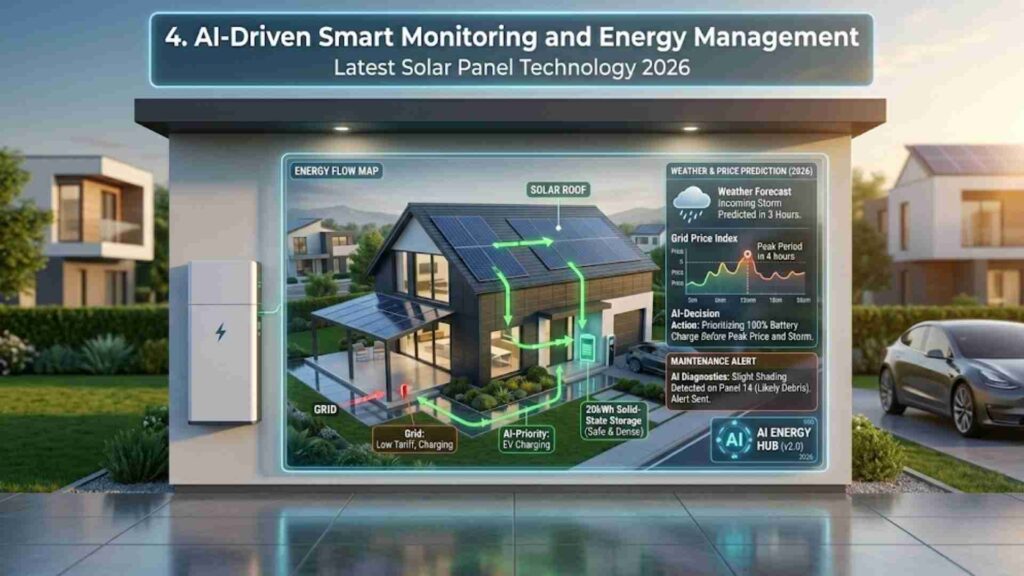
In 2026, a solar system isn’t just hardware; it’s software. The latest solar panel technology 2026 includes integrated AI chips within the inverters.
Your Solar System is Now “Thinking”
These AI systems analyze weather patterns, your daily habits, and real-time electricity prices. For example, if the AI detects a storm coming, it will automatically prioritize charging your home battery to 100% before the grid potentially fails. If it sees that electricity prices will be high at 7 PM, it will save your stored solar energy for that specific window to maximize your savings.
5. Building-Integrated Photovoltaics (BIPV): The Future of Latest Solar Panel Technology 2026
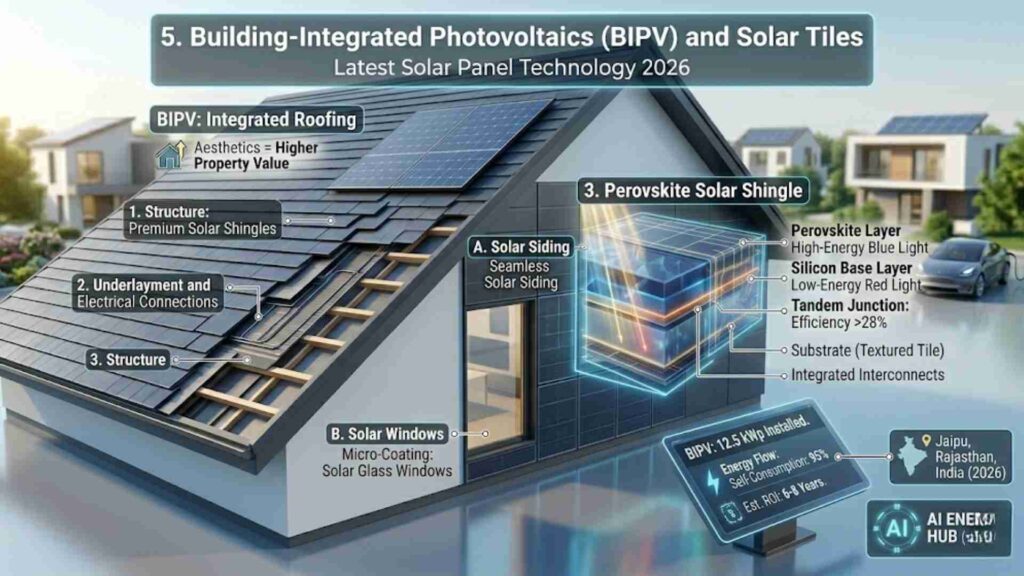
For many homeowners, the “bulky” look of traditional solar panels was a dealbreaker. In 2026, BIPV (Building-Integrated Photovoltaics) has solved this. We are seeing a massive surge in:
- Solar Roof Shingles: These look exactly like high-end slate or terracotta tiles but generate power.
- Solar Windows: Transparent solar coatings on glass that turn your windows into power generators.
- Solar Sidings: Photovoltaic materials integrated into the walls of the house.
While slightly less efficient than dedicated rooftop panels, BIPV offers a seamless architectural look that increases property value.
6. Solid-State Battery Storage: Powering Latest Solar Panel Technology 2026 Installations
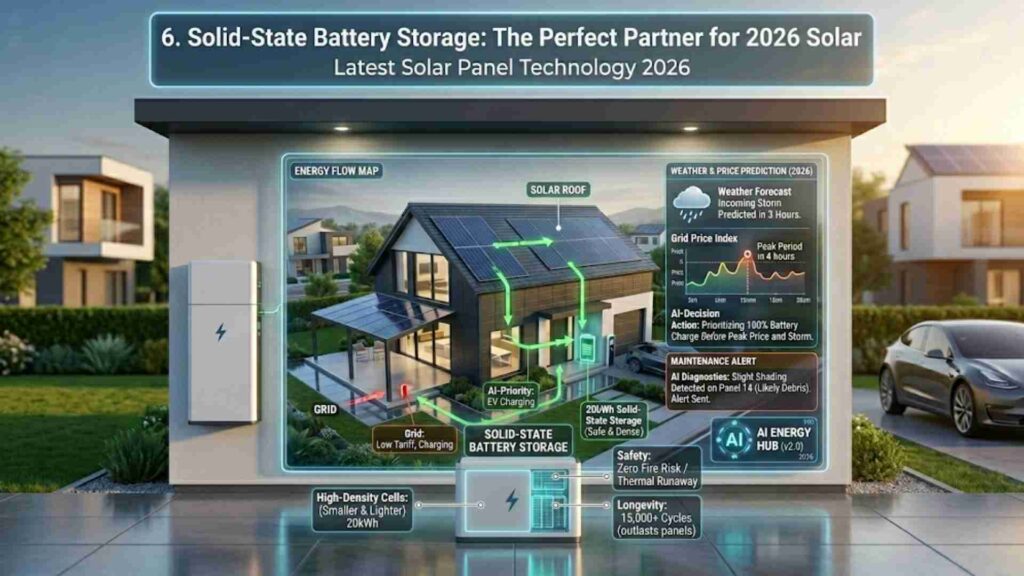
What good is the latest solar panel technology 2026 if you can’t store the power safely? This year has seen the first commercial residential Solid-State Batteries.
Why Solid-State is a Game Changer:
- Safety: Zero risk of fire or “thermal runaway” compared to older Lithium-ion variants.
- Density: They are smaller and lighter, meaning you can fit a 20kWh battery in a space previously occupied by a 10kWh unit.
- Longevity: These batteries can last for 15,000+ cycles, effectively outliving the solar panels themselves.
7. The “Plug-and-Play” Revolution in Latest Solar Panel Technology 2026
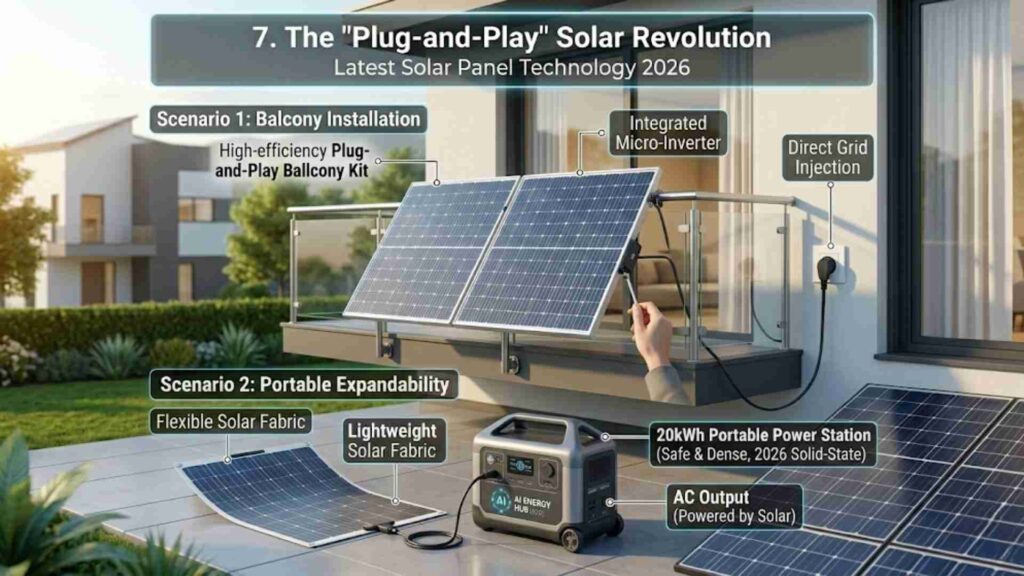
Ease of installation is a major trend in 2026. Micro-inverter technology has advanced to the point where “Plug-and-Play” kits are becoming common for balconies and small sheds. These systems allow homeowners to start small and expand their solar capacity as their budget allows, without needing a massive overhaul of their home’s electrical panel.
Comparing Efficiency: Which Latest Solar Panel Technology 2026 is Right for You?
To help you decide which latest solar panel technology 2026 is right for your home, look at this comparison:
| Technology | Best For… | Efficiency Range | Expected ROI |
| TOPCon | Budget-conscious, high-heat areas | 22% – 24% | 4 – 6 Years |
| HJT | Premium homes, long-term durability | 24% – 26% | 5 – 7 Years |
| Tandem Cells | Limited roof space, tech enthusiasts | 28% – 30%+ | 6 – 8 Years |
| Bifacial | Flat roofs or ground mounts | +15% gain | 4 – 5 Years |
Conclusion
The latest solar panel technology 2026 has moved beyond just “saving money.” It is now about energy security, architectural beauty, and intelligent management. Whether you choose the record-breaking efficiency of Tandem cells or the smart integration of AI-monitored systems, 2026 is the year where your home becomes its own power utility.
Investing in solar today means you are securing a 25-to-30-year future of clean, free, and reliable energy.
Frequently Asked Questions (FAQ)
1. Are Perovskite solar panels available for homes in 2026?
Yes, while they were in the testing phase for years, several major manufacturers have launched Perovskite-Silicon Tandem panels for the residential market in 2026, offering efficiencies near 30%.
2. Is it better to wait or buy the latest solar panel technology in 2026?
2026 is considered a “stabilization year.” The massive jumps in efficiency (TOPCon and HJT) have already hit the mass market, making it an excellent time to buy without worrying that your tech will be obsolete in 12 months.
3. How does AI improve my solar panel’s performance?
AI doesn’t change the panel itself, but it optimizes the “yield.” It predicts shading, manages battery discharge based on weather, and alerts you to maintenance needs before a component fails.
4. Can I install bifacial panels on a standard sloped roof?
Yes, you can! However, to get the best results from the back side, it is recommended to have a slight gap between the panel and the roof and to use a light-colored roofing material to reflect light upward.
5. What is the average cost of the latest solar panel technology 2026?
While the technology is more advanced, manufacturing scales have kept prices competitive. On average, a high-end 2026 system costs about 10-15% more than the basic models of 2024 but produces 25% more energy, leading to a faster ROI.