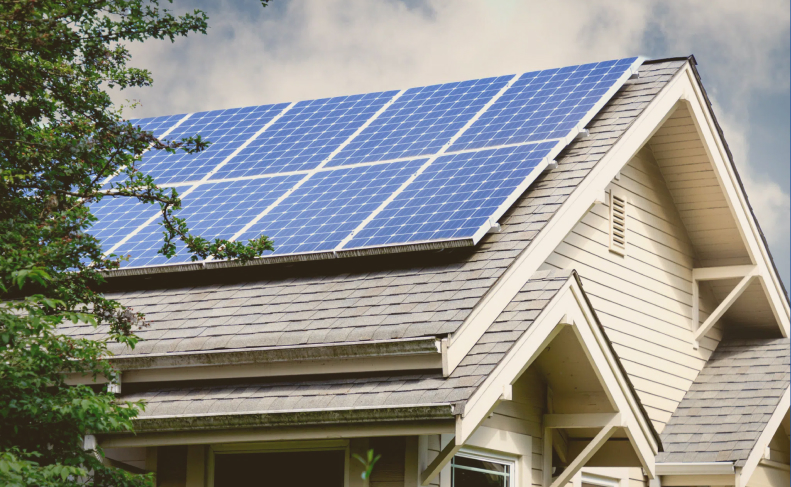
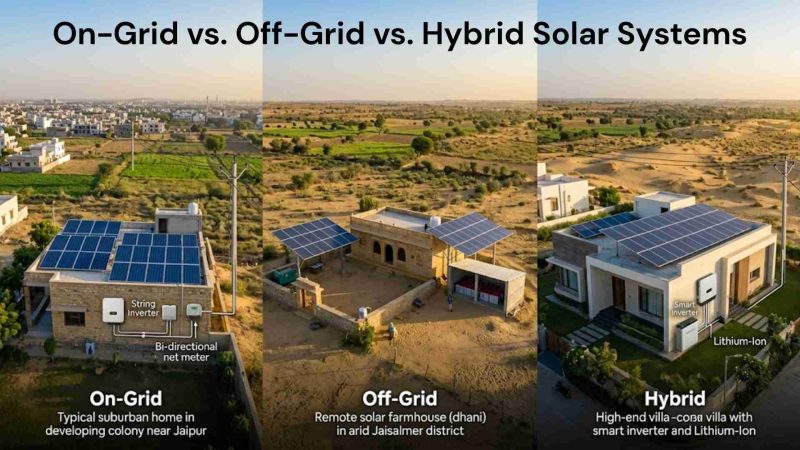
When transitioning to renewable energy in 2026, understanding the benefits of On-grid vs. Off-grid solar systems is the first step toward achieving true energy independence. In a high-solar-radiation state like Rajasthan, choosing the right architecture can mean the difference between a lifetime of savings and a high-maintenance burden. Whether you are a homeowner in the bustling streets of Jaipur looking to slash your DISCOM bills or a farm owner in the remote dunes of Jaisalmer needing 24/7 power, evaluating the specific benefits of On-grid vs. Off-grid solar systems will help you determine which technology matches your lifestyle and budget.
The Science of the Sun: How Solar Works in 2026
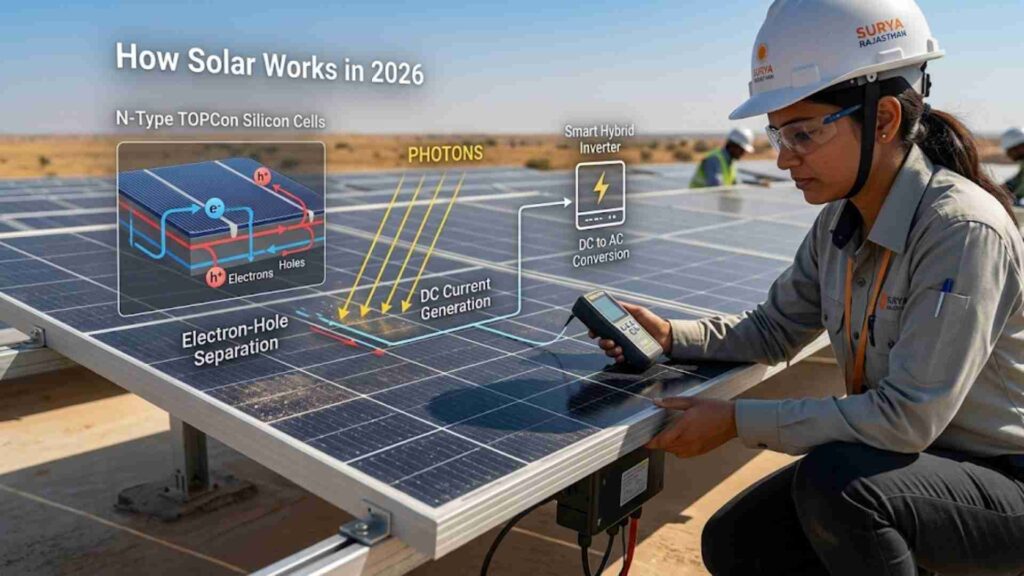
Before comparing the systems, it is vital to understand the technology powering them. In 2026, the industry has shifted toward N-Type TOPCon and HJT (Heterojunction Technology) panels. These panels offer 22-24% efficiency, performing significantly better in the high-heat environments of Jodhpur and Bikaner compared to the older Polycrystalline modules.
Regardless of the system type, the core process remains the same: Photons hit the silicon cells, knocking electrons loose and creating Direct Current (DC). The “System Type” (On-grid, Off-grid, or Hybrid) simply determines where that DC electricity goes next.
On-Grid Solar Systems: The Urban Powerhouse
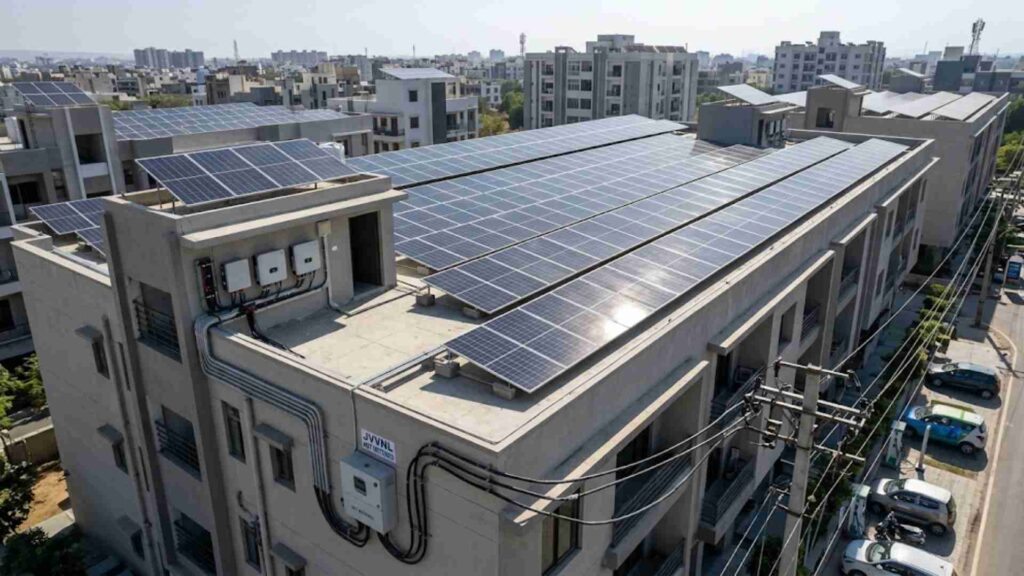
An on-grid solar system (also known as grid-tied) is the most common installation in residential Jaipur and Udaipur. It operates in synchronization with the local DISCOM (Distribution Company) like JVVNL.
Technical Architecture of On-Grid Systems
In an on-grid setup, your solar inverter converts DC to AC and feeds it directly into your home’s electrical panel. If your panels produce more power than you are using, the excess flows back into the government grid through a Bi-directional Net Meter.
Comprehensive Benefits of On-grid vs. Off-grid solar systems (On-Grid Focus)
- The Lowest Capital Expenditure (CAPEX): Since there are no batteries involved, the cost per kilowatt is the lowest. For a middle-class family in Rajasthan, this represents the fastest way to see a “Zero Bill.”
- The Magic of Net Metering: Rajasthan’s 2026 solar policy allows homeowners to “bank” their energy. If your system produces 500 units in a sunny month but you only use 300, the remaining 200 units are credited to your next bill.
- Minimal Maintenance: Batteries are the most “high-maintenance” part of a solar system. By removing them, an on-grid system becomes a “set-and-forget” solution. You only need to clean the dust (common in Rajasthan) off the panels.
- High ROI and Subsidy Eligibility: Under the PM Surya Ghar Yojana, the Indian government provides massive subsidies for on-grid systems up to 3kW. In many cases, the system pays for itself in just 36 to 42 months.
Off-Grid Solar Systems: Total Energy Sovereignty
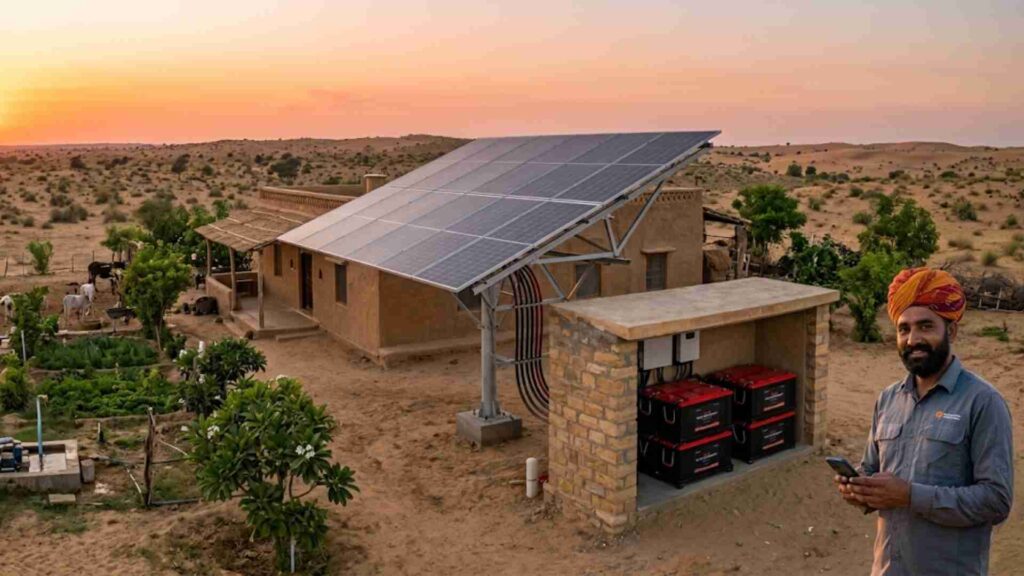
Off-grid systems are entirely disconnected from the utility company. They are popular in the sprawling farmlands of Ganganagar or remote resorts in the Thar Desert where pulling a grid line is physically or financially impossible.
How Off-Grid Storage Works
Because there is no grid to “bank” your energy, you must store every excess watt-hour in a battery bank. In 2026, Lithium Iron Phosphate (LiFePO4) batteries have replaced lead-acid. They are lighter, safer, and can handle the 45°C+ temperatures of a Rajasthani summer without degrading rapidly.
Strategic Benefits of On-grid vs. Off-grid solar systems (Off-Grid Focus)
- 100% Independence: You are immune to grid failures, transformer bursts, or government tariff hikes.
- No Monthly Fixed Charges: Even if you use zero electricity on an on-grid system, you still pay “fixed charges” to the DISCOM. With off-grid, your monthly bill is exactly ₹0.00.
- Ideal for Agricultural Applications: Many farmers in Rajasthan use off-grid systems to power solar pumps and cold storage units in areas where the grid is unreliable.
Hybrid Solar Systems: The 2026 Gold Standard
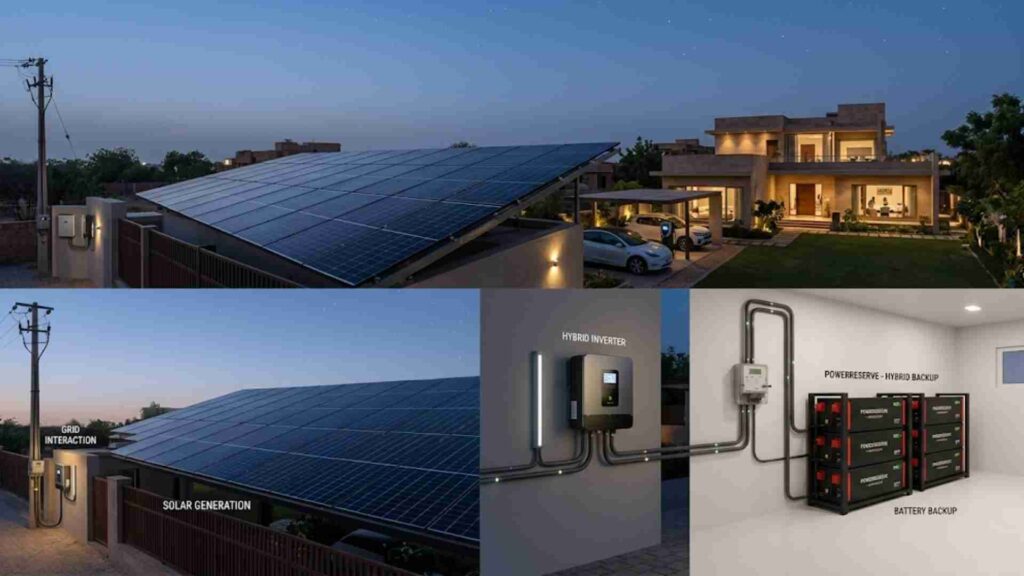
A Hybrid system is the “Smartphone” of the solar world. It combines the grid-connection of an on-grid system with the battery backup of an off-grid system.
Why Hybrid is Trending in Rajasthan
While Rajasthan is a power-surplus state, local distribution grids often face “voltage fluctuations” or scheduled maintenance cuts. A Hybrid system uses a Smart Hybrid Inverter that can:
- Export excess power to the grid (earning you money).
- Store power in batteries (for night use or outages).
- Draw power from the grid only when solar and batteries are exhausted.
Comparative Benefits of On-grid vs. Off-grid solar systems in a Hybrid Context
The Hybrid model solves the biggest weakness of the On-grid system: The Blackout Problem. Standard On-grid systems shut down during a power cut to prevent “Islanding” (sending electricity to a dead grid which could shock repair workers). A Hybrid system uses an internal switch to disconnect from the grid while keeping your home powered, providing safety and continuity.
Detailed Head-to-Head Comparison Table
| Feature | On-Grid (Grid-Tied) | Off-Grid (Stand-Alone) | Hybrid (The All-Rounder) |
| Grid Connection | Required | None | Optional/Connected |
| Battery Storage | Not Included | Mandatory | Included |
| Initial Cost | Low (₹50k – ₹65k per kW) | High (₹90k – ₹1.2L per kW) | Very High (₹1.1L – ₹1.4L per kW) |
| Maintenance | Very Low | High (Battery checks) | Moderate |
| Best For | Urban Homes/Offices | Rural/Remote Areas | Luxury Homes/Critical Biz |
| Net Metering | Yes (Primary Benefit) | No | Yes |
| Power During Outage | No | Yes | Yes |
Financial Analysis: Weighing the Benefits of On-grid vs. Off-grid Solar Systems
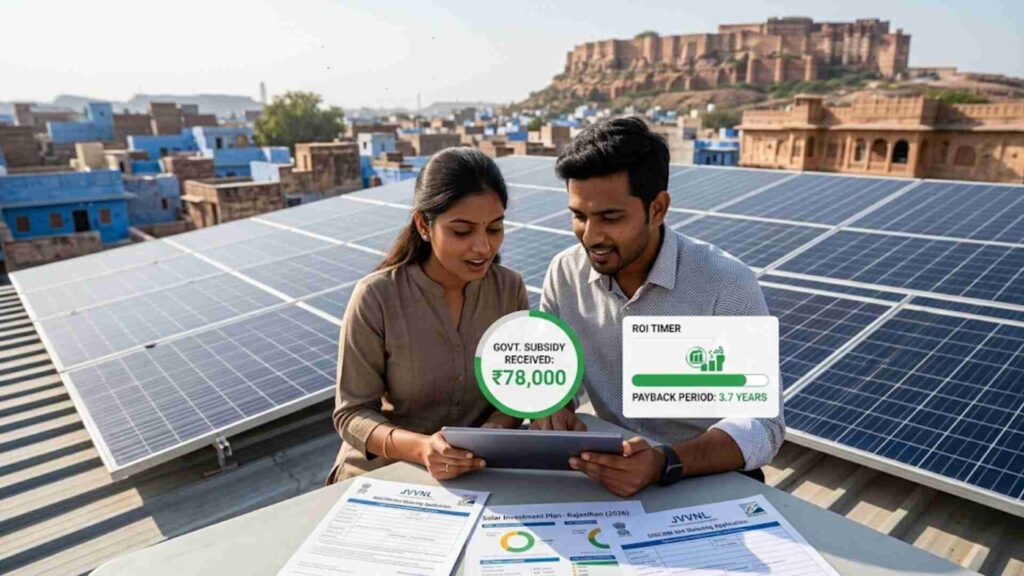
For a 5kW system in 2026, the financial breakdown looks vastly different based on your choice.
On-Grid ROI
- Cost: ~₹3,00,000
- Subsidy: ~₹78,000
- Net Cost: ~₹2,22,000
- Annual Savings: ~₹60,000
- Payback: 3.7 Years.
Off-Grid ROI
- Cost: ~₹5,50,000 (including high-capacity Lithium storage)
- Subsidy: ₹0
- Annual Savings: ~₹75,000 (including eliminated fixed charges)
- Payback: 7.3 Years.
The Benefits of On-grid vs. Off-grid solar systems clearly lean toward On-grid for purely financial investors, while Off-grid is a “utility” investment for those without power access.
Installation Challenges in the Rajasthan Climate
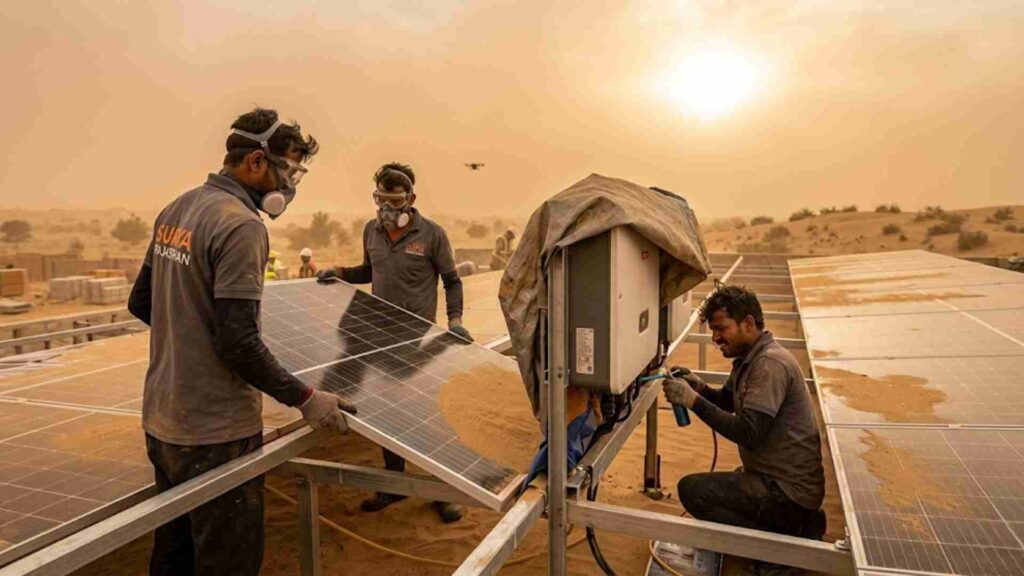
Rajasthan presents unique challenges that influence which system you should choose.
The Dust Factor (The “Aandhi” Effect)
In Western Rajasthan, dust buildup can reduce efficiency by 30% in a single week.
- On-Grid: High tolerance; the grid compensates for the drop.
- Off-Grid: Dangerous; if panels don’t charge the batteries due to dust, you run out of power at night. Automatic robotic cleaning or pressurized water systems are highly recommended here.
The Heat Factor
Solar panels actually lose efficiency as they get hotter. In 2026, using bifacial panels (which catch light from both sides) on elevated structures is the best way to keep panels cool. This is easier to implement in on-grid urban setups where roof space is optimized.
Environmental Impact: A Greener Rajasthan
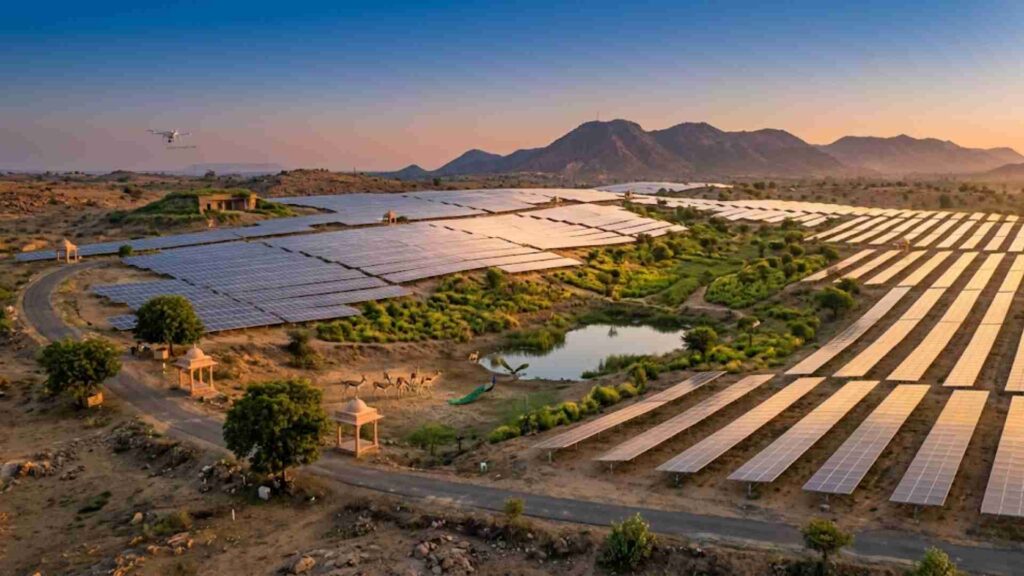
Beyond the Benefits of On-grid vs. Off-grid solar systems, we must consider the carbon footprint.
- On-Grid helps the state reduce its reliance on coal-fired plants in Kota and Suratgarh.
- Off-Grid often requires a backup diesel generator (DG set) for long cloudy periods (monsoon), which can be less eco-friendly than the grid.
Conclusion: Final Verdict on the Benefits of On-grid vs. Off-grid Solar Systems
So, who wins the “Ultimate Showdown”?
- The Urban Resident: If you live in a developed colony in Jaipur or Jodhpur, On-Grid is the undisputed winner. The financial benefits of net metering and government subsidies are too large to ignore.
- The Remote Dweller: If you are building a home in the desert outskirts or a farmhouse where the grid is 1km away, Off-Grid is your only logical choice.
- The High-End User: If you run a home office, a clinic, or simply want 24/7 AC without worrying about the grid’s stability, invest in a Hybrid system.
Frequently Asked Questions (FAQs)
Q1: Can I convert my On-grid system to Hybrid later?
Yes, but it requires changing the inverter to a Hybrid Inverter and adding a battery bank. It is cheaper to decide this at the time of initial installation.
Q2: How long do the batteries last in Rajasthan’s heat?
With modern Lithium (LiFePO4) batteries, you can expect 10-12 years of life even in Rajasthan, provided they are kept in a ventilated, shaded area.
Q3: Does the government give subsidies on batteries?
No. Currently, the Central and State subsidies apply only to the solar modules and on-grid inverters. Batteries are considered a private consumption item.
Q4: Which system is better for a 1-ton AC?
An AC requires a high starting current. An On-grid system handles this easily by drawing “extra” power from the grid. For Off-grid, you would need a massive inverter (at least 5kVA) to handle the AC’s load.
Q5: What is the lifespan of the panels?
Quality Tier-1 panels installed in 2026 come with a 25-30 year performance warranty, regardless of the system type.