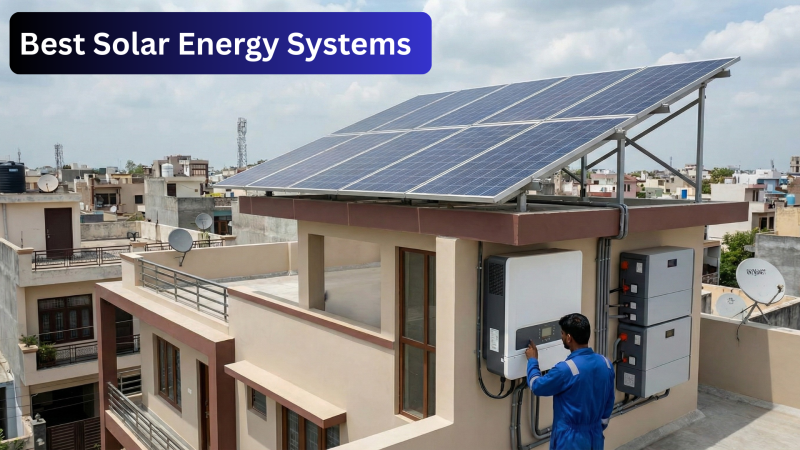
As India moves towards a greener future, the demand for reliable power solutions has never been higher. For the Indian homeowner searching for the Best solar energy for residential use, the challenge isn’t just about saving on the monthly electricity bill—it’s also about securing peace of mind during frequent power outages in summer and monsoon seasons. While traditional inverters have served us well, they are no match for the modern energy needs of a household running ACs, refrigerators, and work-from-home setups. This is where hybrid solar systems come into play.
If you are looking for the Best solar energy for residential use, a system with battery backup (Hybrid System) is the ultimate solution. It combines the savings of a grid-tied system with the independence of an off-grid system. In this extensive guide, we will explore the top brands, costs, government subsidies like the PM Surya Ghar Yojana, and everything you need to know to make the right choice for your home.
How to Choose the Best Solar Energy for Residential Use in India
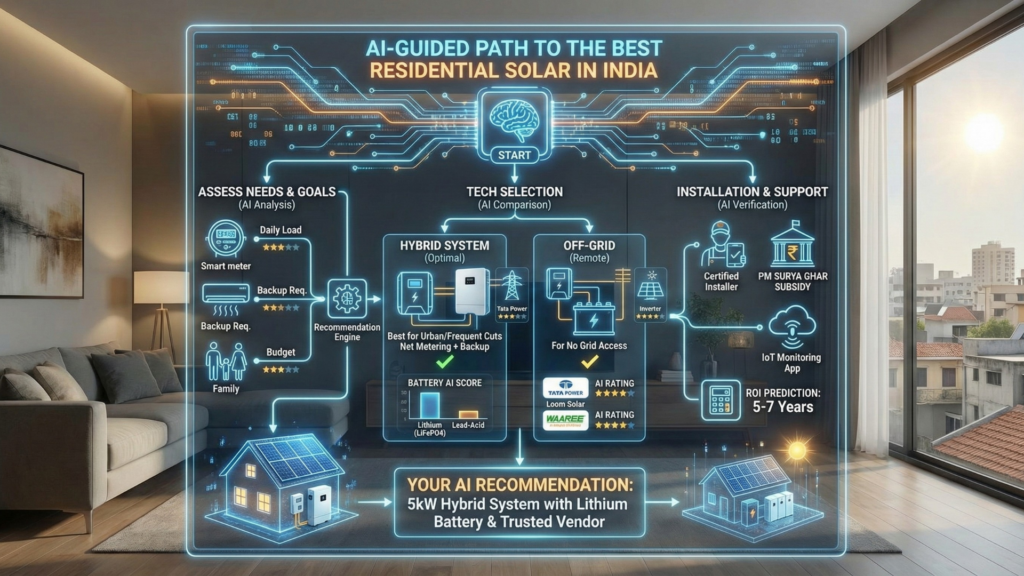
Selecting a solar system is a significant investment, often costing between ₹2 Lakhs to ₹8 Lakhs depending on capacity. To ensure you are getting the Best solar energy for residential purposes, you must evaluate the following critical factors before making a purchase.
1. Hybrid vs. Off-Grid Inverters
In India, “Solar with Battery” usually refers to two types of systems. Understanding the difference is key to finding the Best solar energy for residential setups:
- Hybrid Solar Systems: These are connected to the government grid (DISCOM) and have a battery. They allow you to export excess electricity to the grid (Net Metering) to reduce your bill, while the battery provides backup during power cuts. This is the most recommended option for urban India.
- Off-Grid Systems: These are completely disconnected from the grid. They rely entirely on batteries at night. These are best suited for remote farmhouses or rural areas where the grid is unreliable or non-existent.
2. Battery Technology: Lead-Acid vs. Lithium-Ion
The heart of your backup system is the battery.
- Tubular Lead-Acid Batteries: These are the traditional tall batteries (e.g., Exide, Luminous). They are cheaper upfront but require maintenance (water topping) and have a shorter life (3-5 years).
- Lithium-Ion (LiFePO4) Batteries: Brands like Loom Solar and Waaree are pushing this technology. They are expensive (2x the cost of lead-acid) but are maintenance-free, look sleek, and last 10-15 years. For a modern home seeking the Best solar energy for residential aesthetics and performance, Lithium is the winner.
3. Inverter Capacity and Surge Power
Indian homes often have high “surge” loads—like when an Air Conditioner compressor kicks in. Ensure your hybrid inverter has a high surge rating. A 5kW system is generally the “Sweet Spot” for a standard 3BHK Indian home, capable of running a 1.5-ton AC alongside lights and fans.
Top Brands and Models Comparison (2025)
To help you identify the Best solar energy for residential installation, we have compared the top 5 trusted brands in India that offer hybrid inverters and battery solutions.
Table 1: Top 5 Hybrid Solar Energy Systems in India
| Brand | Model / Series | System Type | Battery Compatibility | Warranty | Approx. Price (5kW Hybrid Inverter Only) |
| Luminous | Solarverter PRO / NXG+ | Hybrid / Off-Grid | Lead-Acid & Lithium | 2-5 Years | ₹45,000 – ₹55,000 |
| Loom Solar | Fusion Series | Hybrid | Lithium / Lead-Acid | 2 Years | ₹65,000 – ₹80,000 |
| Tata Power | Ez Home Solar | On-Grid/Hybrid | Lithium-Ion | 5 Years | Project Basis |
| Waaree | WAAREE ESS | Hybrid | LiFePO4 (Lithium) | 5-10 Years | ₹75,000 – ₹90,000 |
| Enphase | IQ Battery (Encharge) | Micro-inverter | Lithium (Built-in) | 10-15 Years | ₹2,00,000+ (Premium) |
Top Picks for the Best Solar Energy for Residential Homes
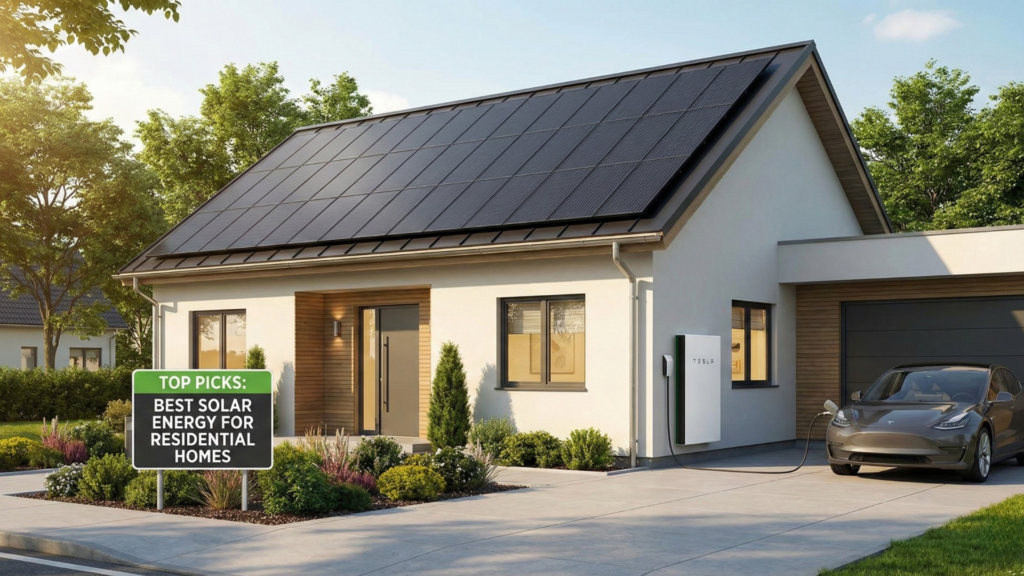
Let’s dive deeper into why these brands are considered the top contenders for the Best solar energy for residential market in India.
1. Tata Power Solar (The Trusted Giant)
Tata Power is practically synonymous with electricity in India. For residential users, they offer comprehensive rooftop solutions. While they are famous for on-grid systems, their recent expansion into “Solar Rooftop with Storage” caters to the premium segment.
- Why it’s a winner: Their nationwide service network is unmatched. When you buy a Tata system, you are buying reliability.
- Best For: Homeowners who want a “fit and forget” experience and don’t mind paying a premium for a trusted brand name.
2. Loom Solar (The Innovator)
Loom Solar has revolutionized the Indian market by focusing heavily on the residential sector and Lithium technology. Their “Fusion” inverter series is specifically designed to work as a hybrid unit.
- Why it’s a winner: They offer IoT-enabled inverters where you can monitor your solar generation on a mobile app—a feature tech-savvy Indians love. Their “Super High Efficiency” Shark solar panels are also excellent for roofs with limited space.
- Best For: Modern apartments and independent floors looking for compact, high-efficiency systems.
3. Luminous (The Household Name)
Luminous is likely the brand of the inverter battery currently sitting in your home. They have successfully transitioned into solar. Their NXG+ range is an intelligent solar inverter that prioritizes solar usage to reduce bills.
- Why it’s a winner: Affordability and availability. You can find a Luminous mechanic in almost every Tier-2 and Tier-3 city in India.
- Best For: Budget-conscious buyers in semi-urban areas who want robust performance without high upfront Lithium costs.
4. Waaree Energies (The Manufacturing Powerhouse)
Waaree is one of India’s largest solar panel manufacturers. Their hybrid combos (Inverter + Li-ion Battery) are gaining popularity because they offer a single-window solution.
- Why it’s a winner: Their quality control on panels is world-class. If you want a system where the panels and the battery storage are from the same manufacturer for seamless compatibility, Waaree is the Best solar energy for residential choice.
Why Hybrid is the Best Solar Energy for Residential Solution
You might be wondering, “Why should I pay extra for batteries if the grid is available?” Here is why a Hybrid system is superior:
- Energy Independence: In many Indian states, power cuts are still common during summer evenings. A hybrid system ensures your lights, fans, and WiFi never go off.
- Combating “Time of Day” Tariffs: Many Indian states are introducing tariffs where electricity is expensive during peak evening hours. A hybrid system stores cheap solar energy during the day and uses it in the evening, saving you money.
- Net Metering Issues: In some states, getting Net Metering approvals from DISCOMs can be slow. A hybrid system allows you to consume your own generated power immediately, reducing reliance on bureaucratic approvals.
Government Support: PM Surya Ghar Muft Bijli Yojana
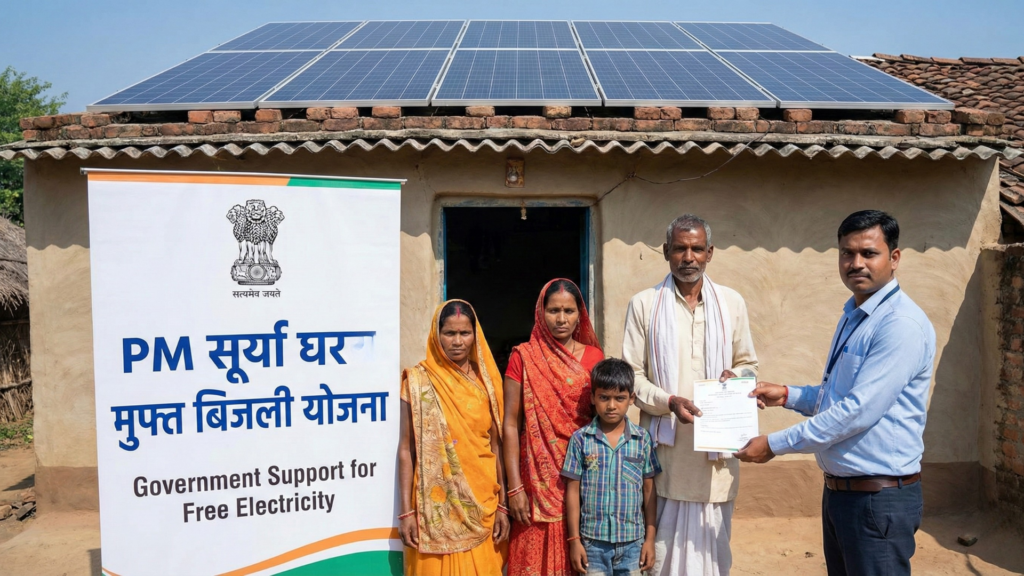
The Government of India is aggressively promoting residential solar through the PM Surya Ghar Muft Bijli Yojana.
- Subsidy Structure:
- ₹30,000 subsidy for 1 kW systems.
- ₹60,000 subsidy for 2 kW systems.
- ₹78,000 subsidy for systems of 3 kW and above.
- Note: This subsidy is primarily calculated on the solar module capacity. While it may not fully cover the cost of the battery component in a hybrid system, it significantly reduces the overall project cost, making the Best solar energy for residential systems more accessible.
Table 2: Cost & ROI Analysis (5kW System for a 3BHK Home)
Estimates based on average Indian market rates for 2025. Prices include installation and structure.
| Feature | On-Grid System (No Battery) | Hybrid System (Tubular Battery) | Hybrid System (Lithium Battery) |
| Initial Cost (Approx) | ₹2.5 Lakhs | ₹4.0 Lakhs | ₹5.5 Lakhs – ₹6.5 Lakhs |
| Govt. Subsidy (Approx) | – ₹78,000 | – ₹78,000 | – ₹78,000 |
| Net Cost to Consumer | ~ ₹1.72 Lakhs | ~ ₹3.22 Lakhs | ~ ₹4.72 Lakhs |
| Power Backup | No (System shuts down if grid fails) | Yes (4-6 Hours) | Yes (6-10 Hours) |
| Battery Life | N/A | 3-4 Years | 10-15 Years |
| Monthly Bill Savings | ₹4,000 – ₹5,000 | ₹4,500 – ₹5,500 | ₹4,500 – ₹5,500 |
| ROI (Break-even) | ~ 3 Years | ~ 5-6 Years | ~ 7-8 Years |
As seen in the table, while the On-Grid system has a faster ROI, the Hybrid system provides the “Best solar energy for residential” value by offering security against power cuts.
Installation Guide for the Best Solar Energy for Residential Setups
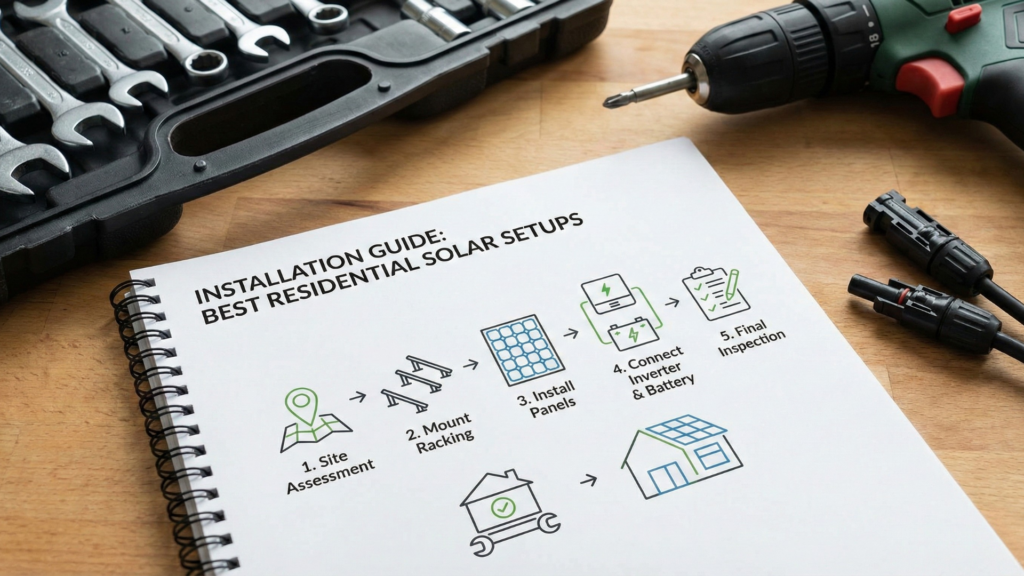
To ensure your system performs optimally for 25 years, follow these installation tips:
- Shadow Analysis: Before installation, ensure your roof is shadow-free between 9 AM and 4 PM. Even a small shadow from a water tank can drop system efficiency by 30%.
- Structure Quality: India faces strong winds and monsoons. Ensure the mounting structure is made of Hot Dip Galvanized Iron to prevent rust. Do not settle for simple painted iron.
- Approved Vendors: To avail of the PM Surya Ghar subsidy, you must install the system through a vendor registered with your local DISCOM. Installing through a non-registered vendor will disqualify you from the subsidy.
Conclusion: Best Solar Energy for Residential
Investing in the Best solar energy for residential use is no longer just about being eco-friendly; it is a financially smart decision for Indian families. With electricity tariffs rising by 5-10% every year, locking in your energy price today is wise.
For most Indian households, a 5kW Hybrid System with Lithium-ion battery backup offers the perfect balance of luxury and savings. Brands like Tata Power and Waaree offer reliability, while Loom Solar brings innovation to your roof. While the upfront cost of hybrid systems is higher than simple on-grid inverters, the comfort of having 24/7 power—combined with the slashing of your electricity bill—makes it a worthy investment.
Don’t wait for the next power cut to decide. Take advantage of the PM Surya Ghar Muft Bijli Yojana today and transform your home into a mini-power plant.
Frequently Asked Questions (FAQ): Best Solar Energy for Residential
Q1: Can I run my Air Conditioner (AC) on a solar hybrid system?
A: Yes, you can. However, to run a 1.5-ton AC, you typically need at least a 5kW hybrid inverter and a robust battery bank. A standard 1kW or 2kW system is not sufficient for running ACs for long durations.
Q2: Which is the single Best solar energy for residential brand in India?
A: There is no single “best” as it depends on your budget. Tata Power Solar is best for premium service and trust. Loom Solar is best for the latest technology and Lithium batteries. Luminous is best for budget-friendly options.
Q3: Is the government subsidy available for Hybrid systems?
A: The subsidy (up to ₹78,000) is available for the solar plant capacity (panels and inverter capacity) installed on your roof. The government generally does not subsidize the battery cost directly. You can use the subsidy to reduce the overall cost of your hybrid setup.
Q4: Do solar panels work during the rainy season in India?
A: Yes, solar panels still generate electricity during the monsoon, but the efficiency drops to 25-30% of their peak capacity. This is where a hybrid system helps—it can charge the batteries using the grid during rainy days to ensure you still have backup.
Q5: What is the maintenance cost of a residential solar system?
A: If you choose Lithium-ion batteries, the maintenance is almost zero. You only need to clean the dust off the solar panels every 15 days to maintain efficiency. If you choose Lead-Acid batteries, you will need to top up the distilled water every 3-6 months.
Q6: Can I start with an On-Grid system and add batteries later?
A: This is difficult and expensive. Standard On-Grid inverters are not compatible with batteries. If you think you might need batteries in the future, you must buy a “Hybrid Ready” inverter right from the start. This is a crucial step in choosing the Best solar energy for residential future-proofing.