If you are a homeowner in India in 2025, you likely have one burning question: How much do solar panels cost?
With electricity tariffs rising in states like Maharashtra, Karnataka, and Rajasthan, and the government pushing heavily for renewable energy, solar power has moved from a luxury upgrade to a financial necessity. However, finding accurate pricing is difficult because the final price depends on your sanctioned load, the type of panels (Polycrystalline vs. Mono-PERC vs. Bifacial), and the subsidies you claim.
In this guide, we break down exactly how much solar panels cost in India in 2025, including the crucial PM Surya Ghar: Muft Bijli Yojana subsidies, hardware prices, and hidden fees you need to know before signing a contract.
How Much Do Solar Panels Cost in 2025?
As of early 2025, the average cost of solar panels in India ranges from ₹45,000 to ₹65,000 per kilowatt (kW) before subsidies.
For a standard 3-kilowatt (kW) system, which is the typical size for an Indian middle-class household (running lights, fans, fridge, and one AC), the gross cost is typically between ₹1,60,000 and ₹2,00,000.
However, after applying the Central Government Subsidy (PM Surya Ghar Yojana), the net cost drops significantly. The Return on Investment (ROI) for solar in India is currently one of the best in the world, typically typically taking just 3 to 5 years to recover the cost.
Solar System Cost by Size (2025 Estimates)
The capacity of your system is the biggest factor in answering “how much do solar panels cost.” In India, residential systems usually range from 1kW to 10kW.
Table 1: Estimated Solar Panel Cost by System Size in India (2025)
| System Size (kW) | Avg. No. of Panels | Estimated Gross Cost (Before Subsidy) | Approx. Govt Subsidy (PM Surya Ghar)* | Estimated Net Cost (To Customer) | Suitable For |
| 1 kW | 2-3 Panels | ₹60,000 – ₹75,000 | ₹30,000 | ₹30,000 – ₹45,000 | Small Home / Low Bill (<₹1000) |
| 2 kW | 4-5 Panels | ₹1,10,000 – ₹1,30,000 | ₹60,000 | ₹50,000 – ₹70,000 | 2 BHK / Normal Usage |
| 3 kW | 6-8 Panels | ₹1,60,000 – ₹2,00,000 | ₹78,000 | ₹82,000 – ₹1,22,000 | 3 BHK / 1 AC Usage |
| 5 kW | 9-12 Panels | ₹2,50,000 – ₹3,20,000 | ₹78,000 | ₹1,72,000 – ₹2,42,000 | Large Home / Multiple ACs |
| 10 kW | 18-22 Panels | ₹5,00,000 – ₹6,00,000 | ₹78,000 | ₹4,22,000 – ₹5,22,000 | Joint Family / Villa / EV |
Note: Prices vary based on the quality of panels (e.g., Adani, Tata, Waaree) and inverter technology. The subsidy caps at 3kW capacity (₹78,000 max).
The Game Changer: PM Surya Ghar Muft Bijli Yojana
When calculating how much solar panels cost, you cannot ignore the Central Government subsidy.
In 2025, the PM Surya Ghar: Muft Bijli Yojana provides substantial financial aid to residential consumers.
- Up to 2 kW: You receive ₹30,000 per kW.
- Additional 1 kW (Total 3 kW): You receive an additional ₹18,000.
- Total Maximum Subsidy: ₹78,000 for systems 3 kW and above.
To avail of this, you must install the system through a registered vendor listed on the National Portal for Rooftop Solar and use DCR (Domestic Content Requirement) panels—meaning the solar cells must be manufactured in India.
5 Key Factors Influencing How Much Solar Panels Cost
Why does your neighbor pay ₹1.5 Lakh for solar while you might be quoted ₹1.8 Lakh? The answer lies in the variables.
1. Type of Solar Panels
Not all panels are created equal. The hardware you choose impacts the price per watt significantly.
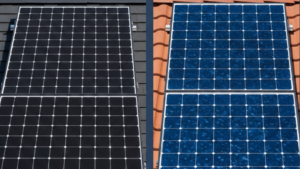
- Polycrystalline Panels: Older technology, blue in color. Cheapest option (approx ₹25-₹28/watt), but less efficient. Rarely recommended in 2025.
- Mono-PERC Panels: The standard in India today. Black/Dark Blue, highly efficient. They work better in low light. (Approx ₹30-₹35/watt).
- Bifacial Panels: These generate power from both the front and back (using reflection from the roof). They are slightly more expensive but generate 10-20% more power.
2. Inverter Technology
The inverter converts DC energy into AC energy.
- String Inverters: (e.g., Growatt, Solis, GoodWe) The most affordable and common in India.
- Microinverters: (e.g., Enphase) Much more expensive. Each panel has its own inverter. This can increase the cost by ₹40,000 – ₹80,000 for a 3kW system but offers superior safety and efficiency.
3. Structure Height (High-Rise vs. Low-Rise)
“How much do solar panels cost” often depends on how much roof you are willing to give up.
- Normal Mounting: Panels are mounted close to the roof. Cheapest option.
- High-Rise Structure (Pergola): Panels are raised 6-8 feet high so you can still use the roof space underneath for walking or drying clothes. This requires more heavy galvanized iron (GI) steel, increasing the cost by ₹15,000 – ₹25,000 per kW.
4. On-Grid vs. Off-Grid (Battery Cost)
- On-Grid: Connected to the government grid via Net Metering. No batteries. Cheapest and most popular.
- Off-Grid/Hybrid: Includes batteries (Lead Acid or Lithium-Ion) for power backup. Batteries add significant cost. A lithium battery bank can add ₹1,00,000+ to the project cost.
5. Installation & Liaisoning Charges
This includes the cost of the “Net Meter” (bidirectional meter), government file processing, DISCOM approvals, and labor. While often included in the “per kW” price, complex approvals in certain states can add to the cost.
State-wise ROI: Where is Solar Most Valuable?
While the hardware cost is similar across India, the savings differ because electricity rates vary by state.
Table 2: Estimated ROI & Savings by State (2025)
| State | Avg. Electricity Rate (Tiered) | Avg. 3kW System Cost (Net) | Payback Period (ROI) |
| Maharashtra | ₹8 – ₹14 / unit | ₹1,20,000 | 3.0 Years (Fastest ROI) |
| West Bengal | ₹7 – ₹11 / unit | ₹1,25,000 | 3.5 Years |
| Karnataka | ₹7 – ₹9 / unit | ₹1,22,000 | 3.8 Years |
| Rajasthan | ₹6 – ₹8 / unit | ₹1,20,000 | 4.0 Years |
| Gujarat | ₹5 – ₹7 / unit | ₹1,18,000 | 4.2 Years |
| Uttar Pradesh | ₹6 – ₹7.5 / unit | ₹1,20,000 | 4.0 Years |
Pro Tip: States like Uttar Pradesh and Delhi sometimes offer additional state subsidies on top of the Central ₹78,000, reducing how much solar panels cost even further. Always check local DISCOM notifications.
Hidden Costs You Must Watch For
When asking quotes for “how much do solar panels cost,” ensure these are included:
- Net Metering Charges: The DISCOM charges a fee to install the bi-directional meter. This can range from ₹5,000 to ₹15,000 depending on the state.
- Earthing and Lightning Arrestors: Essential for safety during monsoons. Ensure the quote includes a separate chemical earthing pit.
- Wiring Cabling Length: Most quotes include a standard length (e.g., 30 meters of DC cable). If your inverter is far from the panels, you will pay extra per meter.
Walkways: Aluminum walkways to clean panels easily are an extra add-on, usually costing ₹5,000 – ₹10,000.
Financing: Solar Loans in India
If you don’t want to pay the full amount upfront, financing is easier than ever in 2025.
- Solar Loans: Public sector banks like SBI and Canara Bank offer specific solar loans (e.g., PM Surya Ghar Loan) with interest rates as low as 7% to 9%.
- No Cost EMI: Some private solar installers offer EMI options, though the cash price is usually lower.
For a 3kW system, your EMI might be roughly ₹2,500 per month—which is often less than the electricity bill you are saving!
Conclusion: Is Solar Worth the Cost in India?
So, how much do solar panels cost? For the average Indian household in 2025, the magic number is approximately ₹1,20,000 (net cost) for a system that will eliminate electricity bills for 25 years.
Considering that a 3kW system generates roughly ₹36,000 to ₹40,000 worth of electricity every year, you will recover your investment in roughly 3 to 4 years. After that, you enjoy free electricity for the remaining 20+ years of the panel’s life.
With Indian summers getting hotter and AC usage increasing, locking in your electricity price at “zero” is one of the smartest financial decisions you can make this year.
Frequently Asked Questions (FAQ)
Q1: Has the price of solar panels reduced in India in 2025?
A: Yes, the price of solar cells has dropped globally. While labor costs have risen slightly, the overall cost per kW has stabilized. The major benefit in 2025 is the increased efficiency of Mono-PERC and Bifacial panels.
Q2: How much do solar panels cost for a home with 1 AC?
A: If you run one 1.5-ton AC, you typically need a 3 kW system. The net cost after subsidy is approximately ₹1.1 Lakh to ₹1.3 Lakh. This system will generate roughly 12-14 units per day.
Q3: Is the government subsidy directly credited to my account?
A: Yes. Under the PM Surya Ghar Yojana, you pay the vendor the full amount (or the amount minus subsidy, depending on the model), and once the system is commissioned and the net meter is installed, the subsidy is credited directly to your bank account within 30-45 days.
Q4: What is the maintenance cost?
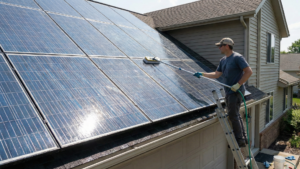
A: Negligible. You only need to clean the panels with water every 10-15 days to remove dust. No expensive servicing is required for On-Grid systems.